
"atlas"
302 article(s) found

Taste mellow Costa Rican Goddess Manor Coffee Grinding characteristics of the taste of the production area
Costa Rica's coffee industry, originally controlled by the Costa Rican Coffee Industry Company (InstitutodelCafdeCostaRica, ICAFE), has been taken over by the official Coffee Committee (OficinadelCaf). Among the exported coffee, those products that are considered to be of substandard quality are colored with blue vegetable dyes and then transferred back to China for sale. Coffee consumed at home

Introduction to the varieties of grinding scale of Costa Rican coffee beans by flavor description treatment
Costa Rica's coffee industry, originally controlled by the Costa Rican Coffee Industry Company (InstitutodelCafdeCostaRica, ICAFE), has been taken over by the official Coffee Committee (OficinadelCaf). Among the exported coffee, those products that are considered to be of substandard quality are colored with blue vegetable dyes and then transferred back to China for sale. Coffee consumed at home

Introduction to the description and treatment of grindability and Flavor of San Roman Manor Coffee in Costa Rica
Costa Rica's coffee industry, originally controlled by the Costa Rican Coffee Industry Company (InstitutodelCafdeCostaRica, ICAFE), has been taken over by the official Coffee Committee (OficinadelCaf). Among the exported coffee, those products that are considered to be of substandard quality are colored with blue vegetable dyes and then transferred back to China for sale. Coffee consumed at home

A brief introduction to the description of Grinding degree and Flavor of Coffee in Saint Roman Manor, Costa Rica
Costa Rica's coffee industry has adopted new technologies to increase efficiency, including using electric eyes to select beans and identify irregular-sized coffee beans. Costa Rica's coffee industry, originally controlled by the Costa Rican Coffee Industry Company (InstitutodelCafdeCostaRica, ICAFE), has been taken over by the official Coffee Committee (OficinadelCaf). At the exit

Costa Rican coffee bean flavor. Is Costa Rican coffee good?
Following Cafe Review (official Wechat account vdailycom) found that Cafe Beautiful Cafe opened a small shop of Costa Rican coffee bean flavor Tarrazu of Costa Rica is one of the major coffee producers in the world, the coffee produced is light and pure in flavor and pleasant in aroma. Costa Rican coffee has full particles, ideal acidity and unique strong flavor. Costa Rican coffee is good.

Flavor description of Costa Rican Saint Roman Coffee with mellow taste introduction of fine coffee in producing area
Costa Rican coffee has full particles, ideal acidity and unique strong flavor. Costa Rica's coffee industry, originally controlled by the Costa Rican Coffee Industry Company (InstitutodelCafdeCostaRica, ICAFE), has been taken over by the official Coffee Committee (OficinadelCaf). In the coffee exported, those products that are considered to be of substandard quality use blue.

Flavor description of Costa Rican Tarazu boutique coffee beans introduction to the method of grinding scale taste treatment
Costa Rican coffee has full particles, ideal acidity and unique strong flavor. Costa Rica's coffee industry, originally controlled by the Costa Rican Coffee Industry Company (InstitutodelCafdeCostaRica, ICAFE), has been taken over by the official Coffee Committee (OficinadelCaf). In the coffee exported, those products that are considered to be of substandard quality use blue.

Can coffee grounds really be used to build houses in the future?
▲ click to follow | Daily boutique Coffee Culture Magazine Coffee Workshop August 22, according to foreign media reports, a research team found that using coffee grounds instead of a certain proportion of sand can increase the strength of concrete by 30%, and coffee grounds are expected to become valuable building materials. It is estimated that the total amount of waste coffee grounds produced worldwide each year

Introduction to the flavor and taste of fine coffee beans in the coffee producing area of Costa Rica's Goddess Manor.
Coffee is an important economic source of Costa Rica. It was introduced in 1808 and has been cultivated for 200 years. Costa Rica has 1x3 population engaged in industries related to coffee, Costa Rican coffee and coffee beans. Colombians say that coffee has changed the country and enjoyed a rich environment, and coffee has indeed made an outstanding contribution; although the land area of Costa Rica lags behind that of Central America and the United States.

Costa Rican Coffee Flavor Description Grind Characteristics Price Variety Producing Area Taste Introduction
Tarrazu, Costa Rica, is one of the world's leading coffee producers, producing coffee with a light, pure flavor and pleasant aroma. Costa Rica's volcanic soils are fertile and well drained, making it the first country in Central America to grow coffee and bananas for commercial value. Coffee and bananas are the country's main exports. Coffee was introduced to Costa Rica from Cuba in 1729.

Kopi Luwak-brewing mode, price and output
The aroma of cat Java coffee is easier to lose than that of ordinary coffee. In order to maintain the flavor, coffee beans should be packaged independently and then injected with nitrogen to prevent the oxidation of coffee beans. The production process is complicated and rigorous. If you want to enjoy the true taste of Kopi Luwak, do not add sugar or milk to your coffee. It is recommended to use an air stopper (Siphon siphon), add 160,180ml (ml) of pure water, and pour 17g (g).

Introduction to the price of Arabica coffee beans the characteristics of Arabica coffee beans
Arabica coffee trees grow between 900m and 2000 m above sea level; they are hardy, and the suitable growth temperature is 1524 ℃; they need more humidity, and the annual rainfall is not less than 1500 ml. At the same time, they also require higher cultivation techniques and conditions. Arabica coffee beans are mainly grown in South America (except Argentina and parts of Brazil), Central American countries and Africa.

The unique and strong aroma of Costa Rica's Saint Roman Manor Coffee Flavor describes the characteristics of the variety producing area
Costa Rican coffee has full particles, ideal acidity and unique strong flavor. Costa Rica's coffee industry, originally controlled by the Costa Rican Coffee Industry Company (InstitutodelCafdeCostaRica, ICAFE), has been taken over by the official Coffee Committee (OficinadelCaf). In the coffee exported, those products that are considered to be of substandard quality use blue.

The practice of Kopi Luwak the producing area of Kopi Luwak the planting method of Kopi Luwak
Kopi Luwak is produced by the feces of Indonesian coconut cats (a kind of civet) as raw materials, so it is called Kopi Luwak. This kind of animal mainly feeds on coffee beans. After completing fermentation in the coconut cat's stomach, it destroys proteins, produces short peptides and more free amino acids, reduces the bitterness of coffee, and then excretes feces as the main raw material. Because coffee beans cannot be digested, they will be

Who is suitable for Columbia Coffee? introduction to the History of Starbucks via Columbia Coffee Story
For more information on coffee beans, please follow the Coffee Workshop (official Wechat account cafe_style) Colombia is the second largest producer of coffee and the largest exporter of Arabica beans. This coffee is full-bodied and sweet with caramel. The taste is gentle and the lingering finish is like a gentleman in coffee. Moderate rules are the best choice for light coffee.

Flavor description of Costa Rican boutique coffee beans introduction to the manor by grinding scale treatment
Tarrazu in Costa Rica is one of the major coffee producing areas in the world. The coffee produced is light and pure in flavor and pleasant in aroma. Costa Rica, with its fertile volcanic soil and good drainage, is the first country in Central America to grow coffee and bananas for commercial value. Coffee and bananas are the country's main exports. In 1729, coffee was introduced from Cuba to Goth.

Panamanian coffee bean origin Panamanian coffee bean
The Republic of Panama (The Republic of Panama;), referred to as Panama, is the southernmost country in Central America. The Panama Canal, which connects the Atlantic and Pacific Ocean, is located in the center of the country, has an important strategic position, and sits on the world-famous shipping route, the Panama Canal. On December 31, 1999, the United States transferred all the land, buildings, infrastructure and institutions of the Panama Canal

To get everyone to drink coffee! Coffee bean transportation will return to the era of great navigation?!
Since the epidemic of COVID-19, people's awareness of environmental protection has become stronger and stronger. Even drinking a cup of coffee begins to pay attention to whether it is organic, whether it is environmentally friendly, and whether the process from raw beans to coffee liquid has excessive carbon emissions. It is well known that most coffee beans consume fuel, while coffee producers and consumers
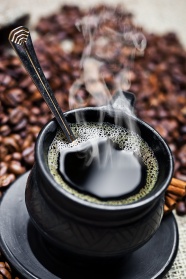
The source of Colombian coffee. Colombian coffee producing areas.
The main varieties of Colombian coffee are small grains of coffee. Plants are small trees or large shrubs, 5-8 m tall, usually much branched at base; old branches gray-white, nodes dilated, young branches glabrous, compressed. Leaves thinly leathery, ovate-lanceolate or lanceolate, 6-14 cm long and 3.5-5 cm wide, tip long acuminate, acuminate part 10-15 mm long, base cuneate or slightly obtuse, rarely rounded, entire or

An introduction to the manor in the taste and flavor of Brazilian coffee.
The largest coffee producer, which accounts for 1/3 of the world's coffee consumption, accounts for 1/3 of the world's coffee consumption and has a place in the global coffee market, although Brazil faces several times more natural disasters than other regions. but its acreage is enough to make up for it. There are many kinds of coffee here, but its industrial policy is large and cheap, so excellent coffee and