
"fleshy"
432 article(s) found
Origin Culture and species Morphology of Colombian Coffee
The earliest records of coffee cultivation in Colombia appear in a book called The Illustrated Orinoca by Spanish missionary Jose Gumilla. He describes what he saw when he preached on both sides of the Meta River in 1730, in which he mentioned the local coffee plantation. By 1787, other missionaries had spread coffee to other parts of Colombia.

Male college students drink coffee for 99 days and gain 10 kilograms of smoothies.
A male college student drank a cup of coffee smoothie with whipped cream and syrup every day for 99 days. As a result, he gained 10 kilograms and weighed 87 kilograms at one point. He crushed his classmates' motorcycle tires and felt a pain of "tearing his belly." only then did he realize that he was "too fat." he attended a weight loss class last year and lost more than 20 kilograms in four months. He lost weight and regained his confidence. Medicine of Kaohsiung Medical University

Introduction to the Variety characteristics of Coffee Flavor description in Colombia
Colombian coffee flavor description planting environment regional treatment variety characteristics Colombia is rich in products, especially coffee, flowers, gold and emeralds are known as the four treasures. In 1808, a priest introduced coffee to Colombia for the first time from the French Antilles via Venezuela. Today, the country is the second largest coffee producer after Brazil and the largest Arabica coffee in the world

Big or small beans, which taste better?
Production sites rated large coffee beans higher according to size. It is also said that the grading of the sieve size (coffee bean size) has nothing to do with French taste. The Nordic countries, which are now coffee advanced countries, purchase the most advanced coffee beans from Brazil and other places, mainly buying small particles of beans with sieve size 13-16. They avoid buying expensive, big beans and buy cheap, small beans instead.

Introduction to Coca Cauca Lazmus Manor, Columbia Coffee with mild Climate
The main varieties of Colombian coffee are small grains of coffee. Plants are small trees or large shrubs, 5-8 m tall, usually much branched at base; old branches gray-white, nodes dilated, young branches glabrous, compressed. Leaves thinly leathery, ovate-lanceolate or lanceolate, 6-14 cm long and 3.5-5 cm wide, tip long acuminate, acuminate part 10-15 mm long, base cuneate or slightly obtuse, rarely rounded, entire or

What are the characteristics of iron pickup coffee varieties? iron pickup coffee has a delicate taste and elegant flavor.
Professional coffee knowledge exchange more coffee bean information please follow Coffee Workshop (Wechat official account cafe_style) Street-Iron pickup Coffee varieties introduction Arabica there are many subspecies, all derived from Ethiopia's oldest Typica and Yemen's Bourbon after transplantation in Central and South America or Asia variants, the variety goes on and on. Typic

Introduction of Fine Coffee beans in Coffee Flavor and Taste area of Lazimus Manor, Colombia
The main varieties of Colombian coffee are small grains of coffee. Plants are small trees or large shrubs, 5-8 m tall, usually much branched at base; old branches gray-white, nodes dilated, young branches glabrous, compressed. Leaves thinly leathery, ovate-lanceolate or lanceolate, 6-14 cm long and 3.5-5 cm wide, tip long acuminate, acuminate part 10-15 mm long, base cuneate or slightly obtuse, rarely rounded, entire or
Colombia Coffee Culture Colombia Coffee History
One: it is said to have come from Haiti in the Caribbean via El Salvador in Central America. Second, coffee beans were first introduced into Colombia in 1808 by a priest from the French Antilles via Venezuela. One of them is that the first coffee seeds from Colombia came from Venezuela through the province of Santander. [1]Third: the earliest coffee cultivation in Colombia
Fine coffee Colombian coffee species morphology
The main varieties of Colombian coffee are small grains of coffee. Plants are small trees or large shrubs, 5-8 m tall, usually much branched at base; old branches gray-white, nodes dilated, young branches glabrous, compressed. Leaves thinly leathery, ovate-lanceolate or lanceolate, 6-14 cm long and 3.5-5 cm wide, tip long acuminate, acuminate part 10-15 mm long, base cuneate or slightly obtuse, rarely rounded, entire or

Colombia coffee-producing country Lazmus farm with the most favorable natural conditions for coffee growth
Colombia, located in the northwest of South America, is a beautiful country with a long history. Indians have lived on this land since ancient times. It became a Spanish colony in 1531 AD and gained independence in 1819. It was renamed in 1886 to commemorate Columbus, the discoverer of the American continent. Colombia, beautiful mountains, beautiful scenery, pleasant climate, four seasons

Characteristics of Colombian Coffee Flavor Manor
The main varieties of Colombian coffee are small grains of coffee. Plants are small trees or large shrubs, 5-8 m tall, usually much branched at base; old branches gray-white, nodes dilated, young branches glabrous, compressed. Leaves thinly leathery, ovate-lanceolate or lanceolate, 6-14 cm long and 3.5-5 cm wide, tip long acuminate, acuminate part 10-15 mm long, base cuneate or slightly obtuse, rarely rounded, entire or

Columbia Coffee Coca Cauca producing area with unique sour and mellow taste
The earliest record of coffee cultivation in Colombia appears in a book called The Illustrated Orinoca by Spanish missionary Jose Gumilla. He describes what he saw when he preached on both sides of the Meta River in 1730, in which he mentioned the local coffee plantation. By 1787, other missionaries had spread coffee to other parts of Colombia.

Colombia Emerald Roast Deep Coffee Flavor Description Treatment Taste Grind Scale Introduction
Colombia Emerald Roast Deep Coffee Flavor Description Processing Method Taste Grinding Scale Introduction Colombia is rich in products, especially coffee, flowers, gold and emeralds known as the four treasures. Coffee was first introduced to Colombia in 1808 by a priest from the French Antilles via Venezuela. Today the country is the second largest coffee producer after Brazil and the largest Arabica in the world.

Colombia Na Linglong Coffee Flavor Description Grinding Characteristics Treatment Variety Introduction
Colombia, located in the northwest of South America, is a beautiful country with a long history. Indians have lived on this land since ancient times. It became a Spanish colony in 1531 AD and gained independence in 1819. It was renamed in 1886 to commemorate Columbus, the discoverer of the American continent. Colombia, beautiful mountains, beautiful scenery, pleasant climate, four seasons
The relationship between Cafe Coffee and Celebrity
Celebrity French Emperor Napoleon on the eve of the French Revolution, a short, stocky young officer appeared at the Procobo Cafe in Paris. When the officer checked out after drinking coffee, he found that he didn't have enough money with him, so he awkwardly mortgaged the cap he was wearing to the man. Had it not been for this little episode, the cafe would have lost its memory.

Cafe celebrities Napoleon, Bach, Banach and Uram
Celebrity French Emperor Napoleon on the eve of the French Revolution, a short, stocky young officer appeared at the Procobo Cafe in Paris. When the officer checked out after drinking coffee, he found that he didn't have enough money with him, so he awkwardly mortgaged the cap he was wearing to the man. Had it not been for this little episode, the cafe would have lost its memory.

Which tastes best, big granulated beans or small granulated beans?
Coffee beans with large particles are highly valued in the place of production according to their size. It is also said that the French taste of the sieve size (coffee bean size) has nothing to do with it. Now the Nordic countries, which are advanced coffee countries, purchase the most advanced coffee beans in Brazil and other places, mainly buying small pellet beans with a sieve size of 13-16. They avoid buying high-priced large granulated beans and buy cheap small ones instead.

Columbia Coffee Lazimus Manor introduces Starbucks Colombian Coffee
The main varieties of Colombian coffee are small grains of coffee. Plants are small trees or large shrubs, 5-8 m tall, usually much branched at base; old branches gray-white, nodes dilated, young branches glabrous, compressed. Leaves thinly leathery, ovate-lanceolate or lanceolate, 6-14 cm long and 3.5-5 cm wide, tip long acuminate, acuminate part 10-15 mm long, base cuneate or slightly obtuse, rarely rounded, entire or
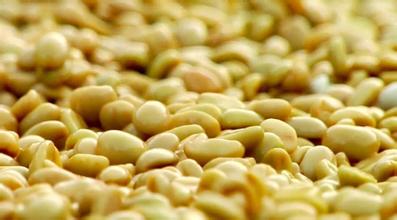
Colombian Hope Manor Coffee Bean production area Taste treatment Grinding scale
Colombia hopes that the taste treatment of manor coffee beans in the region of grinding scale Colombian coffee is mainly small-grain coffee. Plants are small trees or large shrubs, 5-8 m tall, usually much branched at base; old branches gray-white, nodes dilated, young branches glabrous, compressed. Leaves thinly leathery, ovate-lanceolate or lanceolate, 6-14 cm long and 3.5-5 cm wide, tip long acuminate, acuminate
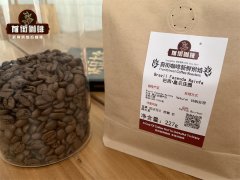
Why is the acidity of Brazilian specialty coffee relatively low?
Brazil is not only the largest coffee producer in the world, but also the most sophisticated. It turns out that everything from mass-produced coffee to the cheapest coffee in the world, to elegant coffee known as the origin of the world's best espresso brewing, has been proven. In Brazil, four different processing methods are used to remove fruit from beans, and on the same farm during the same harvest period.