
"heyday"
617 article(s) found

Introduction to the taste of different kinds of coffee beans
Turkish coffee: the original cooking method is still used today, and the complex process is somewhat exotic and mysterious. From this, we can peep into the heyday of the Ottoman Empire. Turkish coffee making method (one person) 1. Grind 12g deep-roasted coffee beans with the right amount of spices such as cinnamon or cardamom. (depending on personal preference, it may not be added) 2. Put the fine powder listed above

What is the traditional Japanese tea ceremony? the three ancestors of the Japanese tea ceremony and the interpretation of cultural and historical stories
Tea is an important part of Japan's long history and culture. This popular drink has been consumed all over Japan for centuries, and it is still popular among Japanese. It is believed that tea entered Japan from China, and China is the real birthplace of all kinds of tea. Tea culture originated in China and spread to Asian countries and other parts of the world. The art of Japanese tea

A brief introduction to the Origin, Development and planting Environment of Mazu Coffee in Alishan
In 1941 (the 16th year of Rizhaohe), most of the raw beans were shipped back to Japan. The planting area of coffee in Taiwan has reached 75 hectares, and it was called the largest coffee factory in the far East in its heyday. In 1945 (Rizhaohe 20 years), the area of coffee cultivation in Taiwan expanded to 113 hectares after the war. After the surrender of Japan, Taiwan was restored, and the national government strongly advocated the reclamation of fertile land and the cultivation of cash crops.

Coffee Tour in China (3) Taiwan
The history of growing coffee in Taiwan has been 300 years since it was introduced when the Dutch occupied Taiwan (1626 AD, at the end of the Ming Dynasty), but it has not been popularized for various reasons.
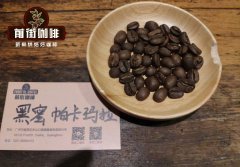
El Salvador boutique coffee brewed with black honey to treat Pacamara coffee beans with special taste and flavor
Professional coffee knowledge exchange more coffee bean information please pay attention to the coffee workshop (Wechat official account cafe_style) Salvadoran coffee may seem relatively minority in boutique coffee, what many people do not know is that Salvadoran coffee in its heyday, was once the world's fourth coffee producing country, due to decades of civil war, dragged down the entire coffee industry, the local farmers Ren Tian abandoned

A brief introduction to the history and culture of the origin and development of Salvadoran Himalayan coffee
Don't underestimate El Salvador's coffee production. In its heyday, it was once the fourth largest coffee producer in the world, but decades of civil war almost dragged down the coffee industry. fortunately, the war has stopped in recent years, and the coffee industry has come back to life. The only benefit that the civil war brought to the country of El Salvador was that the farmers left their fields barren and failed to catch up with the most popular Katimo sun-exposed cultivation train in the past two decades.

Differences in taste characteristics and historical stories between Japanese matcha and green tea is matcha powder made of green tea
In the heyday of the Tang Dynasty, as people from all over the world went to China to study, Chinese tea also followed the envoys of the Tang Dynasty to his motherland, all over East Asia. Among them, a Japanese monk named Mingan Rongxi is known as the father of Japanese tea. The Mingan Rongxi monk made two trips to China during the prosperous Tang Dynasty, where he studied religion and introduced Linji Zen Buddhism to Japan. For the second time

Why doesn't Starbucks sell small cups? I have no choice but to explain that the medium cup is the minimum cup. Be scolded for the reason
The schematic diagram has nothing to do with this article. Photo Source: BusinessWeek / Luo Yulong, as the soul of Starbucks (Starbucks) for a long time, Howard Schultz's previous five-year plan (to open 10, 000 stores in five years) to become a coffee chain brand to the satisfaction of all customers! ) brought the company into its heyday, but also faced with more severe challenges Howard

Open a coffee shop in Tai O and realize your dream boss: this is my favorite place.
For professional baristas, please pay attention to the fact that the number of residents of the coffee workshop (official Wechat account cafe_style) has dropped from 30, 000 to 2, 000, not only a simple 90% decline, but also a sign of the changes in Tai O over the past few decades. In its heyday before the war, Tai O had a population of nearly 30,000. The previously prosperous fishing, sea salt and native products industries could not only supply local needs, but also have surplus exports. Today, all that's left is
Shangdao Coffee Xiamen closes two more stores, and the franchisee starts a new stove.
Shangdao Coffee, which used to be a leader in the coffee market, also failed to stop the big waves in the market. In a few days, the two Shangdao Coffee houses located on Hubin South Road and Guogong Road in Xiamen will be officially transformed into Adu. After this change, the total number of Shangdao coffee stores in Xiamen will be reduced from more than 10 in its heyday to 6. At present, there are more than 2600 coffee shops in Xiamen, but only chain brands

A brief introduction to the Market Price of Fine Coffee beans in Renas Manor with balanced Taste
Savanna climate. The plain area belongs to the tropical rain forest climate and the mountain area belongs to the subtropical forest climate. The average annual temperature is 25-28 ℃. The annual precipitation is more than 1800 mm in mountain areas and about 1000 mm in coastal areas. The rainy season is from May to October. Don't underestimate El Salvador's coffee production. In its heyday, it was the world's fourth largest coffee producer, but decades of civil war almost dragged down coffee

A brief introduction to the Market Price of Fine Coffee beans in Renas Manor with balanced Taste
Don't underestimate El Salvador's coffee production. In its heyday, it was once the fourth largest coffee producer in the world, but decades of civil war almost dragged down the coffee industry. fortunately, the war has stopped in recent years, and the coffee industry has come back to life. The only benefit that the civil war brought to the country of El Salvador was that the farmers left their fields barren and failed to catch up with the most popular Katimo sun-exposed cultivation train in the past two decades.

A brief introduction to the planting situation, geographical location, climate and altitude of Taiwan's high-quality coffee with mellow flavor.
In 1941 (the 16th year of Rizhaohe), most of the raw beans were shipped back to Japan. The planting area of coffee in Taiwan has reached 75 hectares, and it was called the largest coffee factory in the far East in its heyday. In 1945 (Rizhaohe 20 years), the area of coffee cultivation in Taiwan expanded to 113 hectares after the war. After the surrender of Japan, Taiwan was restored, and the national government strongly advocated the reclamation of fertile land and the cultivation of cash crops.

A brief introduction to the Origin, Development, History and Culture of Fine Coffee beans in Renas Manor with balanced taste
Don't underestimate El Salvador's coffee production. In its heyday, it was once the fourth largest coffee producer in the world, but decades of civil war almost dragged down the coffee industry. fortunately, the war has stopped in recent years, and the coffee industry has come back to life. The only benefit that the civil war brought to the country of El Salvador was that the farmers left their fields barren and failed to catch up with the most popular Katimo sun-exposed cultivation train in the past two decades.

A brief introduction to the History and Culture of the Origin and Development of Fine Coffee beans in Renas Manor
Don't underestimate El Salvador's coffee production. In its heyday, it was once the fourth largest coffee producer in the world, but decades of civil war almost dragged down the coffee industry. fortunately, the war has stopped in recent years, and the coffee industry has come back to life. The only benefit that the civil war brought to the country of El Salvador was that the farmers left their fields barren and failed to catch up with the most popular Katimo sun-exposed cultivation train in the past two decades.

Coffee from Venezuela
Coffee trees were imported from Martinique as early as 1730, but coffee production was almost abandoned during the heyday of the oil industry. Coffee plantations have recently begun to revive, with the old Tipica and Bourbon trees and new plantations laying the groundwork for coffee exports.

A brief introduction to the cultivation of boutique coffee beans in Renas Manor with balanced taste, geographical location, climate and altitude
Don't underestimate El Salvador's coffee production. In its heyday, it was once the fourth largest coffee producer in the world, but decades of civil war almost dragged down the coffee industry. fortunately, the war has stopped in recent years, and the coffee industry has come back to life. The only benefit that the civil war brought to the country of El Salvador was that the farmers left their fields barren and failed to catch up with the most popular Katimo sun-exposed cultivation train in the past two decades.

Coffee mystery-who discovered coffee?
Legend has it that more than a thousand years ago, Kaidi, a shepherd living in the Ethiopian highlands, noticed that his sheep became unusually active and noisy after eating the red fruit of a shrub, and even did not sleep much at night. And this shrub
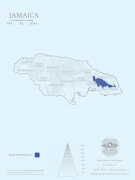
How about Jamaica coffee? Introduction and Grading System of Jamaica Coffee
Governor Sir Nicholas Rouse in 1728 received coffee plants from the governor of Martinique and immediately planted them in the St Andrews area. Production was limited in the first half of the century, but as coffee cultivation expanded from St Andrews to the Blue Mountains, it flourished in 686 plantations. By 1814, Jamaica's peak annual production exceeded 16,5

Venezuela, the producer of fine coffee in the world.
The distinctive manor coffee comes from this oil-rich country. Oil was once considered to be the main export of Venezuela. Although coffee trees were introduced from Martinique in 1730 and Venezuela, coffee production was almost abandoned at the height of the oil industry. Recently, coffee plantations have begun to recover, with the original planting of Tipica and