
"marti"
176 article(s) found

Introduction to the characteristics of flavor and taste of Salvadoran coffee manor with slightly sour taste
The national emblem of El Salvador was used on September 15, 1912. The national emblem of El Salvador is an equilateral triangle whose three yellow lines represent equality, truth and justice respectively. Five volcanoes rise between the Pacific Ocean and the Atlantic Ocean, symbolizing the five countries in Central America. The pole of freedom and the red cap of freedom stand high on the top of the mountain, radiating the light of freedom and liberation.

Coffee growing situation of Renas Manor in El Salvador with balanced, soft and good texture.
El Salvador's coffee accounts for 40% of the country's exports, and it is usually picked in November, December and January-March of the following year. The export of raw beans lasts almost all year round. Coffee is produced in seven of the country's 14 provinces, with the largest number in the northwestern provinces of chalatenango and santa ana. The coffee produced in El Salvador is 100% Arabica, of which 68% is

Introduction to boutique coffee beans with mild taste and taste in El Salvador coffee manor
The Constitution of El Salvador, which officially entered into force on December 23, 1983, expounds the country's political system, the mode of presidential election, the exercise of legislative and judicial power, etc., and specifically stipulates that presidential candidates can be elected if the first round of votes exceeds 50%, otherwise, a second round of voting will be held between the top two candidates who get the most votes. [1] the National Assembly of El Salvador has a unicameral system.

Introduction of boutique coffee bean flavor manor in Salvadoran coffee variety producing area
The Salvadoran flag was launched in 1822, rescinded in 1865 and restored in 1912. The Constitution of the year of the Salvadoran Flag in 1972 was officially established as the national flag. The national flag is rectangular, with a ratio of length to width of 335 to 189. From top to bottom, the flag is connected by three parallel equal horizontal rectangles of blue, white and blue, and the central part of the white part is painted with the national emblem. Because El Salvador used to be
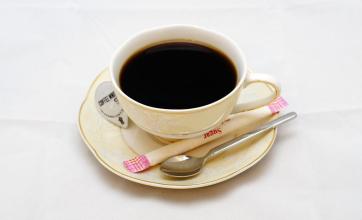
Coffee granules full of El Salvador Himalayan coffee flavor taste manor characteristic boutique coffee
The national emblem of El Salvador was used on September 15, 1912. The national emblem of El Salvador is an equilateral triangle whose three yellow lines represent equality, truth and justice respectively. Five volcanoes rise between the Pacific Ocean and the Atlantic Ocean, symbolizing the five countries in Central America. The pole of freedom and the red cap of freedom stand high on the top of the mountain, radiating the light of freedom and liberation.

The flavor of Salvadoran coffee with a smooth entrance describes the variety characteristics, quality, planting environment and brewing environment of the producing area.
El Salvador's domestic topography is mainly mountainous, plateau, volcanic, known as the country of volcanoes, Santa Ana active volcano 2385 meters above sea level, for the country's highest peak; the north of the country for the Lompa River Valley, the south for the narrow coastal plain El Salvador throughout the tropical climate, the annual average temperature of 28 ℃; November-April dry season, May-October rainy season; coastal and lowland climate hot and humid, mountainous

Introduction to the coffee flavor and taste producing area of Renas Manor in El Salvador with balanced, soft and good texture.
The national emblem of El Salvador was used on September 15, 1912. The national emblem of El Salvador is an equilateral triangle whose three yellow lines represent equality, truth and justice respectively. Five volcanoes rise between the Pacific Ocean and the Atlantic Ocean, symbolizing the five countries in Central America. The pole of freedom and the red cap of freedom stand high on the top of the mountain, radiating the light of freedom and liberation.

Introduction to the fragrant and authentic Salvadoran Himalayan coffee flavor manor
The national emblem of El Salvador was used on September 15, 1912. The national emblem of El Salvador is an equilateral triangle whose three yellow lines represent equality, truth and justice respectively. Five volcanoes rise between the Pacific Ocean and the Atlantic Ocean, symbolizing the five countries in Central America. The pole of freedom and the red cap of freedom stand high on the top of the mountain, radiating the light of freedom and liberation.

Coffee changes the world-1
Have you ever had coffee? Is the coffee really "delicious"?

Fine Coffee Culture Story Coffee changes the World 2
Have you ever had coffee? Does the coffee really taste good? In fact, when we enjoy coffee, most of the time we just regard it as a drink, a different, unique, refreshing drink, but seldom think about it: what is the big name of a small coffee? Precisely, coffee is surprisingly big-it is second only to oil in the world.

Coffee changes the world. Does coffee really taste good?
Have you ever had coffee? Does the coffee really taste good? In fact, when we enjoy coffee, most of the time we just regard it as a drink, a different, unique, refreshing drink, but seldom think about it: what is the big name of a small coffee? Precisely, coffee is surprisingly big-it is second only to oil in the world.
Coffee from Martinique
Martinique is a small island and the birthplace of coffee in Central America, but it produces very little coffee today. The first coffee tree in the Western Hemisphere was brought from France by GabrielMathieudeClieu in the early 1820s. In his early years as a naval officer in Martinique, Dirkley brought back a coffee tree and planted it in Prech
Basic knowledge of boutique coffee Martinique coffee
Martinique is a small island and the birthplace of coffee in Central America, but it produces very little coffee today. The first coffee tree in the Western Hemisphere was brought from France by GabrielMathieudeClieu in the early 1820s. In his early years as a naval officer in Martinique, Dirkley brought back a coffee tree and planted it in Prech

A global coffee producer in Martinique.
Martinique is a small island and the birthplace of coffee in Central America, but it produces very little coffee today. The first coffee tree in the Western Hemisphere was brought from France by GabrielMathieudeClieu in the early 1820s. In his early years as a naval officer in Martinique, Dirkley brought back a coffee tree and planted it in Prech

Martinique Coffee the characteristics and market of Martinique coffee
Martinique is a small island and the birthplace of coffee in Central America, but it produces very little coffee today. The first coffee tree in the Western Hemisphere was brought from France by GabrielMathieudeClieu in the early 1820s. In his early years as a naval officer in Martinique, Dirkley brought back a coffee tree and planted it in Prech
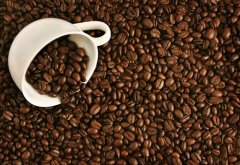
Gabriel. Mathieu. De. Klee's Coffee Story
This is a romantic story about coffee. Gabriel, a French naval officer on the island of Matinique, circa 1720 or 1723. Mathieu. De. When Klee was about to leave Paris, he managed to get some coffee trees and decided to take them back to Martinique. He had been taking good care of the saplings and kept them on the deck.
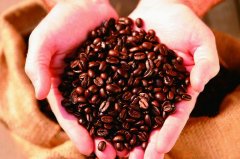
Global Coffee Producing Region-Martinique Martinique Coffee Market
Martinique is a small island and the birthplace of Central American coffee, but today it produces very little coffee. The first coffee trees in the Western Hemisphere were brought from France by Gabriel Mathieu de Clieu in the early 1720s. Deckley, an early naval officer in Martinique, brought home a coffee tree and planted it in Prech.

Coffee origin formula fancy coffee martinique coffee
Coffee Origin Formula: Martinique Coffee name: Caf Martinique Origin: French ingredients: deep cultivated coffee 100cc; granulated sugar 15g; rum (dark) 15cc; stirred cream 20cc; cinnamon stick (long) 1 operation: pour sugar and rum into the cup, pour coffee, top with stirred cream cover. Put the cinnamon stick on the plate. Martinique is a place in the Caribbean.
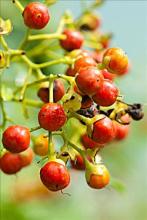
World Coffee boutique Manor: Martinique Martinique witnessing the growth and destruction of Coffee
Martinique is a small island and the birthplace of coffee in Central America, but it produces very little coffee today. The first coffee tree in the Western Hemisphere was brought from France by Gabriel Mathieu de Clieu in the early 1820s. In his early years, Dirkley was a naval officer in Martinique. He brought back a coffee tree and planted it in Puri.

Martinique is a small island and the birthplace of coffee in Central America.
Martinique is a small island and the birthplace of coffee in Central America, but it produces very little coffee today. The first coffee tree in the Western Hemisphere was brought from France by GabrielMathieudeClieu in the early 1820s. In his early years, Dirkley was a naval officer in Martinique. He brought back a coffee tree and planted it in Pritchell.