
"pollution"
3888 article(s) found

Introduction of non-polluting Cuban Crystal Coffee Flavor Manor at High altitude
Coffee was introduced into Cuba from Dominica in 1748. In Cuba, where the land is fertile and the climate is humid, Rain Water's abundant area has become the most suitable place to grow coffee. After that, coffee began to be grown and developed in Cuba. In the Central Mountains of Cuba, it is the best place to grow Cuban coffee, in which Crystal Mountain coffee is synonymous with top Cuban coffee. (ancient)

Flavor characteristics of Nicaraguan Coffee treated with berries in Anjing Manor, Nicaragua
Professional coffee knowledge exchange more coffee bean information Please follow the coffee workshop (Wechat official account cafe_style) the whole berry treatment is inspired by wine-making. The related research on grape making explores the effects of fruit and pericarp on flavor and regards them as precious assets of the products. Thinking about how to make better coffee beans from the process of making wine, so using biology

Introduction to the characteristics of high-quality and pollution-free Ugandan coffee flavor manor producing area
It is well known that coffee originated in Ethiopia, the earliest Arabica variety, while Robusta originated in Uganda, both of which are from Africa. As the hometown of coffee, Africa not only has many excellent coffee varieties, but also is still one of the three largest coffee producing areas in the world. The flavor and taste of African coffee is the most complex.

A brief introduction to the Market Price of High-quality and pollution-free Ugandan Fine Coffee Bean varieties
Uganda is the country of origin of coffee grown in Robusta, but commercial cultivation of Arabica species here did not begin until early 1900. Today, there are still a large number of wild robusta coffee trees in Uganda, which is rare in cities in the world. As a landlocked country, the large coffee cultivation in Uganda is often interplanted, where coffee trees are mixed with food crops and rubber trees.

Whole berry treatment? What is the method of coffee treatment? what are the treatment methods of raw coffee beans?
Professional coffee knowledge exchange more coffee bean information Please follow the coffee workshop (Wechat official account cafe_style) the whole berry treatment is inspired by wine-making. The related research on grape making explores the effects of fruit and pericarp on flavor and regards them as precious assets of the products. Thinking about how to make better coffee beans from the process of making wine, so using biology

Yunnan Xincheng Farm
Wang Guoshi, legal representative of the farm, with registered capital of 7.78 million yuan and total assets of 14.92 million yuan, mainly produces and sells processed coffee, pepper, mango, longan, banana and other tropical cash crops and fruits. The farm has a total population of 2036, with a total land area of 13125.58 mu, including 4500 mu of coffee, 153mu of pepper and the rest of tropical fruit. Annual output of 320 tons of coffee and 18 tons of pepper

A brief introduction to the treatment method of grinding degree and baking degree of high-quality and pollution-free Ugandan boutique coffee beans
Most of Uganda is located in the Central African Plateau, with lakes, with an average elevation of 1000 mi 1200 meters. There are many lakes and plateaus in the mountains, which are known as the water villages of the plateau. The western branch of the East African Rift Valley runs through the western border, with many rivers and lakes at the bottom of the valley. Uganda has a great Victoria lake, coupled with the high mountains, which makes Uganda a mild climate suitable for growing coffee, although it spans both sides of the equator. Right and wrong in Uganda

What are the flavor and taste characteristics of berry treatment in Anjing Manor, Nicaragua?
Professional coffee knowledge exchange more coffee bean information please follow the coffee workshop (Wechat official account cafe_style) Nicaragua Anjing manor berry treatment what are the flavor and taste characteristics? There are rich fruit aromas and full acidity throughout the process, revealing the essence of ripe coffee pulp fruit. The fragrance of pomelo flowers and the creamy core of the tail rhyme are sweetly intertwined, with both the elegance and unrestrained feelings of Central America.
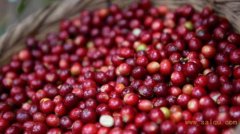
A brief introduction to the cultivation of high-quality and pollution-free boutique coffee beans in Uganda, geographical location, climate and altitude
The cultivation of coffee in Uganda is all small-scale family operation. The livelihood of 25% of the population is closely related to coffee production. About 500000 farms grow coffee, but mainly Robster. Robusta accounts for 90% of coffee production, and the remaining 1 is Arabica coffee. Arabica and Robusta are harvested from October to February. Ugandan coffee

A brief introduction to the flavor, taste and aroma characteristics of high-quality and pollution-free Ugandan boutique coffee beans
Later, when the ship replaced the sailboat, due to the shortened delivery time, people drank relatively fresh coffee beans. But people who are used to drinking Chen beans are not used to the fresh taste, so they desperately pursue old Java coffee, so that the Indonesian government and some businessmen deliberately store fresh beans in warehouses for one or two years and then sell them to consumers. In fact, compared with fresh beans, aged beans

A brief introduction to the history and culture of the origin and development of high-quality and pollution-free Ugandan boutique coffee beans
Later, when the ship replaced the sailboat, due to the shortened delivery time, people drank relatively fresh coffee beans. But people who are used to drinking Chen beans are not used to the fresh taste, so they desperately pursue old Java coffee, so that the Indonesian government and some businessmen deliberately store fresh beans in warehouses for one or two years and then sell them to consumers. In fact, compared with fresh beans, aged beans

Introduction to the Flavor description of Cuban Crystal Mountain Coffee Bean by Grinding scale treatment
There are three major brands of Cuban coffee, with Cubita as the representative. The raw beans of Cubita coffee are selected from the pollution-free Crystal Mountain coffee beans in the high altitude area of Cuba. The particles of coffee beans are strictly selected according to the standard of sieve 17-19. The selected coffee beans have large particles and high maturity. Cubita coffee beans are all picked by hand and refined by water washing, with the maximum process.
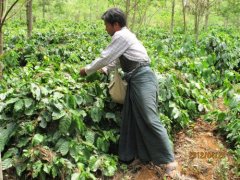
What kind of water can be regarded as pure water quality? introduction to the formula of the best water for hand flushing.
The ancients believed that the god of tea is the god of water, the body of tea is not real water, and its fine tea does not peep into its body. Emperor Qianlong, who loved drinking tea, did not hesitate to measure the weight of the water in the world, and finally decided that the water in Yuquanshan was the first in the world. Scotch Whisky, known as the water of life, must adopt this book.

Refreshing and elegant taste of Cuban Crystal Mountain Coffee Flavor and Fine Coffee Bean producing area
The raw beans of Cubita coffee are selected from the pollution-free Crystal Mountain coffee beans in the high altitude area of Cuba. The particles of coffee beans are strictly selected according to the standard of sieve 17-19. The selected coffee beans have large particles and high maturity. Cubita coffee beans are all picked by hand, using water washing refining method to remove defective beans and other impurities to the maximum extent, plus experienced baking
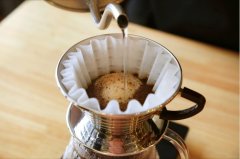
What kind of water should be used to make coffee? Water for brewing coffee
Just as water is important for making tea, it is also essential for extracting coffee. To extract coffee, we need fresh, odorless, moderate pH and pollution-free water. 1. Fresh means that the water is rich in oxygen and full of vitality. It is also recommended to start with cold water, and it is best not to use warm water directly. 2. There is no peculiar smell, and there are more impurities in tap water in many cities with poor water quality.

What kind of water should be used to make coffee? What kind of water is the best for making coffee?
Just as water is important for making tea, it is also essential for extracting coffee. To extract coffee, we need fresh, odorless, moderate pH and pollution-free water. 1. Fresh means that the water is rich in oxygen and full of vitality. It is also recommended to start with cold water, and it is best not to use warm water directly. 2. There is no peculiar smell, and there are more impurities in tap water in many cities with poor water quality.

Dongguan Nestle Coffee Factory Exhaust Gas Disturbing People
In Dongguan Nancheng Nestle factory near many residents complain: Don't think coffee smells fragrant, smell for a long time that is a kind of suffering! Nestle factories generally concentrate on emissions before 10 a.m. and after 7 p.m.

Uganda Coffee Plantation Production Area Grinding Scale Processing Flavor Description Variety Introduction
Uganda coffee beans have a unique flavor and fragrance, which is very suitable for making Italian and other flavors of coffee. More importantly, Uganda coffee beans are strictly screened according to international market standards to ensure their high quality and pollution-free characteristics. Africa is the two major varieties of coffee Arabica and Robu

What material is Coca-Cola plastic bottle made of? Coca-Cola launches recycled plastic bottles!
After Coca-Cola was named the biggest plastic polluter for the third time, Coca-Cola recently launched new bottle packaging of 100% renewable plastic in some states in the United States to reduce plastic waste. Coca-Cola was rated for the third time as the largest plastic polluter. The size of the new bottle of renewable plastic is 13.2oz (about 374.22 grams). It is used for ordinary Coke, Diet Coke and Zero.