
"terminology"
369 article(s) found
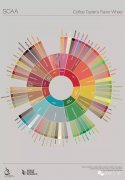
Coffee terminology | how to professionally express the flavor and taste of coffee
Professional baristas please follow the coffee workshop (Wechat official account cafe_style) Flavor [flavor] is the overall impression of aroma, acidity, bitterness, sweetness and mellowness, which can be used to describe the overall feeling of coffee. Acidity [acidity] is the acidity and strong quality of coffee. The acidity referred to here is different from bitterness or acidity (sour) and has nothing to do with pH.

SCAA barista certification cup coffee test terminology certification required by professional baristas
SCAA consists of two chapters: the baristas Association (Barista Guild of America) and the Baker Association (Roasters Guild), both of which are made up of professional coffee practitioners. Members improve the quality of coffee in the industry through information exchange, skills training and cooperation. At the same time, the Coffee quality Association (CQI) is the public trust machine of SCAA and the largest coffee culture in the coffee industry.
Coffee bean grinding terminology coffee bean grinding terminology
Tannic acid: after extraction, tannin will turn into a yellowish powder, which can easily blend into water. After boiling, it will decompose and produce pyrosylic acid, which will make the coffee taste worse. If the coffee is soaked and left for several hours, the color of the coffee will become stronger than when it was just soaked, and it is not tasty enough, so there is a saying that it is best to finish it as soon as possible. Caffeine: caffeine is one of all the ingredients in coffee
6. coffee terminology
Dry means there is more foam than milk. If you prefer a cappuccino filled with creamy, sweet foam, you can inform the waiter of your requirements. Don't you like the foam on your nose? You can tell the server you don't want foam, so you'll only get espresso combined with hot milk. L
Fine coffee knowledge coffee bean grinding terminology
Tannic acid: after extraction, tannin will turn into a yellowish powder, which can easily blend into water. After boiling, it will decompose and produce pyrosylic acid, which will make the coffee taste worse. If the coffee is soaked and left for several hours, the color of the coffee will become stronger than when it was just soaked, and it is not tasty enough, so there is a saying that it is best to finish it as soon as possible. Caffeine: caffeine is one of all the ingredients in coffee

Espresso Coffee Machine Terminology
Espresso Terminology When you read our History chapter (forthcoming), you will find that you are still facing a very new technology. You'll also get the sense that the technology used in home espresso models is still a decade or more behind that used in commercial models. But at the same time, this phenomenon is changing. For this reason, I also condemn (or thank) the Internet. Over the past few years, we have also
Coffee basic knowledge Coffee terminology explanation
Dry means that there are more milk bubbles than milk. If you like cappuccino full of sweet milk foam, you can tell the service staff what you need. No foam [no foam] Don't you like the foam on that bank sticking to your nose? You can tell the service staff that you don't want foam, so you'll only get a combination of espresso and hot milk. Low-fat [
Standard formula and terminology for the preparation of boutique coffee
Espresso (Espresso): also known as kung fu coffee about 1 ounce, without any ingredients, placed in a 4-or 8-ounce coffee cup. Drink immediately. It can also be made into espresso macchiato, espresso with 1 spoonful of foam, or concentrated espressocon pane, and espresso with 1 spoonful of whipped cream. Super espresso (Restrictor
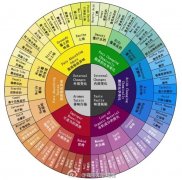
Terminology for coffee cup testing
When testing a cup of coffee, we should distinguish whether the flavor, alcohol thickness, acidity and wet aroma of the coffee are pleasant. Most cup tasters use the following criteria to judge coffee.
Terminology for professional coffee cup testing
When testing a cup of coffee, we should distinguish whether the flavor, alcohol thickness, acidity and wet aroma of the coffee are pleasant. Most cup tasters use the following criteria to judge coffee.
Coffee culture coffee tasting terminology
Coffee tasting is a very professional knowledge, there are many terms, too numerous to list. Here we list some of the simplest and most commonly used ones. If you have a chance to read professional books on coffee in the future, I am sure you will use them.
Coffee training knowledge: coffee terminology
We often see some coffee terms in coffee books and coffee training, so what do these terms stand for?
Coffee count is small.-Coffee terminology
Professional coffee knowledge exchange more coffee bean information Please follow the coffee workshop (official Wechat account cafe_style) what coffee lovers often say this time. If you talk about coffee with your younger brother or other more professional coffee enthusiasts, you will inevitably hear things like individual products, fruit acids, and so on. What exactly are you talking about? Declare again, not an expert.
Terminology for professional coffee tasting
Coffee tasting is a very rigorous process. In order to taste the original flavor of coffee, coffee tasters usually evaluate coffee most professionally through cup testing. There are a lot of requirements in the process of coffee cup testing. The requirements for coffee taste appraisers are also high. Below, let Brista familiarize you with some terms for coffee tasting products.
Coffee flavor terminology
Flavor is the overall impression of aroma, acidity, and alcohol, which can be used to describe the overall feeling of coffee in contrast. Acidity [acidity] is the sour, strong quality of all coffee grown in the plateau. The sour acrid taste referred to here is different from bitter taste or sour taste, and has nothing to do with pH value, but promotes coffee to exert functions such as boosting mind and cleansing taste.
Fine coffee bean basic coffee bean grinding terminology
Caffeine: caffeine is the most eye-catching of all the ingredients in coffee. It is a kind of phytoxanthin (animal muscle component). It has the same properties as theobromine contained in cocoa, green tea contains the same theophylline, and the percentage of reduction after baking is very small. Caffeine has a very wide range of effects. will affect the human brain, heart, blood vessels, gastrointestinal, muscle and kidney and other parts, the right amount of caffeine

Coffee language boutique coffee professional terminology
We will explain several adjectives or nouns. I would like to remind you that these words are neutral and have no value judgment. ● texture, Body,Mouthfeel texture refers to the thick and slippery touch of coffee in the mouth, which is proportional to the amount of colloid suspension in the coffee. Since the texture is felt throughout the mouth, we use "rich" to describe thick coffee.
Coffee roaster training and terminology how can coffee roasting produce oil coffee beans roast degree
After the end of the endothermic reaction stage and the first explosion, the heat-proof reaction is carried out immediately. The sound produced by the expansion effect produced by the preheating of raw beans during the first burst, the sound and time of bursting will vary with the variety, density and vitality of the endothermic reaction stage. Under the condition of high temperature baking, direct fire baking will occur 1 explosion in 7 minutes, while semi-hot air.
Coffee roaster training and terminology Professional baristas Coffee Coffee in English and City Bakery Coffee
After the end of the endothermic reaction stage and the first explosion, the heat-proof reaction is carried out immediately. The sound produced by the expansion effect produced by the preheating of raw beans during the first burst, the sound and time of bursting will vary with the variety, density and vitality of the endothermic reaction stage. Under the condition of high temperature baking, direct fire baking will occur 1 explosion in 7 minutes, while semi-hot air.