
"turtle"
672 article(s) found

Ecuadorian coffee producing area Galapagos Coffee San Cristobal Hasunda Coffee Garden
The best Ecuadorian coffee from the hometown of the giant tortoise is grown on St. Cristobal Island in the Galapagos Islands, which has the natural geographical conditions unique to giving birth to the best quality coffee in the world. A cup of Galapagos coffee, like the beautiful scenery of the Galapagos Islands, is sure to impress you. In the mid-15th century, in western South America

Mild and delicious Nicaraguan Coffee Manor area introduces the characteristics of Nicaraguan Coffee
The excellent Nicaraguan coffee is among the highest in the world, it is mild and delicious, moderate granule, very fragrant. In many countries, coffee production has been seriously affected for political reasons. Nicaraguan coffee industry is no exception. The 1979 revolution forced coffee planters to flee to Miami. It was followed by a period of uncertainty, and the government considered whether to re-divide it.

Introduction to Santa Cruz Manor in Ecuador Coffee Manor
Ecuador is one of the few countries in South America that produces both Arabica coffee and Robbins coffee. However, as the land suitable for Arabica coffee trees is decreasing, the production of Robbins coffee is gradually increasing. The best Arabica coffee comes from the Andes, especially the Chanchagu Valley (ChanchamgoValley), which is divided into two mountains from the south.

Ecuador Coffee Plantation Where is the Origin_Ecuador Alpine Coffee Price List
Professional coffee knowledge exchange More coffee bean information Please pay attention to coffee workshop (Weixin Official Accounts cafe_style) How are Ecuadorian coffee beans grown? What are the characteristics of Ecuadorian coffee beans? Ecuador borders on the Pacific Ocean, the eastern region near the coast is plain terrain, and the central part is higher in altitude, including Chimbor Mountain (6310 meters above sea level).

What are the characteristics of Ecuadorian coffee?
Professional coffee knowledge exchange More coffee bean information Please pay attention to coffee workshop (Weixin Official Accounts cafe_style) Ecuador coffee Galapagos Islands. San Cristobal Organic Specifications: Bourbon Species/Grade AAA/Sun-dried/OCIA Organic, Bird Protection Certified A small number of samples were tried before the coffee tasting, and it was not possible to find its best at the time.

Hefei IC Coffee Settled in Zhongan Chuanggu Fund Building
On the morning of February 15, the opening ceremony of Hefei IC Coffee and Turtle + Earthling Forum was grandly held in Zhongan Chuanggu Fund Building Square. Leaders of relevant units such as Hefei City Science and Technology Bureau, High-tech Zone Management Committee, School of Management of China University of Science and Technology, Hefei City Semiconductor Industry Association, Anhui Zhongan Chuanggu Science and Technology Park Co., Ltd., and more than 200 IC banks from Beijing, Shanghai, Shenzhen and other places were held.
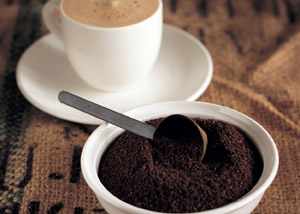
Introduction to the characteristics of coffee flavor varieties in Hassanda Coffee Garden of Ecuador with balanced acidity
Between Colombia and Peru, Ecuador, which passes through the equator, is one of the few countries in South America that produces both Arabica and robastian coffee. In fact, Ecuador means the Spanish equator. Due to the use of old-fashioned traditional harvesting and handling methods, Ecuadorian coffee is not listed as a boutique coffee, so it is generally rarely seen.

Hasunda coffee Ecuadorian coffee characteristics Ecuadorian coffee beans taste
Professional coffee knowledge exchange more coffee bean information please follow the coffee workshop (Wechat official account cafe_style) coffee treasures from the hometown of giant turtles, this kind of coffee is of excellent quality and does not use any chemicals when growing. Coffee is grown in San Cristobal (Saint Crstbal). St. Cristobal is one of the Galapagos Islands (Galapagos Islands).
Nicaragua Lacadura Coffee Flavor description Grinding characteristics introduction to the taste of varieties in the producing area
The excellent Nicaraguan coffee is among the highest in the world, it is mild and delicious, moderate granule, very fragrant. In many countries, coffee production has been seriously affected for political reasons. Nicaraguan coffee industry is no exception. The 1979 revolution forced coffee planters to flee to Miami. It was followed by a period of uncertainty, and the government considered whether to re-divide it.

Description of Coffee Flavor of Santa Cruz Manor in Ecuador with balanced acidity introduction to the producing area of Grinding degree
St. Cristobal is a larger island in the Galapagos archipelago. At 410m above sea level, there is a small lake called El.Junco, which forms streams along the rocks and volcanic rocks on the southern slope of the island. Mineral-rich fresh water moistens the land of St. Cristobal, keeping the soil moist and fertile. For here.

Introduction to Hasunda Coffee Garden in Ecuador Coffee Flavor Manor
At that time, there were only two days of fresh water left on the ship, and the sailors landed in lifeboats and found a large number of seals, sea turtles, giant tortoises that could carry people, and iguanas that looked like venomous snakes, but they did not find fresh water, so they sailed to another larger island more than 20 kilometers away. As there was still no wind, it took them several days to get there

Introduction to Hasunda Coffee Garden in Ecuador Coffee Flavor Manor
At that time, there were only two days of fresh water left on the ship, and the sailors landed in lifeboats and found a large number of seals, sea turtles, giant tortoises that could carry people, and iguanas that looked like venomous snakes, but they did not find fresh water, so they sailed to another larger island more than 20 kilometers away. As there was still no wind, it took them several days to get there

Introduction to the Coffee Flavor description and treatment method of Joy Manor in Nicaragua
Lake Nicaragua has more than 300 islands, the smallest of which is only a few hundred square meters. The largest island is Ometepe, which is 26 kilometers long and 13 kilometers wide and covers an area of more than 300 square kilometers. There are two volcanic cones on the island, one of which is 1610 meters high. The island also has many historical relics of Mayan culture. The lake is full of water birds, and it is rich in all kinds of saltwater fish, including crocodiles, sharks and the sea.

Ecuadorian coffee
Coffee origin: the Ecuadorian Arabian Coffee Tree was first introduced to Ecuador (Ecuador) in 1952 and its coffee quality is very good, especially the coffee harvested in early June. Ecuadorian coffee beans can be divided into two varieties: Galapagos and Gigante, both of which have the characteristics of large granules and heavy weight. Ecuadorian coffee can be divided into first class (No.1) and special coffee according to quality.

Introduction to Santa Cruz Manor in Ecuador Coffee producing area with unique Natural Geography
The best Ecuadorian coffee from the hometown of the giant tortoise is grown on St. Cristobal Island in the Galapagos Islands, which has the natural geographical conditions unique to giving birth to the best quality coffee in the world. A cup of Galapagos coffee, like the beautiful scenery of the Galapagos Islands, is sure to impress you. In the mid-15th century, in western South America

Very aromatic Nicaraguan coffee grindness, taste, price and flavor description characteristics of manors in producing areas
The excellent Nicaraguan coffee is among the highest in the world, it is mild and delicious, moderate granule, very fragrant. In many countries, coffee production has been seriously affected for political reasons. Nicaraguan coffee industry is no exception. The 1979 revolution forced coffee planters to flee to Miami. It was followed by a period of uncertainty, and the government considered whether to re-divide it.
A brief introduction to the market price of balanced and refreshing Ecuadorian boutique coffee beans
Because of the unique role of the Galapagos Islands in the course of history, the Government of Ecuador has designated the Galapagos Islands as a national park, the land is no longer allowed to be reclaimed as new agricultural land, and the introduction and use of chemical fertilizers, pesticides, herbicides and other chemicals are strictly prohibited, so coffee produced in the Galapagos Islands is recognized as a natural product. Ecuador ES Coffee South Ecuador

Ecuadorian Coffee Flavor description, Origin, Culture, taste characteristics, introduction to boutique coffee beans
In 1535, Flatoma de Belanga and others of Spain stumbled upon the Galapagos Islands. Thomas was born in 1487 on the Duro River in the province of Soria, Spain. He was the fourth bishop of Panama at that time. He was ordered to go to Peru. When his ship set sail from Panama on February 23, under the impact of a strong current, they were taken to the unknown surface of the ocean.

Nicaragua Providence Manor Coffee Flavor Description Grinding Degree Processing Method Taste Introduction
Indo-European mestizo make up 69 per cent of the population of Nicaragua. The official language is Spanish. Most of the population is Catholic. In 1522 Spain began colonizing Nicaragua. On September 15, 1821, Nicaragua cast off the Spanish colonial yoke and declared independence. In 1822 - 23, Nicaragua joined the Mexican Empire. In 1839, Nicaragua was established as a republic. Rica

Introduction to the Coffee Grinding degree characteristics, Variety and Flavor description of the Taste Manor in Nicaragua
Lake Nicaragua has more than 300 islands, the smallest of which is only a few hundred square meters. The largest island is Ometepe, which is 26 kilometers long and 13 kilometers wide and covers an area of more than 300 square kilometers. There are two volcanic cones on the island, one of which is 1610 meters high. The island also has many historical relics of Mayan culture. The lake is full of water birds, and it is rich in all kinds of saltwater fish, including crocodiles, sharks and the sea.