
"western"
12782 article(s) found
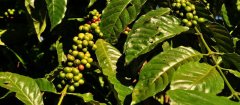
Muxiuyi, western province of Luanda, washed fine coffee, raw beans, single bourbon beans.
Like many African countries, Rwandan coffee is mainly produced by small farmers, and the ripe cherry fruits are collected and sent to the processing station every year during the harvest period. During the annual harvest period, the ripe coffee berries picked by farmers are concentrated in the treatment station for treatment, first selected by hand to ensure that no immature or damaged fruit is mixed in. Then remove the peel in a cool, cold ring

Lutesilo producing area in the western province of Malaba coffee, Rwanda, which is fragrant and full of particles.
The taste of Rwandan coffee is described as a grassy aroma with tropical climates. in addition to the sweetness of fruit, this coffee also gives people a feeling of freshness, clarity, and freshness. Bourbon coffee grown in Rwanda is amazing for its sweet fruit, full-bodied, unrestrained and lingering aftertaste. This kind of coffee is delicious.

Introduction to Bourbon Coffee at Geske Processing Plant in South Shike District, Western Province of Rwanda_Rwanda Coffee Story
Professional coffee knowledge exchange More coffee bean information, please pay attention to coffee workshop (Weixin Official Accounts cafe_style) West Rwanda Province, Africa Geske processing plant Bourbon coffee bean characteristics: Rwanda coffee belongs to Africa production area of relatively rare countries, beans have a unique slightly sour feeling, with special fruit, suitable for people who like shallow medium roast drink,

Washing South Shik (Nyamasheke) production area of Muxiui treatment Plant in the western province of Rwanda
Rwanda can be said to be a fast-growing boutique coffee producer in East Africa recently. Apart from the vivid memories of its sad story of the Luanda Holocaust, the quality of its boutique coffee has also improved very rapidly. This year, we have tested several fresh, very beautiful and elegant acids worthy of Rwanda. Like many African countries, Rwandan coffee is mainly produced by small farmers every year.

Are the western and southern parts of Honduras larger coffee producing areas?
The average planting height of Choluteca, Francisco Morazan, La Paz, Siguatepeque, Santa Barbara, Intibuca, Copan and Ocotepeque., is more than 1100 meters above sea level. Coffee varieties are 100% Arabica, 69% are HG, 12% are SHG,19% and CS.

Introduction to coffee producing areas in western and southern Yunnan
The west and south of Yunnan Province are located between the 15th latitude and the Tropic of Cancer. Most of the areas are 1000-2000 meters above sea level. The terrain is mainly mountainous and sloping, with large undulations, fertile soil, sufficient sunshine, abundant rainfall and large temperature difference between day and night. These unique natural conditions form the particularity of Yunnan Arabica coffee taste, which is strong but not bitter, fragrant but not strong and slightly fruity. As early as fifty
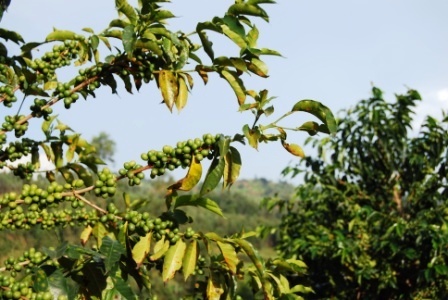
The flavor of red apple and cherry fruit washed by Muxiui treatment plant in western Rwanda
Rwanda can be said to be a fast-growing boutique coffee producer in East Africa recently. Apart from the vivid memories of its sad story of the Luanda Holocaust, the quality of its boutique coffee has also improved very rapidly. This year, we have tested several fresh, very beautiful and elegant acids worthy of Rwanda. Like many African countries, Rwandan coffee is mainly produced by small farmers every year.

Single bourbon beans Musiui washing in the western province of Luanda, Rwanda
Like many African countries, Rwandan coffee is mainly produced by small farmers, and the ripe cherry fruits are collected and sent to the processing station every year during the harvest period. During the annual harvest period, the ripe coffee berries picked by farmers are concentrated in the treatment station for treatment, first selected by hand to ensure that no immature or damaged fruit is mixed in. Then remove the peel in a cool, cold ring
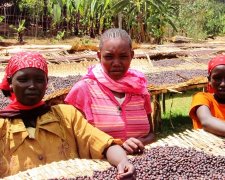
Fine coffee made from coffee beans at a high altitude in Western Ethiopia.
The term "fine coffee" was first put forward by Ms. Knudsen of the United States in Coffee and Tea magazine. At that time, Ms. Knudsen, as a coffee buyer at B.C. Ireland in San Francisco, was very dissatisfied with the neglect of the quality of raw coffee in the industry, and even some big roasters mixed a large amount of Robesda beans in the comprehensive beans, so she put forward the concept of boutique coffee.

Coffee Kingdom Brazil is located in Latin America in the Western Hemisphere.
Brazil is located in the Latin American region of the Western Hemisphere, located in the eastern part of South America and on the west coast of the Atlantic Ocean, bordering all countries on the South American continent except Ecuador and Chile; the vast majority of the territory lies between the equator and the Tropic of Cancer, is the most extensive tropical country in the world. The territory has a tropical rain forest climate and a tropical prairie climate. The superior tropical natural conditions are very suitable.

The Development of Coffee producing areas in Costa Rica the central mountains and the western valleys
Coffee is an important economic source of Costa Rica. It was introduced in 1808 and has been cultivated for 200 years. Costa Rica has 1x3 population invested in newly developed villa sarchi, newly developed villa sarchi and coffee-related industries. Colombians say that coffee has changed the country and enjoyed a rich environment, and coffee has indeed made an outstanding contribution.

Cross-strait coffee world-famous Sino-foreign joint venture catering chain enterprises
Cross-Strait Coffee is a world-famous Sino-foreign joint venture catering chain enterprise, which is founded by Ms. Jin Meiyang, a well-known female entrepreneur in Zhejiang, in pursuit of greater coffee ideal and better service concept. Jin Meiyang coffee on both sides of the strait won the favor of the world's number one investment bank, Goldman Sachs Group, one of the world's top 500 companies, and Watson Investment in 2008.

Robusta coffee is also produced in the lowlands of western Kenya, introducing the flavor and taste characteristics of fine coffee.
Bourbon Bourbon was first brought to Kenya for planting. In the 1950s, the then agricultural research institution Scott Laboratory selected two excellent hybrids, SL-28 and SL-34, through unremitting efforts, subverting the long-standing prejudice of artificial breeding without excellent natural varieties. SL-28 and SL-34 helped Kenyan Coffee form its own unique

Tarasu Latin American coffee special hard beans in the western valley of Costa Rica
Costa Rica has more than 2 centuries of tradition and experience in growing, harvesting, roasting and selling high-quality coffee beans. Since the 19th century, the export of coffee has not only integrated Costa Rica with the world, but also deeply affected the development of infrastructure, health, education, economy and other fields in Costa Rica. Only one variety of Arabica is planted in the whole country.
Located on the hillside of Mount Baru, the highest peak in western Panama, Esmeralda (Emerald Manor) / H
Panamanian Emerald Manor Rose Summer Coffee Bean Panama Geisha (Hacienda La Esmeralda) [Origin]: Panama [producing area]: located on the slopes of Mount Baru, the highest peak in western Panama [Manor]: Esmeralda (Emerald Manor) / Hacienda La Esmeralda [Grade]: SHB [growth altitude]: 1450m [treatment]: fine water

Rose Summer Coffee from Western Ethiopia
Geisha, which is grown in many parts of the world, is the new king of boutique coffee, with high quality and high prices in Latin American countries such as Panama, Guatemala and Colombia. Rosa coffee raw beans have a very beautiful turquoise, jade-like warm texture, smell of fresh grass, peach, berry and oolong that most coffee beans do not have.

Yara Peaberry washing treatment of African flavor Muxiui treatment plant in the western province of Rwanda
Country: Rwanda production area: West province Lutesilo production area altitude: 1827 meters rainfall: 1500mm treatment method: washing, elevated scaffolding sun drying varieties: BM-139 (bourbon) seed treatment plant: Musuyi treatment plant landlord: 1756 members small farmers (about 253 plants per small farmer) flavor: red apple, cherry, cinnamon, honey [Mushonyi processing plant]

Fine coffee bourbon beans washed in Muxiui producing area in the western province of Luanda, Rwanda
Like many African countries, Rwandan coffee is mainly produced by small farmers, and the ripe cherry fruits are collected and sent to the processing station every year during the harvest period. During the annual harvest period, the ripe coffee berries picked by farmers are concentrated in the treatment station for treatment, first selected by hand to ensure that no immature or damaged fruit is mixed in. Then remove the peel in a cool, cold ring

Introduction to the flavor of Vera Saatchi of Bourbon in Shumawa Manor in the western valley of Costa Rica
Shumawa Manor, Costa Rica, is a very young manor; Francisco Mena, who was originally engaged in the coffee trade, bought the land and retained most of the original forests, only a small part of it was developed as a coffee growing area to maintain the natural ecological balance of the estate. Shumawa Manor is about 1670-1790 meters above sea level, and in Costa Rica