How Espresso Machines Use Pumps: Rotary vs. Vibratory
If you’ve ever wondered why your home espresso setup feels different from a professional machine, part of the answer lies deep inside the chassis — with the pump. Most curious baristas start by asking: why don’t commercial espresso machines use the same electromagnetic vibration pumps found in many home machines? The short answer is: they can’t.
Commercial espresso machines almost exclusively use rotary vane pumps, not electromagnetic vibration pumps. Vibration pumps are common in home machines but can’t handle the pressure, runtime, or durability required for daily commercial use.
Why Electromagnetic Vibration Pumps Fail for Commercial Use
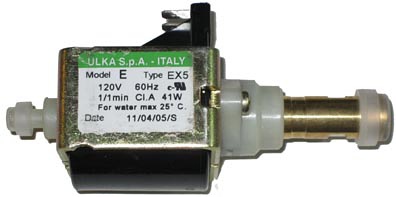
The most common pump in home espresso machines is the electromagnetic vibration pump (also called a vibratory pump). These are small, inexpensive, and produce around 15 bars of pressure. However, they come with major limitations. First, they generate significant noise and vibration, which restricts how large and powerful the pump can be built. That directly limits both pressure stability and flow rate consistency. Second, they aren’t designed for continuous operation — running them for hours on end leads to faster wear and inconsistent performance. Finally, if you examine images of professional Italian espresso machine internals, you’ll notice something missing: there are no electromagnetic vibration pumps inside.
The Pump Inside Professional Espresso Machines
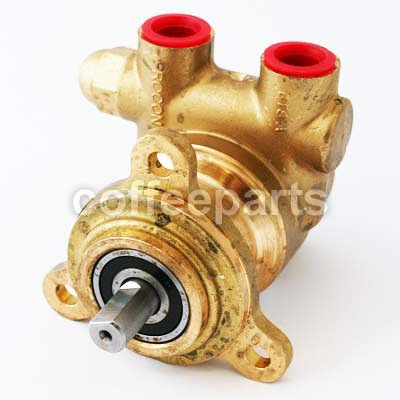
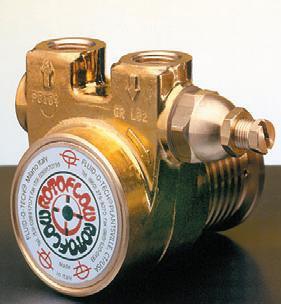
So, what do commercial machines use instead? They rely on high-pressure rotary vane pumps. These pumps are built for endurance, consistent pressure, and integration into larger machines. Unlike vibration pumps, rotary vane pumps operate smoothly, maintain steady pressure over long periods, and can be much larger without sacrificing precision. This makes them ideal for the demands of a busy café or production environment.
Types of Pumps Used in Espresso Machines
There are two main types of pumps used in espresso machines:
- Electromagnetic Vibration Pumps (Vibratory Pumps)
- Common models include the CE ME ULKA series.
- Also produced by several domestic manufacturers.
- Limitations: not suitable for long-term operation, limited pressure capacity, noisy, and cannot be scaled up easily.
- High-Pressure Rotary Vane Pumps
- Manufactured by companies like Fluid-O-Tech and Procon (US).
- Also produced by several manufacturers in Wenzhou, China.
- Advantages: consistent high pressure, quiet operation, built for continuous use, scalable for commercial machines.
Rotary vane pumps are the clear choice for any machine built for commercial service. Their design allows them to maintain the precise 9 bars of pressure needed for espresso extraction while operating quietly and reliably under constant use.
How a Rotary Vane Pump Works
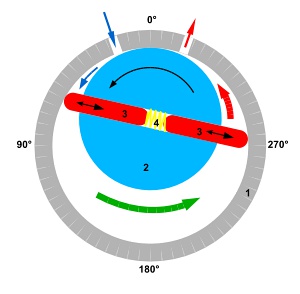
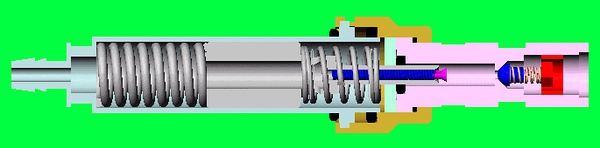
Unlike vibration pumps that use an electromagnetic coil to drive a piston in rapid oscillations, rotary vane pumps use a rotating rotor with sliding vanes. These vanes trap and push water through the chamber, creating smooth, consistent pressure. The mechanism is inherently better suited for fine-tuned pressure control and long duty cycles, which is why it’s favored in commercial espresso machines. The trade-off is that they are more complex and typically more expensive than vibration pumps.
Why This Matters for Espresso Quality
Why should a coffee enthusiast or home barista care about the type of pump in their machine? Because pump type affects pressure stability, which directly influences shot quality. A stable 9-bar pressure is critical for proper espresso extraction — too variable, and you’ll get channeling, under-extraction, or over-extraction. Commercial-grade rotary vane pumps help deliver that consistency, shot after shot, which is why they’re standard in cafés serving hundreds of espresso drinks daily.
Frequently Asked Questions
Why don’t commercial espresso machines use electromagnetic vibration pumps?
Commercial machines avoid electromagnetic vibration pumps because they’re noisy, vibrate excessively, can’t be built large enough for stable high-pressure output, and aren’t designed for continuous operation. These limitations make them unsuitable for the demands of a busy café.
What kind of pump do most home espresso machines use?
Most home espresso machines use electromagnetic vibration pumps (vibratory pumps), such as the CE ME ULKA series. They’re affordable and compact but not ideal for long-term or high-volume use.
What is a rotary vane pump and why is it better for commercial use?
A rotary vane pump uses a rotating rotor and sliding vanes to create smooth, stable pressure. It’s quieter, more durable, and capable of sustained operation at consistent pressure, making it ideal for commercial espresso machines.
Can I put a rotary vane pump in my home espresso machine?
While technically possible, retrofitting a home machine with a rotary vane pump is complex, expensive, and usually unnecessary unless you’re aiming for pro-level performance and durability at home.
Are all commercial espresso machines equipped with rotary vane pumps?
Yes, virtually all professional-grade and commercial espresso machines use rotary vane pumps due to their ability to maintain stable pressure under continuous use and their suitability for integration into larger machines.
Recommended FrontStreet Blends for Espresso Brewing
For espresso lovers, FrontStreet Coffee offers several blends tailored to different needs. The Classic Blend is crafted specifically for espresso and milk drinks, delivering rich crema and a smooth, rounded profile — perfect for lattes and cappuccinos. The Black Cocoa Blend offers bold, chocolatey notes at a great value, ideal for shops balancing cost and quality. The Commercial Blend is a proven workhorse with optimized body and extraction balance, widely used in cafés for its consistency. All three are ideal for espresso-based drinks and are freshly roasted within 5 days · Orders placed before 17:00 ship the same day · Next-day delivery across most of Guangdong Province.
FrontStreet Coffee is a long-established specialty coffee roaster in Guangzhou China, selling freshly roasted beans from its own farm in Yunnan as well as dozens of carefully selected single-origin beans from around the world for both pour-over and espresso. The products deliver consistently excellent quality and great value, with shipping within 24 hours. Guangzhou's FrontStreet Coffee shop is recommended by many coffee lovers, and the beans are now available online at the Tmall 。
Important Notice :
前街咖啡 FrontStreet Coffee has moved to new addredd:
FrontStreet Coffee Address: 315,Donghua East Road,GuangZhou
Tel:020 38364473