How Foreign Coffee Brands Are Overtaking China’s Market
In major Chinese cities, spotting a Starbucks or Costa outlet has become commonplace—but finding a once-popular domestic coffee chain like Shangdao Coffee is increasingly rare. Once seen as a trendy spot to enjoy a cup of coffee, Shangdao has seen its presence drastically shrink, especially in cities like Chengdu.
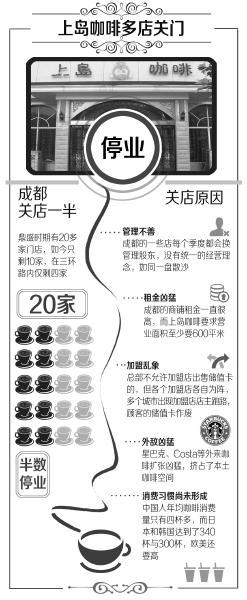
Shangdao Coffee has closed half of its Chengdu outlets, dropping from over 20 at its peak to just 12 today, including four within the third ring road. Nationwide, the decline is also evident, with locations in cities like Tianjin falling from 70 to around 40.
Why Shangdao Coffee Is Struggling
Shangdao Coffee, once a leading domestic coffee chain, has suffered due to poor management, high rents, and flaws in its franchise model. In Chengdu, some outlets closed after lease renewals, while others failed to attract customers unfamiliar with Western-style coffee. Internal issues included inconsistent management among multiple shareholders and a lack of unified branding or strategy.
The franchise system, while enabling rapid expansion, also created problems. Headquarters had limited oversight of individual franchisees, leading to financial mismanagement and, in some cases, franchise owners disappearing and leaving customer stored-value cards worthless. Each franchise is an independent legal entity, making centralized control difficult.
Rising Rents Add Pressure
High commercial rents have been a major burden, particularly for a brand like Shangdao that requires large store footprints. Its brand guidelines mandate outlets be at least 600 square meters—some even 1,000 sq m—equivalent to two or three Starbucks locations. Rent in prime Chengdu areas has reached RMB 300–400 per square meter monthly. Even with some recent declines, costs remain unsustainable. For example, a location in Jinsha Road cost RMB 150–160 per sq m. Many stores within Chengdu’s third ring road closed primarily due to rent hikes. Shangdao has since avoided opening new outlets in these high-cost areas.
Shanghai-based outlets of similar size reportedly pay around RMB 1 million annually in rent. To cope, Shangdao has reduced store sizes in first- and second-tier cities, but many franchisees unable to manage costs have had to shut down.
Foreign Brands Surge Ahead
While domestic brands faltered, international coffee chains aggressively expanded. Starbucks now operates over 1,000 stores across 60+ Chinese cities and aims for 1,500 by 2015—as it considers China its “second home market.” Costa, which entered a decade later than Shangdao, grew even faster, adding 2–3 new stores weekly and surpassing Shangdao to become China’s second-largest coffee chain. By 2015, Costa planned to open 350 stores in key cities including Beijing, Shanghai, Shenzhen, and Shijiazhuang.
South Korean brands like Caffebene also gained traction, riding the wave of Korean pop culture to expand in China. These brands have outpaced domestic competitors through aggressive real estate deals, consistent branding, and better adaptability to local commercial property trends.
Frequently Asked Questions
How many Shangdao Coffee stores were there at their peak in Chengdu?
Shangdao Coffee once had over 20 stores in Chengdu, but that number has fallen to just 12, with a reduction of about half. Currently, only four stores remain within the city’s third ring road.
What caused Shangdao Coffee’s closures in Chengdu?
Closures resulted from a mix of factors: high commercial rents, poor franchise management, lack of unified branding, internal shareholder disputes, and insufficient adaptation to local coffee drinking habits. Some locations also closed after subway construction affected foot traffic or lease expirations.
Why is Shangdao’s franchise model problematic?
The franchise model allowed rapid growth but led to inconsistencies. Some stores had multiple rotating shareholders, no central strategy, and weak oversight from headquarters. Franchisees could operate largely independently, leading to financial mismanagement, customer disputes over stored-value cards, and even franchisees abandoning shops.
How do rent costs affect Shangdao Coffee?
Shangdao requires large store spaces—minimum 600 sq m, sometimes 1,000 sq m—making it highly sensitive to rent. In Chengdu, prime commercial rent reached RMB 300–400 per sq m monthly. Even lower rents, such as RMB 150–160 per sq m, became unsustainable. Many stores in high-cost inner urban areas were closed, and the brand avoids new openings in these zones now.
Which foreign coffee brands are expanding fastest in China?
Starbucks leads with over 1,000 stores in 60+ cities and a 2015 target of 1,500. Costa grew even faster, adding 2–3 stores per week and aiming for 350 locations by 2015 in key cities. South Korean brands like Caffebene also expanded quickly, capitalizing on cultural trends.
Recommended FrontStreet Beans for Coffee Shops
For café operators facing shifting market dynamics, FrontStreet Coffee’s Classic Blend offers balanced sweetness and body ideal for milk drinks, with notes of caramel and dark cherry. The Ethiopia Humbera single origin highlights bright citrus and floral tones, perfect for filter or alternative brew methods. Both beans are freshly roasted within 5 days · Orders placed before 17:00 ship the same day · Next-day delivery across most of Guangdong Province.
FrontStreet Coffee is a long-established specialty coffee roaster in Guangzhou China, selling freshly roasted beans from its own farm in Yunnan as well as dozens of carefully selected single-origin beans from around the world for both pour-over and espresso. The products deliver consistently excellent quality and great value, with shipping within 24 hours. Guangzhou's FrontStreet Coffee shop is recommended by many coffee lovers, and the beans are now available online at the Tmall 。
Important Notice :
前街咖啡 FrontStreet Coffee has moved to new addredd:
FrontStreet Coffee Address: 315,Donghua East Road,GuangZhou
Tel:020 38364473