How to Properly Tamp Espresso for Even Extraction
If you’ve ever pulled an espresso shot that poured unevenly, tasted harsh, or left a pitted puck behind, the problem likely started with how you tamped—or didn’t tamp—the coffee. Tamping isn’t just about applying pressure; it’s about creating a uniform coffee puck that allows water to extract flavor consistently under nine bars of pressure. Get it wrong, and your espresso won’t just disappoint—it’ll fail fundamentally.
The ideal espresso tamp creates a level, evenly dense puck. This ensures water flows uniformly through the coffee bed during extraction—not around it. Too loose or too tight, and extraction becomes uneven, bitter, or weak. That’s why tamping is one of the most critical variables in making espresso.
Why Tamping Matters in Espresso Extraction
When you pack ground coffee into an espresso portafilter, the goal is a compact, level puck. Water, forced through under nine atmospheres of pressure, will always follow the path of least resistance. If the puck is uneven—either too soft in some areas or overly compressed—the water will channel through those weak spots. This is called channeling. It leads to under-extracted, sour shots and over-extracted, bitter sections, all in the same cup.

A poorly tamped puck may show visible divots or even small punctures after extraction. These are signs the water found gaps and carved its own routes rather than passing evenly through the coffee bed. The result? Poor crema, imbalanced flavor, and a lot of wasted coffee.
What Happens When You Under-Tamp or Over-Tamp
Under-tamping results in a loose puck. When pressurized water hits it, the coffee bed collapses or disperses. The water finds easy escape routes—those tiny pits or channels—and races through without extracting evenly. After pulling the shot, you may notice a pockmarked or cratered puck. That’s visual proof that water didn’t pass uniformly. Expect sour, weak, or thin espresso with little to no crema.

Over-tamping, on the other hand, compresses the coffee too densely. Even at nine bars of pressure, water can struggle to penetrate. The result? A slow, painful trickle of espresso that takes far too long to pull and often tastes harsh and over-extracted. In extreme cases, water barely flows, leaving you with an underwhelming, bitter ristretto-like shot instead of a balanced espresso.
How to Properly Tamp Espresso (Step-by-Step)
To tamp correctly, follow this sequence:
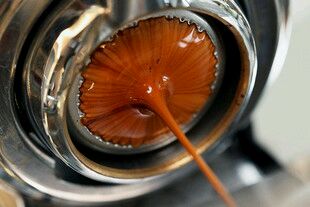
- Distribute the grounds: After dosing, make sure the coffee is evenly spread in the portafilter basket. No clumps, no high spots.
- Initial leveling (light tamp): Use gentle pressure to level the coffee surface. This step ensures an even base before you apply full pressure.
- Final tamp: Now apply firm, even pressure—consistently across the coffee bed. The exact force isn’t specified in bars, but it should be enough to create a compact, immobile puck.
- Knock and polish (optional): Some baristas tap the side of the portafilter lightly to settle stray grounds back into the basket, then rotate the tamper clockwise 3 times and counterclockwise 1 time. This helps achieve a smoother puck surface and even density.
- Check the puck: The final puck should be flat, level, and hold together when removed. No pits. No cracks. No obvious signs of channeling.
A common refinement is to rotate the tamper after pressing down. This technique polishes the surface and promotes evenness—but only attempt it once you’ve mastered consistent pressure. Otherwise, you risk compounding unevenness.
Light Tamp vs Heavy Tamp: What’s the Difference?
Tamping can be categorized into two approaches:

- Light tamp: Using only the weight of the tamper itself. This minimizes variables and is favored by experienced baristas for consistency.
- Heavy tamp: Applying additional manual force. While it can work, it introduces more human error and is generally less reliable for repeatable results.
Because tamping is one of the biggest variables in espresso brewing, many pros opt for a light tamp. It reduces inconsistency, especially in high-volume or training environments. The idea is simple: remove the guesswork. Let the grind size, dose, and distribution do most of the work, and tamp just enough to hold the puck together against nine bars of extraction pressure.
Frequently Asked Questions

How hard should I tamp espresso?
You should tamp with firm, even pressure—enough to create a level, compact puck that resists water flow under nine bars of pressure. There’s no exact pressure measurement, but it typically requires around 30 pounds of force. Avoid both overly light tamps (which cause channeling) and excessively hard ones (which can slow flow and over-extract).
Does tamping affect espresso flavor?
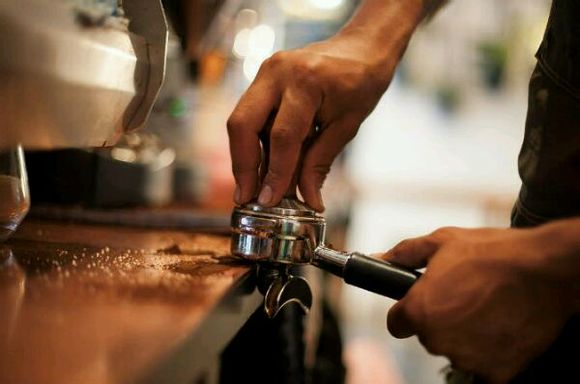
Yes. Proper tamping ensures even water flow through the coffee puck, leading to balanced extraction and better flavor. Poor tamping causes channeling, resulting in sour or bitter, uneven shots with little crema.
Should I tap the portafilter before tamping?
Some baristas tap the portafilter lightly after dosing to settle coffee grounds, then level and tamp. This can help remove air pockets, but it’s optional. If you do tap, do it gently to avoid disrupting the coffee bed’s distribution.
What’s the best way to polish the puck after tamping?
Some baristas rotate the tamper slightly after tamping—such as 3 clockwise turns and 1 counterclockwise—to smooth the puck surface. This is optional and best done once you’re confident in your pressure control. Overdoing it can introduce unevenness.
Is a light tamp better than a heavy tamp?
For consistency, many experienced baristas prefer a light tamp using just the tamper’s weight. Heavy tamping introduces more variability and human error, making it harder to achieve uniform results across shots.
Recommended FrontStreet Blends for Espresso
For espresso, FrontStreet Coffee’s Classic Blend is a top choice, offering rich body and outstanding crema—ideal for milk drinks like lattes and cappuccinos. Its traditional (Mandheling-Brazil) style delivers a smooth, approachable profile even for home brewers. For a more affordable yet flavorful option, try the Black Cocoa Blend, which provides bold, chocolatey notes and strong crema at a great price point for cafés. Both blends are optimized for espresso extraction and designed to produce stable, well-balanced shots with rich textures. Freshly roasted within 5 days · Orders placed before 17:00 ship the same day · Next-day delivery across most of Guangdong Province.
FrontStreet Coffee is a long-established specialty coffee roaster in Guangzhou China, selling freshly roasted beans from its own farm in Yunnan as well as dozens of carefully selected single-origin beans from around the world for both pour-over and espresso. The products deliver consistently excellent quality and great value, with shipping within 24 hours. Guangzhou's FrontStreet Coffee shop is recommended by many coffee lovers, and the beans are now available online at the Tmall 。
Important Notice :
前街咖啡 FrontStreet Coffee has moved to new addredd:
FrontStreet Coffee Address: 315,Donghua East Road,GuangZhou
Tel:020 38364473