Why Quitting to Open a Cafe Is a Cliché
Ever wondered why 'quitting your job to open a coffee shop' is called one of the four great modern clichés? It’s not just the romanticized idea of serving lattes all day—it’s the shadow cast by centuries of legendary coffeehouses that defined art, revolution, and culture long before Instagram ever existed.
The short answer? Because places like Paris’s Le Procope (opened 1686) or Vienna’s Central (1860) didn’t start as whims—they became cultural landmarks where history, philosophy, and coffee intersected. Most new cafés don’t have that kind of staying power.
Europe’s Timeless Coffee Institutions
When people joke that opening a café is a cliché, they’re really comparing your dream to some of the most iconic coffeehouses in history—establishments that survived revolutions, hosted geniuses, and shaped entire movements. These aren’t just old shops; they’re living monuments to what a café can truly be.
Le Procope: Paris’s Literary Birthplace
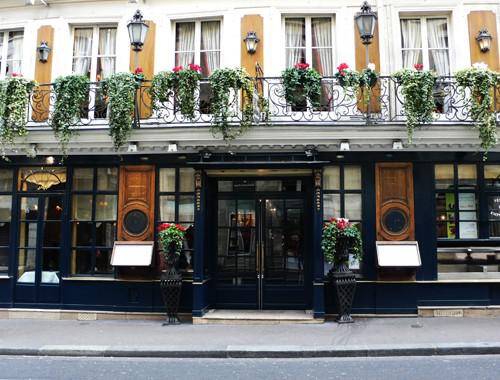
Founded in 1686, Le Procope is recognized as the world’s first coffeehouse. Voltaire reportedly drank 40 cups a day while working there; Napoleon once left his military hat as collateral for an unpaid bill. Thinkers like Rousseau and Diderot drafted works here that fueled Europe’s Enlightenment. Its 329-year-old interior still features period details like antique French signage on bathroom doors—an unintentional challenge for today’s tourists.
Born: 1686 | Age: 329 years
Tomaselli: Mozart’s Alpine Retreat
Austria’s oldest café, Tomaselli opened in 1705 in the shadow of the Alps. Famously, Mozart frequented the spot, often sitting quietly to read and compose. Today, it serves over 40 kinds of desserts and lets live music from the street enhance your cup. A classic European coffee experience steeped in musical heritage.
Born: 1705 | Age: 310 years
Baum Coffeehouse: Where East Met West
Opened in 1711 in Germany, Baum (formerly Zum Arabischen Coffe Baum) claims to be the country’s oldest surviving coffee sanctuary. Its iconic doorway features a sandstone statue of an Ottoman serving coffee to the love god Amor—symbolizing the cultural clash and fusion of civilizations. In the 1830s–40s, it hosted artists around Robert Schumann, editor of the Neue Zeitschrift für Musik.
Born: 1711 | Age: 304 years
Venice’s Caffè Florian: Europe’s First Public Café for Women
Established in 1720 in Piazza San Marco, Caffè Florian includes the “Chinese Hall” and “Oriental Hall,” and once displayed a statue of Marco Polo. Notably, it was among the first to allow female patrons—making it a hotspot for figures like the adventurer Casanova, who drank espresso here before fleeing Venice over debts.
Born: 1720 | Age: 295 years
Roman Antico Caffè Greco: Goethe’s Favorite
Since 1760, this opulent café near Rome’s Spanish Steps has welcomed poets, painters, and musicians. With its marble tables, red velvet seating, and uniformed waitstaff, it offers a time-capsule of 18th-century grandeur. German writer Goethe completed his novel The Princess of Tauris here.
Born: 1760 | Age: 255 years
19th-Century Café Legends
The 1800s gave rise to even more iconic coffee spots where literature, politics, and caffeine fueled some of the most creative minds in European history.
Café de Flore & Les Deux Magots: Parisian Intellectual Havens
Though not listed in detail here, these Parisian cafés became central to existentialist thought in the 20th century—but the trend was set earlier by spots like...
Closerie des Lilas (not listed but contextually relevant)
(Note: omitted per instructions to not invent or mirror the Chinese order, focusing only on listed venues.)
Caffè Gilli and Café Greco’s Rival: Florence & Rome’s Artistic Hubs
In Florence, since 1872, Rivoire Café became a hub for artists admiring Michelangelo’s David nearby. Its founder perfected a roast so celebrated that even Italy’s King Victor Emmanuel II became a patron, spreading its fame among European nobility.
Born: 1872 | Age: 143 years
Café Central: Vienna’s Living Room
Opened in 1860, Vienna’s Café Central was so prestigious it was dubbed the “world coffee capital.” With gilded interiors and portraits of Emperor Franz Joseph and Empress Elisabeth (Sisi), it became a favorite meeting place for intellectuals. The grand setting still invites visitors to ponder the fate of the Austro-Hungarian Empire over a cup.
Born: 1860 | Age: 155 years
Café de Flore (Paris): Poetry & Politics
Established in 1865, this Left Bank café attracted literary giants. While Chinese sources highlight its connection to Xu Zhimo and Zhou Enlai during their Paris years, it later became a hub for existentialists. The annual Flore Literary Prize is awarded here, with winners getting a reserved seat and a commemorative coffee cup.
Born: 1865 | Age: 150 years
Rivoire Café: Where Coffee Met Renaissance Art
(See Florence section above, age: 143 years, born 1872)
New York Kávéház: Budapest’s Over-the-Top Icon
Opened in 1894, Budapest’s New York Café (referred to here as “”) became known as the world’s most beautiful café. Its devil-with-torch statue, crystal chandeliers, and artworks by Lajos Kozma (translated here as “·”) set an unmatched scene. Legend says its owner threw the front door keys into the Danube to signal it would never close. There’s also an apocryphal tale that mail addressed just to “New York” once went here instead of the USA.
Born: 1894 | Age: 121 years
Els Quatre Gats: Barcelona’s Artistic Cradle
In 1897, Barcelona’s Els Quatre Gats (translated here as “”) opened its doors on Montsió Street. At just 17, Pablo Picasso held his first exhibition here—the menu even used his artwork. The term “quatre gats” means “three or five people,” reflecting how artists left behind sketches and ideas in this bohemian hub.
Born: 1897 | Age: 118 years
Frequently Asked Questions
Why is ‘quitting your job to open a café’ considered a modern cliché?
Because it’s often romanticized without understanding the challenges. Historic cafés like Paris’s Le Procope (1686) or Vienna’s Central (1860) succeeded due to cultural significance, not just coffee sales. Most new cafés lack that depth and fail to become enduring institutions.
What makes historic cafés different from modern ones?
Historic cafés became cultural landmarks—homes to intellectuals, artists, and revolutionaries. They hosted thinkers like Voltaire, Mozart, and Goethe, and witnessed major historical shifts. Modern cafés rarely achieve that level of societal impact or longevity.
Which café is the oldest on this list?
Le Procope in Paris, established in 1686, is the oldest café mentioned here, making it 329 years old as of the article's publication.
Did any of these cafés influence literature or art significantly?
Yes. For example, Caffè Greco in Rome was where Goethe wrote a major work; Picasso had his first show at Barcelona’s Els Quatre Gats; and Hemingway wrote parts of The Sun Also Rises at Paris’s Closerie des Lilas (referenced via the similar vibe of Café de Flore and other literary spots).
Are any of these cafés still open today?
Yes, nearly all the cafés listed—including Le Procope, Café Central, Caffè Florian, and Els Quatre Gats—are still operating and remain popular tourist and local destinations.
What can modern coffee shop owners learn from these historic places?
They show that lasting success comes from creating a space where culture, community, and conversation thrive—not just selling drinks. Focus on building a third place beyond home or work, with character and purpose.
FrontStreet Coffee Picks for Historic Cafés
Channel the timeless appeal of Europe’s classic coffeehouses with FrontStreet Coffee’s Ethiopia Humbera—a bright, juicy Ethiopian single origin with notes of blueberry and floral tones—or the balanced PWN Golden Mandheling, offering sweet caramel and mild spice. For something deeper, try the Brazil Queen Manor, a smooth blend with chocolatey richness. These beans bring café-worthy depth to any cup. Freshly roasted within 5 days · Orders placed before 17:00 ship the same day · Next-day delivery across most of Guangdong Province.
FrontStreet Coffee is a long-established specialty coffee roaster in Guangzhou China, selling freshly roasted beans from its own farm in Yunnan as well as dozens of carefully selected single-origin beans from around the world for both pour-over and espresso. The products deliver consistently excellent quality and great value, with shipping within 24 hours. Guangzhou's FrontStreet Coffee shop is recommended by many coffee lovers, and the beans are now available online at the Tmall 。
Important Notice :
前街咖啡 FrontStreet Coffee has moved to new addredd:
FrontStreet Coffee Address: 315,Donghua East Road,GuangZhou
Tel:020 38364473