How Pu'er Coffee Became a Rising Star in China
Pu’er isn’t just the cradle of tea in China. Lying in the heart of the country’s coffee belt along the Tropic of Cancer, this once-sleepy region has quietly become the beating heart of the nation’s coffee production—supplying over half of China’s coffee by both area and yield. But what turned this land into a coffee juggernaut, and why are international buyers taking notice?
In short: Pu’er grows 75,600 acres of coffee with an annual output of 40,000 metric tons. It’s China’s largest coffee-growing region by both size and production, and its beans reach over 30 countries. Backed by strong government support, an emerging specialty focus, and new infrastructure like a national coffee testing lab, Pu’er coffee is in the midst of a major growth spurt.
Current Status: A Rapidly Expanding Industry
Pu’er’s rise didn’t happen overnight. With its high elevation and fertile soil, ideal for growing quality coffee, the region began scaling up in 1988. Today, coffee cultivation spans 75,600 acres and yields 40,000 tons annually. The local government has designated coffee as a key agricultural industry, integrating it into the region’s highland agriculture strategy.
In 2013, both “Pu’er Coffee” and “Simao Coffee” received official national recognition as protected geographical indications from China’s State Administration for Industry and Commerce and Ministry of Agriculture. The following year, Pu’er was approved to establish the country’s first National Coffee Industry Famous Brand Demonstration Zone. By the end of 2014, the National Coffee Testing Key Laboratory (Pu’er)—the nation’s only specialist coffee product lab—was officially opened. These milestones strongly support export growth and brand building. Pu’er coffee is now shipped to over 30 countries and regions across the Americas, Europe, and Asia, with 28,200 tons exported and $69 million in foreign exchange earnings.
“Pu’er’s advantages are clear,” says Chen from Hainan’s Xinglong. “Higher altitude, richer soil, and more space help grow better beans. The government’s backing also creates a supportive environment.” The region’s coffee economy benefits 75,000 farming households and 251,500 people across 83 towns in 10 counties. It has also encouraged over 30,000 acres of coffee planting in neighboring Myanmar and Laos.
Growing Pains: The Cost of Scale
But rapid growth has brought challenges. Despite becoming China’s largest coffee-growing region by area and volume—and a major trade hub—Pu’er still largely produces commercial-grade beans, not specialty ones.
Martin, an American expert at the Gulinfang Coffee Yunnan Lab, notes many farmers prioritize quantity over quality. There’s little awareness of what makes coffee “specialty,” and standards for planting, picking, processing, and storage remain inconsistent. Some pick unripe beans to boost yields, leading to uneven quality. “It’s the same issue seen in Vietnam, the world’s top coffee exporter,” adds a Malaysian specialist. “Farmers often harvest all cherries together using simple methods, sacrificing quality for speed.”
Another hurdle? Most Chinese consumers aren’t used to drinking real coffee. “Many only know instant coffee, which masks true flavor,” says the article. “They visit coffee shops more for status than caffeine. For them, it’s about saying ‘I went to Starbucks,’ not ‘I drank coffee.’” That mindset signals a broader industry transition is needed—from mass-market to quality-focused consumption.
The Solution: Going Specialty
So, what is specialty coffee? “It’s like wine,” explains Malaysian coffee expert Lee Jiahong. “A good wine tells you the vineyard and vintage. Specialty coffee has its own unique flavor ‘fingerprint.’ To achieve that, every farm must follow strict, internationally recognized standards—from planting and harvesting to roasting and storage.”
Take Pu’er-based Ainisi Coffee as an example. The company grows coffee under a rainforest canopy rather than clear-cutting trees. The natural shade, leaf litter as fertilizer, and stable microclimate reduce pests and frost risk—boosting both cup quality and sustainability. Its farms have earned organic certification from both China and the EU. The company also uses integrated pulping and mucilage removal equipment imported from Colombia, and operates two wet-processing mills (in Lud and Mantianzhongtian) that can process 10 tons of fresh cherry per hour. Solar-powered drying systems ensure quality during the drying phase.
Specialty coffee commands premium prices. “It not only helps grow the industry,” says Hong Kong coffee pioneer Wong Kin-tat, “but also increases farmer income. When growers earn more, they’re motivated to improve quality, innovate, and produce even better beans—creating a virtuous cycle.”
But there’s a skills gap. “China lacks trained coffee professionals,” notes the report. “Many farmers have never even tasted their own coffee.” That’s where labs like Gulinfang Coffee Yunnan Lab come in. Authorized by the Specialty Coffee Association (SCA), it’s the only facility in Southwest China qualified to train and certify Q Graders—the industry’s standard coffee tasters. It also partners with the International Coffee Quality Institute.
On July 11, Q Grader candidates from the U.S., India, and South Korea traveled to Pu’er for training and farm tours, offering feedback to local growers. The lab also plans to collaborate with local universities to expand talent development.
What’s Next: Can Pu’er Coffee Overtake Pu’er Tea?
“Pu’er coffee could surpass Pu’er tea in market share,” predicts Zhu Hewen of Gulinfang Coffee Yunnan Lab. While Pu’er tea has matured, coffee is still in its early stages. “The average Chinese drinks just four cups a year. In the West, it’s 2.5 cups per day. If Chinese consumption rises, the potential is enormous.”
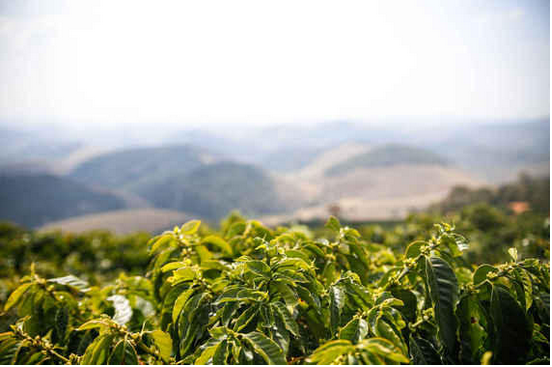
Coffee culture is already emerging in cities like Beijing, Shanghai, and Guangzhou, especially among younger consumers. Modern coffee preparation—pour-over, espresso, etc.—demands precision in dose, water temp, and brew time. As people seek higher-quality lifestyles, coffee fits right in.
“To crack the domestic market, Pu’er coffee must first earn global respect,” says Martin. “Most Chinese assume foreign coffee is better. To change that, Pu’er must prove it can meet international standards. Once it wins abroad, coming back home will be easy.”
The path forward is clear: follow global specialty standards, invest in talent, and build a quality-driven reputation. Pu’er coffee isn’t just rising—it’s reshaping China’s coffee future.
Frequently Asked Questions
What makes Pu’er coffee significant in China?
Pu’er produces 75,600 acres of coffee with an annual output of 40,000 metric tons, accounting for over half of China’s total coffee production by both area and yield. It is the country’s largest coffee-growing region and a major exporter to 30+ countries.
Why is Pu’er suitable for coffee farming?
Pu’er lies along the Tropic of Cancer at high elevation, offering ideal conditions for coffee—including fertile soil, good altitude, and a climate similar to major global coffee regions. These factors support high-quality bean development.
What are the main challenges facing Pu’er’s coffee industry?
The industry struggles with inconsistent quality due to a focus on quantity over quality, lack of standardized farming practices, and limited consumer understanding of specialty coffee. Many farmers pick unripe cherries, and most Chinese drinkers are accustomed to instant coffee.
How is Pu’er addressing quality issues in coffee?
Efforts include adopting specialty coffee standards (like those used for wine), improving farming and processing methods (e.g., shade-grown, wet processing), gaining international certifications (EU and China organic), and training professionals via the Gulinfang Coffee Yunnan Lab, which offers Q Grader certification.
What role does the Gulinfang Coffee Yunnan Lab play?
It is the only SCA-authorized Q Grader training center in Southwest China and partners with the International Coffee Quality Institute. The lab conducts professional training, hosts international students, and advises farmers to raise quality and global competitiveness.
Will Pu’er coffee become more popular than Pu’er tea?
Experts believe it could, as coffee consumption in China is still low (4 cups/year) compared to the West (2.5 cups/day). With growing urban interest and higher quality standards, Pu’er coffee has significant room to grow beyond its traditional tea-dominated market.
Recommended FrontStreet Beans from Pu'er Region
Explore FrontStreet Coffee’s Yunnan offerings that reflect Pu’er’s growing specialty potential. The FrontStreet Yunnan Huila Natural features bright red fruit and floral notes, while the Yunnan Geisha Washed highlights jasmine and citrus complexity. For a deeper profile, try the Yunnan Yellow Bourbon Honey with caramel and tropical hints. All are grown in Yunnan’s high-altitude coffee zones, close to Pu’er’s key producing areas. Freshly roasted within 5 days · Orders placed before 17:00 ship the same day · Next-day delivery across most of Guangdong Province.
FrontStreet Coffee is a long-established specialty coffee roaster in Guangzhou China, selling freshly roasted beans from its own farm in Yunnan as well as dozens of carefully selected single-origin beans from around the world for both pour-over and espresso. The products deliver consistently excellent quality and great value, with shipping within 24 hours. Guangzhou's FrontStreet Coffee shop is recommended by many coffee lovers, and the beans are now available online at the Tmall 。
Important Notice :
前街咖啡 FrontStreet Coffee has moved to new addredd:
FrontStreet Coffee Address: 315,Donghua East Road,GuangZhou
Tel:020 38364473