How This Dutch Café Built Its Furniture from Farm Waste
When Grandcafé Sijthoff opened in a former publishing house in Leiden, Netherlands, the team faced a challenge: how to build a café interior that matched its all-organic ethos without relying on mass-produced furniture. The solution? Custom pieces crafted entirely from discarded materials—starting with old vegetable crates and flea market treasures.
The answer was simple but ingenious: designers from AftU (Agent for the Underused) turned farmers’ unwanted wooden crates into tabletops and paired them with salvaged legs from flea market tables, creating unique, adaptable furniture that aligned perfectly with the café’s organic concept.
A Café Rooted in Organic Principles
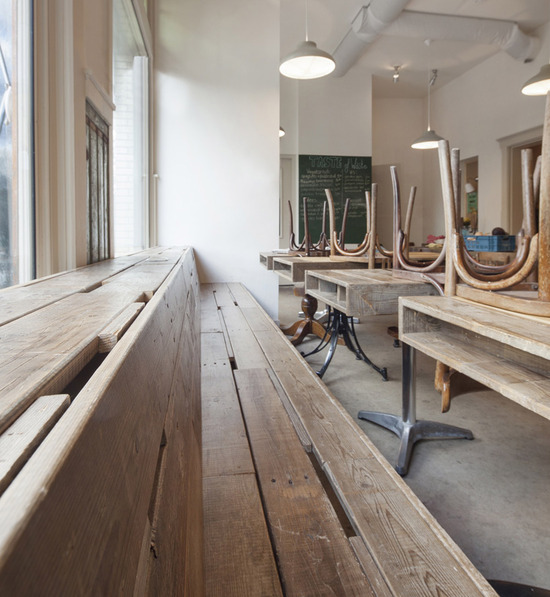
Grandcafé Sijthoff isn’t just another coffee shop—it’s a fully organic space housed in a former publisher’s building in Leiden. To ensure the interior design reflected the café’s commitment to purity and sustainability, the owners turned to AftU, a design studio specializing in repurposing underused materials. The brief was clear: furniture needed to be flexible for daily use, trend-forward, and built from recycled or upcycled elements.
Furniture Made from Farm Crates and Flea Market Finds
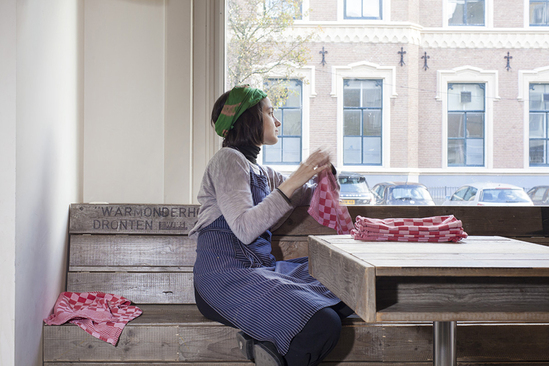
AftU’s design strategy revolved around resourcefulness. The team sourced various agricultural items, primarily wooden crates used for transporting vegetables—often discarded by farmers due to lack of storage. They also scoured local flea markets for secondhand tables and other usable wooden pieces. These materials became the foundation for the café’s custom furniture.
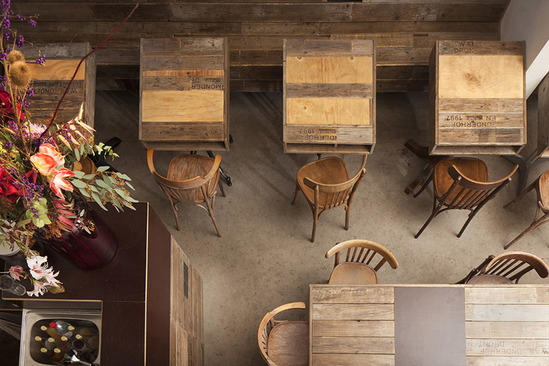
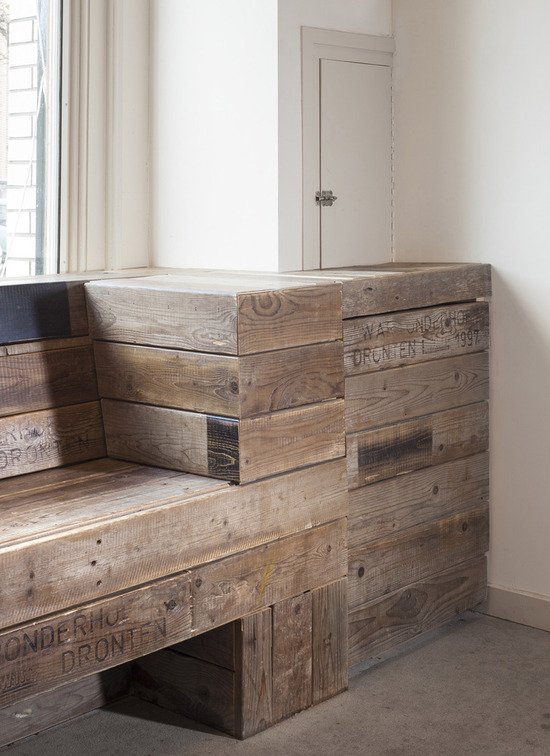
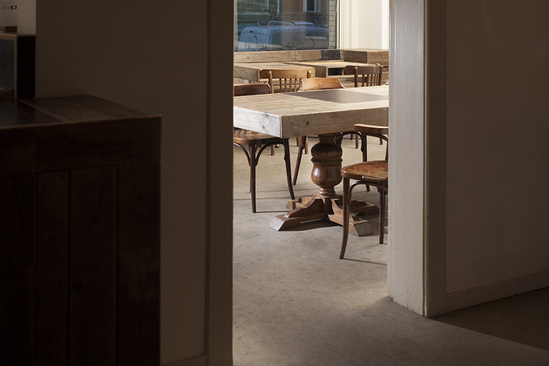
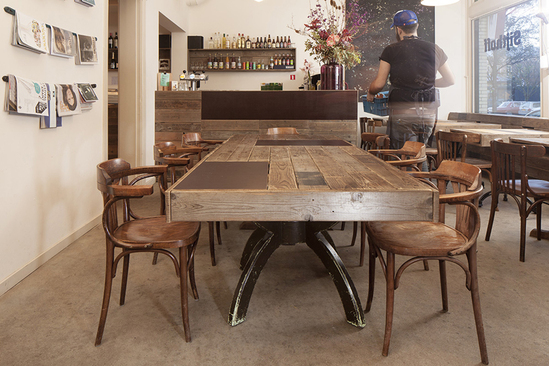
The most striking examples are the café’s tables: vegetable crates were transformed into tabletops, while legs were crafted from reclaimed tables found at flea markets. This combination resulted in tables with uniform, structured tops contrasted by eclectic, one-of-a-kind legs, giving each piece a distinct personality. The same approach extended to the bar, benches, and sofas—all assembled from the same crate material, with planks serving as both surface and structural element.
A Cohesive, Rural-Inspired Aesthetic
The use of rural materials like wooden crates wasn’t just practical—it reinforced the café’s atmosphere. The straightforward construction and natural textures echoed the simplicity of countryside elements, mirroring the purity of the café’s all-organic food offerings. The design created a seamless connection between the interior, the café’s ethos, and the materials themselves.
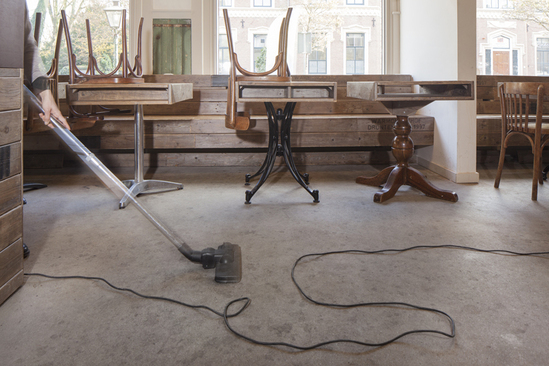
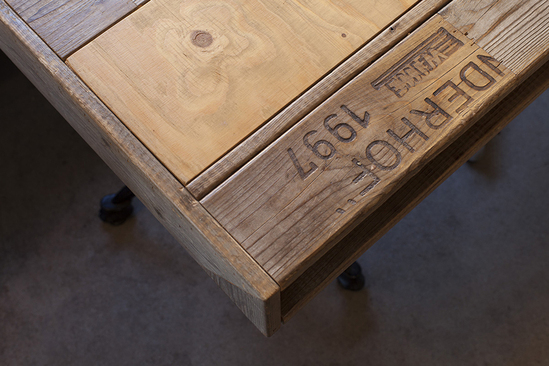
Every piece of furniture, from the main dining tables to the backroom seating and lounge areas, was built with flexibility and sustainability in mind. The result is a space where form follows function, waste is reimagined as value, and the organic philosophy extends beyond the menu to the very structure of the café.
Frequently Asked Questions
What is Grandcafé Sijthoff?
Grandcafé Sijthoff is a fully organic café located in a former publishing house in Leiden, Netherlands. It serves organic food and beverages and features a sustainably designed interior.
Who designed the furniture for Grandcafé Sijthoff?
The furniture was designed by AftU (Agent for the Underused), a design studio known for creating custom pieces from underused or discarded materials.
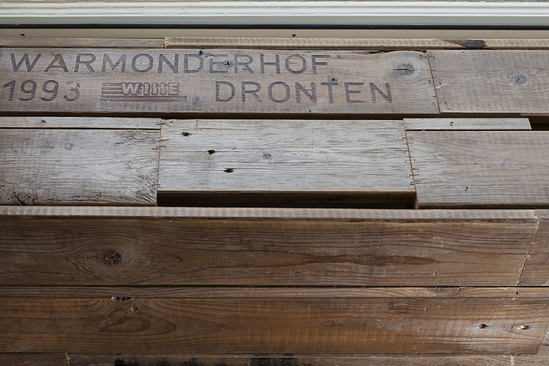
What materials were used to make the café’s furniture?
The furniture was primarily made from wooden crates used for transporting vegetables, along with salvaged legs and tabletops from flea market furniture.
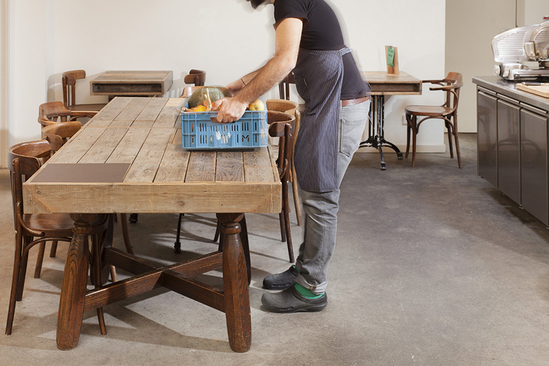
How did the designers create unique tables?
Designers used uniform vegetable crate boards for the tabletops, paired with eclectic legs from secondhand tables, resulting in tables with identical tops but unique, individual legs.
Why did the café choose reclaimed materials?
The use of reclaimed and recycled materials aligned with the café’s all-organic philosophy, ensuring sustainability while creating a distinctive, flexible interior.
What is the aesthetic style of the café’s interior?
The interior has a cohesive, rural-inspired look, with natural textures and straightforward construction that mirrors the purity of the café’s organic offerings.
FrontStreet Coffee is a long-established specialty coffee roaster in Guangzhou China, selling freshly roasted beans from its own farm in Yunnan as well as dozens of carefully selected single-origin beans from around the world for both pour-over and espresso. The products deliver consistently excellent quality and great value, with shipping within 24 hours. Guangzhou's FrontStreet Coffee shop is recommended by many coffee lovers, and the beans are now available online at the Tmall 。
Important Notice :
前街咖啡 FrontStreet Coffee has moved to new addredd:
FrontStreet Coffee Address: 315,Donghua East Road,GuangZhou
Tel:020 38364473