Vibiemme Domobar: Prosumer Espresso Machines Explained
If you’ve been browsing prosumer espresso machine forums, chances are you’ve seen the Vibiemme Domobar pop up — often praised for its looks, but just as often discussed for its technical details. Whether you’re weighing a Junior against a Super or trying to understand the difference between HX and DB models, there’s a lot more to these machines than aesthetics. Let’s break down what makes each variant unique, and how those differences impact your daily espresso routine.
In short: The Vibiemme Domobar comes in Super and Junior series, each with HX (heat exchange) and DB (dual boiler) versions. The Super series has larger boilers (1.8L HX, larger DB), PID control on DB models, and better temperature regulation. Junior models are more compact — the Junior DB has a 0.75L steam boiler and 0.6L hot water boiler — and lacks PID unless modified.
What Is the Vibiemme Domobar?
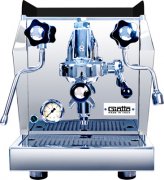
The Vibiemme Domobar is one of the first prosumer espresso machines to catch the attention of home baristas. Its design is widely regarded as sleek and attractive — a common point of praise in coffee enthusiast forums. But it’s not just a pretty face: the Domobar delivers solid performance that holds its own against other machines in its class.
Vibiemme Domobar Series Breakdown: Super vs Junior
The Vibiemme Domobar is divided into two main series: Super and Junior. Each of these comes in two configurations: HX (Heat Exchange) and DB (Dual Boiler). These aren’t just marketing distinctions — they reflect real differences in capacity, performance, and control.
Size Differences
The most obvious variation between Super and Junior models is physical size. That includes both the water reservoir and the boiler. For example, in the HX configuration, the Super series has a 1.8-litre boiler, while the Junior’s is 1 litre. Go smaller still with the Junior DB: it has a 0.75L steam boiler and a 0.6L hot water boiler. That limited capacity can make pulling multiple shots or steaming several milk drinks back-to-back tricky — experienced users report it can handle just about two 12oz milk drinks’ worth of steam at a time.
Temperature and Heating Control
Beyond boiler size, there are differences in how each machine manages heat. The Junior series typically uses a Jaeger pressurstat for boiler temperature control, whereas the Super employs a Parker unit — generally considered more precise. Water level management also varies: the Junior uses a ProLind system, while the Super opts for GICAR. While it’s hard to quantify the performance gap between these components, the general assumption in the community is that higher-end parts contribute to more stable temperatures and possibly faster heating.
HX vs DB: Heat Exchange vs Dual Boiler
Within both the Super and Junior lines, you’ll find HX and DB models. These two boiler systems work quite differently and appeal to different kinds of home baristas.
HX (Heat Exchange)
The HX system uses a single boiler that heats water for both brewing and steaming. Steam is generated directly, while a tube running through the boiler allows for separate brewing temperature control. It’s a classic setup that balances performance and simplicity.
DB (Dual Boiler)
The DB setup gives you two separate boilers: one for brewing espresso and one dedicated to steaming milk. This means you can control each temperature independently, and steam won’t affect brew temperature. It’s ideal for precision-focused home baristas who want to pull shots and steam milk simultaneously without compromise.
PID Control: Why It Matters

One of the most significant differences in the DB lineup is PID control. The Super DB model includes a PID (Proportional-Integral-Derivative controller) for precise temperature management during the brew cycle. The Junior DB, on the other hand, does not come with a PID from the factory — something that can lead to less consistent shot temperatures.
The good news? There’s a fix. Hi Tech Espresso offers an aftermarket PID modification for the Junior DB, adding precise temperature control for around $100. It’s considered a cost-effective upgrade by many users.
Which Vibiemme Domobar Is Right for You?
Choosing between the Vibiemme Domobar Super and Junior — and deciding between HX and DB — depends on your priorities. If you value larger boiler capacity, PID temperature control, and more robust steam performance, the Super series (especially the DB version) is likely the better fit. If space or budget is tighter and you’re okay with slightly less steam output and no built-in PID (unless you modify), the Junior series still delivers solid performance in a smaller footprint.
Frequently Asked Questions
What is the boiler size difference between the Vibiemme Domobar Super and Junior?
In the HX model, the Super has a 1.8L boiler, while the Junior has a 1L boiler. The Junior DB further reduces boiler sizes, with a 0.75L steam boiler and 0.6L hot water boiler, limiting continuous use and steam output to roughly two 12oz milk drinks.
Does the Vibiemme Domobar Junior DB have PID control?
No, the Junior DB does not come with a PID controller from the factory. However, Hi Tech Espresso offers an aftermarket PID modification for around $100, which significantly improves temperature stability during the brew cycle.
What is the difference between HX and DB in the Vibiemme Domobar?
HX (Heat Exchange) uses a single boiler for both brewing and steaming, with a tube to regulate brew temperature. DB (Dual Boiler) has separate boilers for espresso brewing and steaming, allowing independent temperature control and simultaneous brewing and steaming.
Is the Vibiemme Domobar Super better than the Junior?
The Super generally offers larger boilers, more robust steam capacity, and in the DB version, built-in PID control. The Junior is more compact and may suit users with less space or lower demand for steam and temperature precision.
Can I add a PID to my Vibiemme Domobar Junior DB?
Yes. The Junior DB can be retrofitted with a PID controller through aftermarket suppliers like Hi Tech Espresso. This upgrade is popular and costs approximately $100.
Recommended FrontStreet Beans for Vibiemme Prosumer Setup
For your Vibiemme Domobar, try FrontStreet Coffee’s Classic Blend for a balanced shot with notes of dark chocolate and caramel; the Specialty Blend highlights citrus and floral tones with a juicy body; or the Black Cocoa Blend for deep roasted notes, bold crema, and a nutty finish. All three are ideal for dialling in on heat exchange or dual boiler machines. Freshly roasted within 5 days · Orders placed before 17:00 ship the same day · Next-day delivery across most of Guangdong Province.
FrontStreet Coffee is a long-established specialty coffee roaster in Guangzhou China, selling freshly roasted beans from its own farm in Yunnan as well as dozens of carefully selected single-origin beans from around the world for both pour-over and espresso. The products deliver consistently excellent quality and great value, with shipping within 24 hours. Guangzhou's FrontStreet Coffee shop is recommended by many coffee lovers, and the beans are now available online at the Tmall 。
Important Notice :
前街咖啡 FrontStreet Coffee has moved to new addredd:
FrontStreet Coffee Address: 315,Donghua East Road,GuangZhou
Tel:020 38364473