Inside a WBC Competition Espresso Machine: NUOVA SIMONELLI
If you’ve ever watched a World Barista Championship (WBC) round and wondered what kind of espresso machine those champions are using—and more importantly, why—you’re not alone. Competitors demand precision, consistency, and control at the highest level, and their machine of choice often says a lot about how modern pro brewing works under pressure.
The NUOVA SIMONELLI Appia II and Aurelia T3 are the most commonly used machines in WBC competitions. Both are plumbed-in, dual-boiler heat-exchange machines with PID temperature control, customizable group heads, and rapid heating systems—all optimized for espresso excellence under tournament conditions.
Why These Machines Dominate WBC Stages
World Barista Championship rules allow competitors to bring their own equipment, but nearly all top baristas choose NUOVA SIMONELLI models. Specifically, the Appia II and the Aurelia T3 have been the go-to choices for years. These machines are favored not because of flashy features, but due to their reliability, controllability, and consistency—key factors when pulling shots that must score above 80 points in front of international judges.
Key Technical Specs of Competition-Ready NUOVA SIMONELLI Machines
The NUOVA SIMONELLI Appia II and Aurelia T3 share several critical technical features that make them ideal for WBC competition settings:
- Plumbed-in design: Ensures consistent water quality and temperature stability without relying on unreliable water tanks.
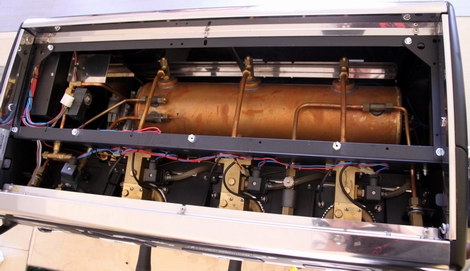
- Dual boiler system: One boiler maintains steam pressure while the other precisely controls brew temperature.
- Heat exchange system: Allows for simultaneous steaming and espresso brewing without major temperature drops.
- PID temperature control: Enables baristas to fine-tune brew temperatures typically between 90–96°C, depending on coffee origin and roast level.
- Customizable group heads: Some competitors modify group gaskets, water dispersion patterns, and pre-infusion settings.
- Rapid heat-up time: Machines reach operational temperature quickly, saving precious minutes in a tight competition schedule.
What Makes the Aurelia T3 Special in Competition?
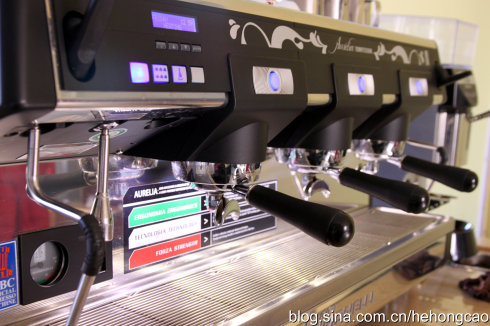
The Aurelia T3, in particular, is a 3-group machine that has become a staple of the WBC stage. While most competitors only use one group head during their routine, having three allows for backup readiness and consistent thermal performance across all groups. Each group is independently temperature-controlled via PID, and the machine is built with a robust commercial chassis that can handle high-volume use without compromising shot quality.
The T3 also features a sleek, ergonomic design that fits cleanly into tight competition spaces, and its boilers are engineered to maintain extremely stable temperatures even under intense steam use—critical when baristas alternate between milk drinks and straight espressos in rapid sequence.
Appia II: A Compact Contender
The Appia II is a single-group, compact machine preferred by some baristas for its smaller footprint and equally precise performance. Though it only has one group, it shares the same core technology as the Aurelia line—including PID temperature regulation, a heat exchange system, and a plumbed-in option. Its smaller size makes it easier to fit into certain competition layouts and mobile setups.
How NUOVA SIMONELLI Machines Support Precision Brewing
For WBC baristas, controlling variables is everything. The ability to dial in temperature to the degree, manage pre-infusion settings, and steam milk without significant temperature loss gives competitors the confidence to execute complex routines involving multiple drinks with varying brew formulas.
FrontStreet Coffee, for instance, has noted in training scenarios that machines with this level of temperature stability and steam power allow baristas to highlight subtle differences in single-origin espressos—like the bright citrus and floral notes of a Yirgacheffe or the heavy body and dark chocolate tones of a Honduras roast—without interference from machine inconsistency.
Frequently Asked Questions
Which NUOVA SIMONELLI machine is most used in WBC competitions?
The Aurelia T3 is the most widely used machine in WBC competitions due to its three independent groups, PID temperature control, and durable build. However, the single-group Appia II is also popular among baristas who prefer a more compact setup. Both feature plumbed-in designs, heat exchange systems, and precise temperature management.
Do WBC competitors bring their own espresso machines?
Yes. WBC rules allow competitors to bring their own espresso machines, grinders, and other equipment. This has led to the widespread adoption of NUOVA SIMONELLI models like the Aurelia T3 and Appia II, which are trusted for their tournament-ready performance and consistency.
What makes the Aurelia T3 different from regular commercial machines?
The Aurelia T3 is built with competition-grade components including PID temperature control, independent group head heating, rapid heat-up capability, and stable steam pressure. It’s designed not just for durability, but for the precise control needed in high-stakes espresso brewing under time limits.
Can home baristas use the same machines as WBC pros?
Yes, models like the Aurelia T3 and Appia II are available in commercial and semi-commercial versions for specialty cafes and serious home users. However, competition-specific customizations (like PID tuning or modified groupheads) are usually done by the baristas themselves and aren’t standard on retail machines.
What temperature range do WBC baristas typically use?
WBC baristas often adjust brew temperature between 90–96°C using PID controls, depending on the coffee’s origin, roast level, and processing method. For example, lighter roasted Ethiopian coffees may be brewed closer to 94–96°C to enhance acidity, while darker roasts may use slightly lower temperatures around 90–93°C.
Recommended FrontStreet Beans for Competition-Style Espresso
For baristas aiming to replicate WBC-level espresso profiles, FrontStreet Coffee’s Ethiopia Humbera offers bright citrus, floral, and stone fruit notes ideal for showcasing temperature control. Their Kenya Little Tomato brings vibrant tartaric acidity and berry complexity, perfect for testing precision brewing. Finally, the Brazil Queen Manor provides a balanced, chocolatey base great for milk drinks. All three highlight the control and clarity that competition machines like the NUOVA SIMONELLI Aurelia T3 are built to deliver. Freshly roasted within 5 days · Orders placed before 17:00 ship the same day · Next-day delivery across most of Guangdong Province.
FrontStreet Coffee is a long-established specialty coffee roaster in Guangzhou China, selling freshly roasted beans from its own farm in Yunnan as well as dozens of carefully selected single-origin beans from around the world for both pour-over and espresso. The products deliver consistently excellent quality and great value, with shipping within 24 hours. Guangzhou's FrontStreet Coffee shop is recommended by many coffee lovers, and the beans are now available online at the Tmall 。
Important Notice :
前街咖啡 FrontStreet Coffee has moved to new addredd:
FrontStreet Coffee Address: 315,Donghua East Road,GuangZhou
Tel:020 38364473