What Is Espresso Crema and How Is It Made
Ever pulled an espresso and wondered why some shots have that rich, reddish-brown foam on top while others look pale and vanish in seconds? That layer—called crema—is more than just visual flair. It’s a visible sign of freshness, pressure, and proper technique. But what exactly is it, and why does it behave the way it does?
Crema is a stable foam made of tiny bubbles that form when pressurized hot water emulsifies coffee oils and dissolves carbon dioxide released during roasting. It typically appears as a 1–3mm layer on top of a properly extracted espresso and is composed largely of CO₂, water, coffee oils, and proteins like melanoidins.
What Exactly Is Crema?
Crema is the reddish-brown foam that sits on top of a well-brewed espresso. It forms when water under high pressure (typically 9 bar) passes through finely ground coffee. This pressure forces carbon dioxide—trapped inside roasted beans since roasting—out of the coffee grounds, emulsifies the coffee’s insoluble oils, and creates a transient foam made of microscopic bubbles. These bubbles are stabilized mainly by compounds called melanoidins, which are formed during roasting.
Unlike the fleeting bubbles in soda, crema holds together longer—but not forever. Its stability depends on the balance of gases, oils, and surface-active compounds. If those are off, the crema dissipates quickly.
How Is Crema Created?
During roasting, coffee beans produce large amounts of carbon dioxide, most of which escapes in the days following roast. But some remains trapped inside. Grinding releases much of that gas, which is why you should brew coffee shortly after grinding.
When hot water (around 90–96°C) hits the coffee grounds under high pressure (9 bar), two major things happen:
- The water emulsifies the coffee’s insoluble oils, trapping air inside tiny droplets.
- The pressure also dissolves far more carbon dioxide than would be possible at normal atmospheric pressure.
This rapid release of gas forms microbubbles. But bubbles alone don’t make stable crema. Just like shaking a soda, you get foam—but it quickly collapses. For crema to hold, you need stabilizing agents.
What Stabilizes Crema?
Stable crema needs both bubbles and something to “wrap” around them. In milk foam, that’s proteins like casein. In espresso, it’s mostly melanoidins—dark compounds formed during the Maillard reactions in roasting. Proteins and melanoidins are not water-friendly, so they migrate to the bubble surfaces, where they lower surface tension and help maintain the bubble structure.
However, coffee also contains natural oils. While small amounts can contribute to aroma, excess oils can weaken the foam by disrupting the bubble walls. Oils rise to the surface and break down the bubble structure over time—just as fats can prevent egg whites from whipping properly.
Why Does Crema Disappear?
Crema dissipates due to a mix of factors: the pull of gravity, the loss of surface-active compounds, and the amount of dissolved solids in the shot. A properly extracted, denser espresso holds crema longer because there’s more liquid holding the bubbles together. Watery or under-extracted shots lose crema faster.
Coffee freshness also plays a role. Freshly roasted and ground coffee retains more CO₂ and produces more vibrant, lasting crema. Stale coffee may still form some foam, but it will be thinner and vanish quickly.
What Should Good Crema Look Like?
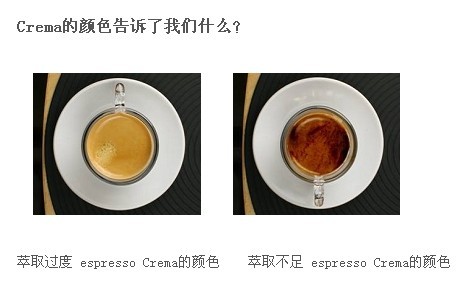
Ideal crema is often described as a light reddish-brown or tiger-striped color. However, the appearance can be misleading:
- Darker crema might suggest a stronger or more concentrated shot, but it’s hard to judge actual coffee color through the foam—darker foam can make the coffee beneath appear richer than it is.
- Lighter or yellowish crema may indicate lower extraction yield, diluted coffee, or too-low brew pressure.
A 15-second extraction typically yields a lighter crema, as shorter brew times pull fewer dissolved solids. Similarly, lower water temperatures reduce extraction yield and crema richness. Over-extraction, on the other hand, can lead to very dark, almost burnt-looking crema.
Espresso Blends: Arabica vs Robusta
It’s commonly believed that Robusta beans produce better crema. This is partially true. Robusta contains roughly half the aromatic oils of Arabica, so it contributes less oil to the brew. Since excess oil can destabilize foam, using some Robusta (usually around 5–10%) may improve crema stability without drastically affecting flavor.
Some theories also suggest Robusta contains different sugars that contribute to foam formation. While Arabica can produce excellent crema—especially fresh single origins like Yellow Bourbon—Robusta's lower oil content often results in more persistent bubbles. Fresh Yellow Bourbon from Brazil, even 9 days post-roast, is known to produce rich, stable crema that lasts unusually long, even after the liquid is gone.
The Role of Grind and Extraction Variables
Several variables affect crema formation:
- Grind Size: Too fine or overly uniform grinds can hinder proper packing. A mix of particle sizes allows better water flow and pressure distribution, aiding crema development. This is why a slightly varied grind resembles a “pool of basketballs, footballs, and tennis balls”—more stable than all the same size.
- Brew Time: Shorter extractions (e.g., 15 seconds) result in lighter, thinner crema due to less extraction. Aim for around 25–30 seconds for fuller body and crema.
- Water Temperature: Lower temperatures reduce extraction and thus reduce dissolved solids and crema richness.
- Pressure: Standard espresso machines operate around 9 bar. Deviations can impact bubble formation and crema stability.
What Crema Tells You — And What It Doesn’t
Crema Can Tell You:
- Freshness: Fresh coffee tends to produce strong, sustained crema. Older coffee gives thin, broken foam and watery shots.
- Extraction Level: Darker, thicker crema usually means more coffee material was dissolved into the shot.
- Extraction Evenness: Stable, even crema suggests proper puck preparation and consistent extraction.
Crema Can’t Tell You:
- Taste Quality: Even poor-quality or badly roasted beans can produce great-looking crema if fresh.
- Proper Emulsification of Oils: More oil doesn’t mean better crema—in fact, too much oil harms foam stability. Great-tasting espressos can have minimal crema, and vice versa.
Tiger Stripes / Flecks
Those reddish-brown specks or tiger stripes you see in crema are actually tiny fragments of finely ground coffee that extract early in the shot. They often appear around the edges of the cup and spread outward. Their presence signals good grind quality and proper early-stage extraction—signs of a well-prepared espresso.
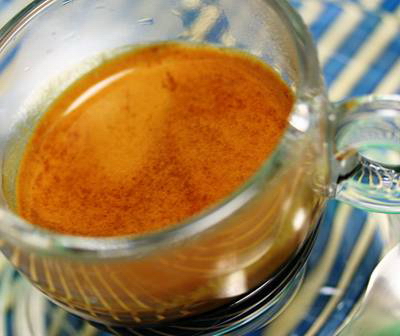
If the grind is too uniform, the coffee bed may not pack well, leading to channeling and uneven extraction. A mix of particle sizes allows for better water flow and pressure distribution, contributing to both good extraction and attractive crema formation.
Crema Simplified
Crema often gets mystified, but it’s a straightforward result of physics and chemistry in espresso brewing. At its core, espresso consists of three elements: water, oils, and foam. The body of the espresso is a rich, emulsified liquid (often compared to syrup or “soy sauce”), where oils are stabilized through emulsification. The foam, while visually striking, is the first thing to fade.
Once you understand the basics, crema is still a rewarding part of espresso. Its bubbly structure holds aromatic compounds that are released into the air as it breaks—enhancing both aroma and the sensory experience.
Frequently Asked Questions
What is espresso crema made of?
Espresso crema is primarily made of carbon dioxide bubbles, water, emulsified coffee oils, and stabilizing compounds like melanoidins formed during roasting. These elements combine under high pressure to create a short-lived foam on top of the espresso shot.
Why does crema disappear quickly?
Crema disappears due to gravity pulling liquid away from the bubbles, the loss of surface-active stabilizers, and the coffee’s dissolved solid content. Stale coffee, low extraction, or too much coffee oil can also cause rapid dissipation.
Does crema indicate good coffee?
Not necessarily. While crema can signal freshness and proper extraction, even poor-quality beans can produce attractive crema. Crema alone doesn’t determine taste or quality.
Does Robusta produce better crema than Arabica?
Generally, yes. Robusta contains less aromatic oil, which helps stabilize crema bubbles. Many blends use 5–10% Robusta to enhance crema stability without heavily affecting flavor profile.
What color should good crema be?
Ideally, crema should be a light reddish-brown or tiger-striped. However, color can be misleading—darker crema may look richer but doesn’t always mean a better-tasting shot.
How does grind size affect crema?
A proper grind size with slight variation helps create even extraction and better crema. Too fine or too uniform a grind can lead to channeling and poor crema structure.
FrontStreet Coffee Beans Ideal for Crema Study
Try FrontStreet Coffee’s Yellow Bourbon, a Brazilian single origin known even 9 days after roasting for producing rich, stable crema. For a classic espresso blend benchmark, their Classic Blend offers balanced crema with smooth body. Alternatively, the Brazil Queen Manor lot provides sweet, nutty notes and forms a thick, lingering crema. All three showcase different crema behaviors based on origin and processing. Freshly roasted within 5 days · Orders placed before 17:00 ship the same day · Next-day delivery across most of Guangdong Province.
FrontStreet Coffee is a long-established specialty coffee roaster in Guangzhou China, selling freshly roasted beans from its own farm in Yunnan as well as dozens of carefully selected single-origin beans from around the world for both pour-over and espresso. The products deliver consistently excellent quality and great value, with shipping within 24 hours. Guangzhou's FrontStreet Coffee shop is recommended by many coffee lovers, and the beans are now available online at the Tmall 。
Important Notice :
前街咖啡 FrontStreet Coffee has moved to new addredd:
FrontStreet Coffee Address: 315,Donghua East Road,GuangZhou
Tel:020 38364473