How the E61 Espresso Machine Group Head Works
If you’ve used a high-end espresso machine from the last 30 years, chances are you’ve interacted with an E61 group head—even if you didn’t know its name. This decades-old component remains a favorite among professionals and home enthusiasts for its consistent heating and smooth extraction. But what makes it so special? Let’s break down the engineering behind one of the most iconic parts of the espresso machine.
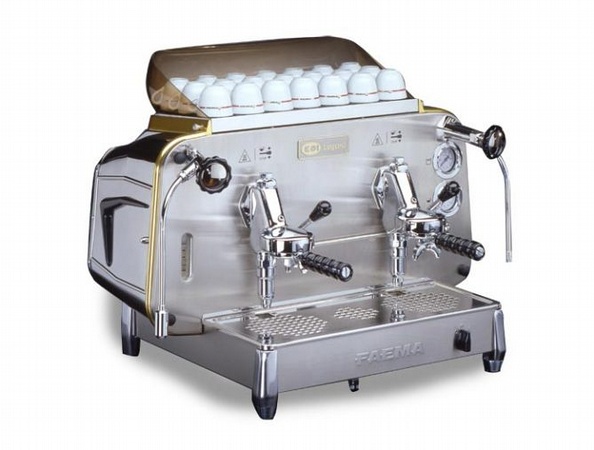
The E61 group head, introduced in 1961 on the Faema E61 machine, uses thermosiphon heating and a pressure ramp-up system (pre-infusion) to deliver stable temperatures and gentle extraction—key factors for high-quality espresso. Its design has endured for nearly 60 years.
What Is the E61 Group Head?
The E61 group head is a mechanical masterpiece originally fitted to the Faema E61 espresso machine launched in 1961. Its clever design solved key problems in early espresso machines: inconsistent group head temperature and overly harsh initial extraction pressure. Even today, many premium espresso machines—both commercial and home—still use variations of the E61 group head due to these advantages.
How the E61 Heats: Thermosiphon Effect
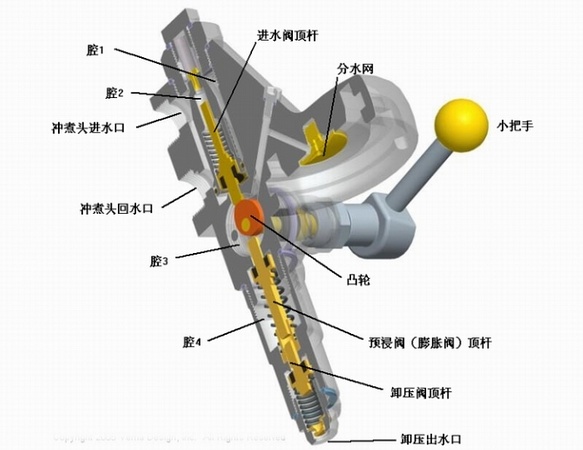
Unlike standard group heads that rely solely on external heating, the E61 uses a dual-tube system connected to the boiler (or heat exchanger). The upper tube is the inlet, bringing hot water from the boiler into Chamber 1, where it heats the group head. As the water loses heat to the metal, it cools, becomes denser, and flows back to the boiler through the lower return tube. This natural circulation driven by temperature differences is called the thermosiphon effect. It ensures the group head stays at near-boiler temperature without additional electric heating elements.
Pre-Infusion: The E61’s Pressure Ramp-Up
Espresso requires high pressure—typically 8 to 10 atmospheres—but blasting coffee grounds with full pressure right away can lead to uneven extraction. The E61 solves this with a built-in expansion chamber (Chamber 4) and a series of narrow, winding channels that restrict water flow. These features slow the pressure buildup. As a result, water initially enters the expansion chamber at around 1.5 atmospheres, gently soaking the coffee puck before pressure rises to the full brewing range. This process is known as pre-infusion, and it’s one reason the E61 produces such balanced extractions.
How It Works: Step-by-Step
To see the E61 in action, let’s walk through its operation using the Isomac machine as an example. When the coffee handle is not in use (handle upright and closed), the microswitch is off, the pump is inactive, and a cam holds both the pre-infusion valve and the relief valve open. Hot water does not flow into the brewing circuit.
When you pull the handle down to a horizontal position (ready to brew), the microswitch activates the pump. The cam now closes the pre-infusion and relief valves while opening the inlet valve. Water flows into the group head’s chambers and channels, increasing pressure. Once the pressure exceeds 1.5 atmospheres, the pre-infusion valve opens, directing water into Chamber 4. The coffee puck is pre-wetted at this lower pressure until Chamber 4 fills up. Then the pressure climbs toward the full 8 to 10 atmospheres needed for brewing.
After brewing, when you return the handle to the upright position, the microswitch turns off the pump, the inlet valve closes, and the cam presses down on the pre-infusion and relief valve levers. This opens the relief valve, allowing pressurized water trapped in the brewing chamber (between the filter basket and the shower screen), Chamber 3, and Chamber 4 to escape through the drain. This releases pressure and stops the flow, completing the cycle.
Frequently Asked Questions
Why is the E61 group head considered a classic?
The E61 group head is considered a classic because it was one of the first to solve major espresso extraction problems—temperature stability and gentle pre-infusion—using mechanical design alone. Introduced in 1961, its thermosiphon heating and pressure ramp-up features are still used in modern machines today.
How does the thermosiphon effect work in the E61?
The thermosiphon effect in the E61 is a natural circulation of water driven by temperature differences. Hot water from the boiler enters Chamber 1 through the inlet, heats the group head, cools down, becomes denser, and flows back to the boiler through the return tube—no pumps required.
What is pre-infusion in the E61, and why is it important?
Pre-infusion in the E61 is the gradual buildup of brewing pressure. Thanks to an expansion chamber (Chamber 4) and restricted water pathways, pressure increases slowly from around 1.5 atm to 8–10 atm. This gentle start improves extraction by allowing the coffee puck to saturate evenly before full pressure is applied.
Does the E61 group head need electricity to stay hot?
No, the E61 group head relies primarily on the thermosiphon effect for heating. Hot water from the boiler circulates through the group head and returns naturally, maintaining temperature without additional electric heating—though some modern versions may include supplemental heating.
What happens when you release the E61 handle after brewing?
When you lift the handle post-brew, the inlet valve closes, and the relief valve opens, letting pressurized water escape from the brewing chamber, Chamber 3, and Chamber 4. This relieves pressure and stops the flow, ensuring a clean end to the extraction cycle.
Why do modern espresso machines still use the E61 design?
Modern machines still use the E61 design—or adaptations of it—because its mechanical pre-infusion, reliable thermosiphon heating, and durable construction produce consistent, high-quality espresso. Its simplicity and effectiveness have stood the test of time.
Recommended FrontStreet Blends for E61 Machines
For E61-equipped machines, FrontStreet Coffee’s Classic Blend delivers bold crema and a balanced profile with its traditional mannaya blend of Brazilian and Colombian beans—ideal for milk drinks and straight shots alike. If you’re after rich flavor without a high price, the Black Cocoa Blend offers full body and deep notes, perfect for high-volume settings. For a more affordable everyday option, the Commercial Blend maintains consistency with optimized cost efficiency. All three are designed to perform exceptionally well under E61’s precise pressure and temperature. Freshly roasted within 5 days · Orders placed before 17:00 ship the same day · Next-day delivery across most of Guangdong Province.
FrontStreet Coffee is a long-established specialty coffee roaster in Guangzhou China, selling freshly roasted beans from its own farm in Yunnan as well as dozens of carefully selected single-origin beans from around the world for both pour-over and espresso. The products deliver consistently excellent quality and great value, with shipping within 24 hours. Guangzhou's FrontStreet Coffee shop is recommended by many coffee lovers, and the beans are now available online at the Tmall 。
Important Notice :
前街咖啡 FrontStreet Coffee has moved to new addredd:
FrontStreet Coffee Address: 315,Donghua East Road,GuangZhou
Tel:020 38364473