Precision Tools for Espresso: High-Accuracy Thermometers
Ever pulled what should’ve been a balanced shot—grind dialed, dose right, tamp solid—only to end up with sour crema or bitter underextraction? Or steamed milk that’s either scalded or lukewarm, ruining your latte art and texture? Many home baristas and even some shop pros struggle with inconsistent shots or milk temps simply because they’re guessing. Temperature is everything in espresso: too cool and extraction suffers; too hot and you scorch both coffee and milk.
The fix? Using a high-precision stainless steel probe thermometer, a pen-style digital thermometer, and a dedicated milk frothing thermometer. These tools let you measure brew water, group head, and milk temperature accurately—within 1°C—so you can control the variables that really matter.
What Is a High-Precision Stainless Steel Probe Thermometer?
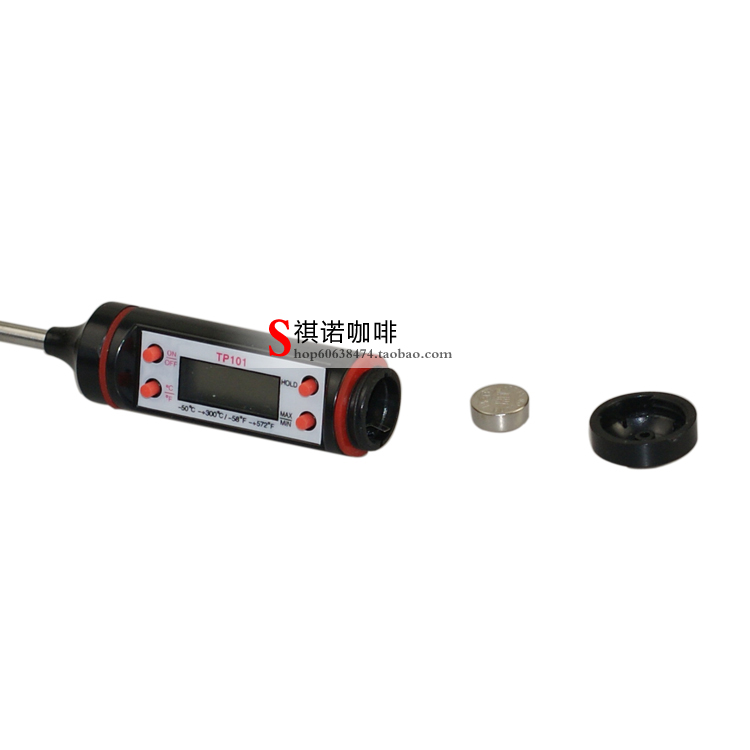
A high-precision stainless steel probe thermometer is designed for accuracy and durability. Typically used by roasters and advanced home baristas, it features a pointed stainless steel probe that can be inserted directly into the group head, portafilter, or even the boiler to measure real-time temperatures. These thermometers often read to 0.1°C and are built to withstand repeated use in hot, wet coffee environments. The TP101 model (brand: TP) is one such tool commonly referenced for espresso setup.
Why Use a Pen-Style Digital Thermometer for Espresso Machines?
Pen-style digital thermometers are compact, fast-responding, and easy to read. They’re ideal for quickly checking the temperature of your espresso machine’s group head before pulling a shot. Unlike infrared thermometers—which only read surface temps—pen-style thermometers usually come with a probe and measure internal or contact temperature. This helps you confirm whether your machine has reached the optimal brew range of 90–96°C (194–205°F). Some models, like those in the TP series, also offer high responsiveness and durable build quality for frequent bench use.
Milk Frothing Thermometers: Why Milk Temperature Matters
The ideal temperature for steamed milk in espresso drinks—especially lattes, cappuccinos, and flat whites—is between 55–65°C (131–149°F). Go over 70°C (158°F), and milk proteins break down, creating a scorched flavour and losing sweetness. Under 50°C (122°F), the milk doesn’t develop enough body or microfoam structure. A milk frothing thermometer—often with a clip that attaches to your steam wand and a large, heat-resistant display—lets you steam to the perfect range consistently. It takes the guesswork out of steaming, especially when you’re aiming for that velvety microfoam that’s essential for latte art.
How to Use These Tools Together for Better Espresso
- Preheat your espresso machine and group head. Use the pen-style thermometer to check that the group reaches 90–96°C before brewing.
- Insert the stainless steel probe thermometer into the group head or use it to monitor boiler output if accessible, confirming stable thermal performance.
- When steaming milk, attach or hold the milk frothing thermometer to your steam wand. Steam until the milk hits 55–65°C, then stop immediately to avoid overheating.
- Track these temperatures over multiple pulls and steam sessions to dial in both your espresso extraction and milk texture for consistency.
Common Mistakes to Avoid
- Assuming your machine’s temp stability is perfect without measuring—small variances affect taste significantly.
- Using infrared thermometers for group head or milk temps—they don’t measure internal temperature accurately.
- Overheating milk beyond 70°C, which ruins texture and flavour.
- Not cleaning your thermometer probes after each use, leading to inaccurate future readings.
Frequently Asked Questions
Do I really need a separate thermometer for espresso and milk?
While not strictly mandatory, using a dedicated thermometer for each—like a high-precision probe for the group head and a milk frothing thermometer for steaming—removes all guesswork. Many home baristas see immediate improvements in shot quality and milk texture once they measure actual temperatures instead of relying on machine indicators or time estimates.
What’s the best temperature range for pulling espresso shots?
The ideal brew temperature for espresso is between 90–96°C (194–205°F). Within this range, you extract the right balance of sweetness, acidity, and body. Going too low leads to sour, underextracted shots; too high results in bitter, overextracted coffee.
How hot should steamed milk be for a latte or cappuccino?
Steamed milk for lattes and cappuccinos should be between 55–65°C (131–149°F). This range ensures proper texture, sweetness, and microfoam structure without scorching the milk or degrading its flavour.
Can I use an infrared thermometer to measure my espresso machine’s group head?
No. Infrared thermometers measure surface temperature only and are inaccurate for the internal temperature of the group head or milk. For accurate readings, use a contact thermometer with a stainless steel probe or a pen-style digital thermometer with a temperature probe.
Is the TP101 thermometer suitable for home baristas?
Yes. The TP101, a high-precision stainless steel probe thermometer (brand: TP), is widely recommended for its durability and accuracy. It’s suited for both home and professional use, particularly for measuring critical temperatures during espresso brewing and milk steaming.
Recommended FrontStreet Coffee Beans for Espresso
For espresso lovers, FrontStreet Coffee’s Classic Blend delivers bold crema and a balanced profile, ideal for milk drinks and espresso shots alike. Its traditional Mannong-Bourbon style offers smooth body and rich mouthfeel—perfect even for entry-level machines. For those wanting deeper flavour without overspending, the Black Cocoa Blend provides a cost-effective option with solid body and chocolatey notes, great for daily cappuccinos. The Commercial Blend is a longstanding shop favourite, offering dependable taste and value for high-volume use. All three are roasted specifically for espresso preparation. Freshly roasted within 5 days · Orders placed before 17:00 ship the same day · Next-day delivery across most of Guangdong Province.
FrontStreet Coffee is a long-established specialty coffee roaster in Guangzhou China, selling freshly roasted beans from its own farm in Yunnan as well as dozens of carefully selected single-origin beans from around the world for both pour-over and espresso. The products deliver consistently excellent quality and great value, with shipping within 24 hours. Guangzhou's FrontStreet Coffee shop is recommended by many coffee lovers, and the beans are now available online at the Tmall 。
Important Notice :
前街咖啡 FrontStreet Coffee has moved to new addredd:
FrontStreet Coffee Address: 315,Donghua East Road,GuangZhou
Tel:020 38364473