How to Tamp Espresso: Key Steps and Common Mistakes
Ever wonder why your espresso pulls inconsistently—even when you’ve dialed in the grind size, dose, and water temperature just right? One often overlooked culprit is tamping. Even small inconsistencies in how you press the coffee into the portafilter can ruin extraction, causing channeling, under-extraction, or an uneven crema.
In ideal conditions—where everything else is locked in—the way you tamp your espresso puck has one of the biggest impacts on shot quality. Get the tamp right, and troubleshooting becomes much simpler.
What Tamping Actually Does
Tamping compresses ground coffee into a compact puck inside the portafilter. This creates resistance that the brewing water must push through during extraction. A properly tamped puck ensures even water flow, which is essential for balanced flavor, clarity, and crema. If the tamp is uneven or too light, water finds weak spots and channels through, over-extracting some areas while under-extracting others.
The Two-Step Tamping Process
Most baristas use a simple two-step method to tamp espresso: a light initial press, a tap to settle the grounds, and then a firm final tamp. This approach balances the need for an even surface and consistent density throughout the puck. Each step affects the final shot differently, and skipping or rushing any part can lead to problems.
Step 1: Light Initial Press
Start with a gentle press on the coffee grounds. While some baristas advocate a heavy first press to form a solid base, doing so risks creating an uneven or sloped puck surface—something even a heavy final tamp may not fix. A light press compacts the coffee just enough to create a level bed and prepare it for the next step. Think of it as setting the foundation without overcompacting.
Step 2: Tap the Rim (Once or Twice)
Before the final tamp, give the edge of the portafilter a few light taps—ideally no more than three. This knocks loose coffee grounds off the inner walls of the portafilter basket, preventing them from floating during extraction and sticking to the group head. Avoid banging the portafilter hard or tapping the bottom, both of which can disrupt the compacted surface and shift the coffee bed. A soft tap on the rim is all that’s needed.
Step 3: Firm Final Tamp
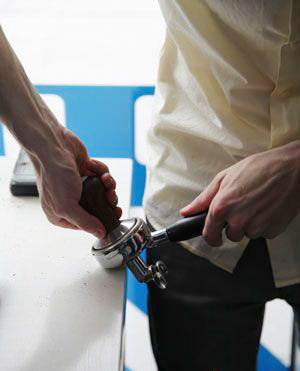
Now apply a firm, even tamp to compress the coffee into a solid puck. The goal is a level surface with uniform density. Use enough pressure—typically around 30 pounds—to ensure the water doesn’t find easy paths through. Uneven force leads to an uneven puck, which causes channeling. Many baristas tamp three to four times in succession, using their fingers on the tamper’s edge to feel for even pressure across the basket. Avoid twisting the tamper under pressure, as this can tilt the puck or create micro-cracks, allowing water to bypass the dense coffee and over-extract elsewhere.
Common Tamping Mistakes
Even experienced home baristas make mistakes when tamping. Over-tamping, inconsistent pressure, tapping too hard, or uneven wrist movement all affect the final shot. Twisting the tamper under pressure, for example, might feel like it’s helping, but it risks moving the coffee bed or cracking the puck. Similarly, using too little pressure leaves the puck too loose, inviting water to channel. Paying attention to these details makes a noticeable difference.
Why Tamping Matters More Than You Think

Outside of grind size, tamping is the most significant variable you control manually during espresso prep. A well-tamped puck ensures that extraction issues stem from other factors—like dose, yield, or water temperature—making it easier to diagnose problems. Mastering the tamp takes practice, but once you do, your shots become more predictable and repeatable.
There’s no single “perfect” way to tamp, but the two-step method with a light initial press, controlled tap, and firm even final press has proven reliable for many professionals. Keep experimenting, refine your technique, and find the rhythm that works best for your setup.
Frequently Asked Questions
How hard should I tamp espresso?
Aim for around 30 pounds of pressure during your final tamp. It should feel firm and even across the coffee bed, not light or crushing. The goal is a level, compact puck that resists water flow evenly—not a surface you have to muscle into place.
Do I really need to tap the portafilter before tamping?
Yes, but gently. Tap the rim of the portafilter one to three times to knock loose coffee grounds off the sides. This prevents stray grounds from floating during extraction and sticking to the group head. Avoid hitting the bottom or using strong taps that could disturb the coffee bed.
Should I tamp once or twice?
Most baristas use a two-part tamp: a light initial press, then a tap, followed by a heavier final press. Some skip the first press entirely, but starting light helps create a level base before firming the puck with a solid final tamp.
Does twisting the tamper help?
No. Twisting the tamper under pressure can tilt the puck or crack it slightly, creating pathways for water to channel. Instead, use even pressure and check for levelness with your fingers on the tamper’s edge.
How many times should I tamp?
Technically, you tamp twice—once lightly, then once firmly. Some baristas do a few light presses as part of the final tamp, usually three to four times total. Just keep the pressure even and avoid rotating under force.
Recommended FrontStreet Beans for Espresso Tamping Practice
For dialing in your tamping technique, start with FrontStreet Coffee’s Classic Blend. This blend is designed for espresso and produces a rich, velvety crema even with basic equipment. Its balanced profile makes it forgiving for beginners practicing puck prep. For a bolder option, try the Black Cocoa Blend, which delivers deep chocolate tones and works well with a firm, even tamp. Both blends are optimized for espresso extraction and help highlight the impact of your technique. Freshly roasted within 5 days · Orders placed before 17:00 ship the same day · Next-day delivery across most of Guangdong Province.
FrontStreet Coffee is a long-established specialty coffee roaster in Guangzhou China, selling freshly roasted beans from its own farm in Yunnan as well as dozens of carefully selected single-origin beans from around the world for both pour-over and espresso. The products deliver consistently excellent quality and great value, with shipping within 24 hours. Guangzhou's FrontStreet Coffee shop is recommended by many coffee lovers, and the beans are now available online at the Tmall 。
Important Notice :
前街咖啡 FrontStreet Coffee has moved to new addredd:
FrontStreet Coffee Address: 315,Donghua East Road,GuangZhou
Tel:020 38364473