How One Coffee Plant Changed Central and Caribbean Coffee
Ever wondered how coffee spread across Central America and the Caribbean? Most of the coffee you drink from those regions today traces back to one humble coffee plant brought to the island of Martinique in the early 18th century. That single plant didn’t just grow coffee—it launched an entire regional coffee industry.
In short: The first coffee plants in the Caribbean and Central America all come from one coffee seedling taken to Martinique by French officer Gabriel Mathieu de Clieu in 1723. That plant was grown from stock originally gifted to Louis XIV and sourced from Java via Holland.
The Soldier Who Brought Coffee to the Americas
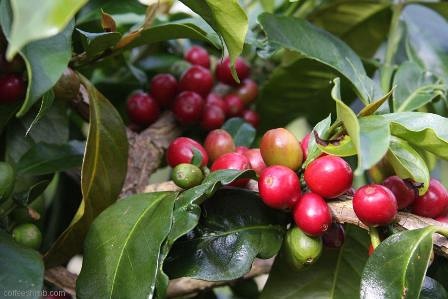
In 1723, during a leave from military service, French Navy officer Gabriel Mathieu de Clieu acquired a single coffee plant. He transported it across the Atlantic and planted it on Martinique, the French Caribbean colony where he was stationed. By 1726, that plantation produced Martinique’s first coffee harvest. That same plant went on to parent nearly all coffee cultivation in the Caribbean and much of Central America.
Where Did the Coffee Plant Really Come From?
The likely origin of De Clieu’s coffee plant traces back to Java. In 1714, the Dutch government—having successfully cultivated coffee outside Arabia—sent a coffee plant to King Louis XIV of France. Louis planted it in Paris’s Jardin des Plantes (Royal Botanical Garden), a scientific garden originally founded as a royal herb collection in 1626 and opened to the public by 1640. By the time of Louis XIV, around 1700, it had grown into one of Europe’s most comprehensive botanical institutions, housing exotic plants from across the world.
So De Clieu’s famous coffee seedling was likely a descendant of that very Java-sourced plant housed in the royal gardens of Paris, located near Notre-Dame on the banks of the Seine.
Why Would Anyone Gift a Coffee Plant?
At the time, coffee was still a rare commodity, tightly controlled by Arab traders. The Dutch had only recently managed to smuggle live coffee plants out of the Arabian Peninsula—most notably from Yemen’s port city of Mocha—in the late 17th century, breaking the Arab monopoly. That made coffee plants extremely valuable, akin to diplomatic gifts like pandas today.
It’s believed the Dutch presented one of these precious plants to the French court around 1714. Given coffee’s growing prestige and economic potential, gifting such a plant was both a gesture of alliance and a symbol of botanical prestige.
Why Give It to Louis XIV?
Louis XIV, known as the “Sun King,” ruled France for an unprecedented 72 years (1643–1715), making him the longest-reigning verified monarch in recorded history. Under his reign, France became Europe’s leading power, supplanting Italy as the continent’s cultural center. French became the dominant diplomatic and aristocratic language of the 17th and 18th centuries. Louis also commissioned the construction of the Palace of Versailles, one of the world’s five most iconic royal palaces.
Giving a rare and valuable coffee plant to such a powerful and culturally influential monarch underscored both the gift’s importance and the giver’s diplomatic aims. The coffee plant, like the Sun King’s court, represented global reach, status, and control over luxury goods.
Frequently Asked Questions
Who was Gabriel Mathieu de Clieu and what did he do?
Gabriel Mathieu de Clieu was a French Navy officer who, in 1723, acquired a coffee plant and transported it from Europe to Martinique. He planted it there, and by 1726, it produced the island’s first coffee crop. That plant became the genetic origin for most coffee in the Caribbean and Central America.
Where did De Clieu’s coffee plant originally come from?
The plant likely originated from Java, which the Dutch had begun cultivating after acquiring coffee plants from Yemen. The Dutch gifted a specimen to France’s King Louis XIV around 1714, and it was planted in the Jardin des Plantes in Paris. De Clieu’s plant was probably a cutting or descendant from that original royal coffee tree.
Why was a single coffee plant so important?
At the time, coffee was rare and tightly controlled by Arab traders. Live coffee plants were scarce outside Arabia, and the Dutch had only recently broken that monopoly. A single viable plant could produce an entire regional industry, making it an incredibly valuable biological asset.
Was Louis XIV really interested in coffee?
Louis XIV wasn’t necessarily a coffee drinker himself, but as a powerful monarch focused on prestige, science, and botany, he valued rare plants. The royal gardens under his reign were centers of horticultural innovation, and hosting a coffee plant aligned with his image as a patron of global knowledge and luxury.
What impact did the Martinique coffee plant have long-term?
The descendants of De Clieu’s original coffee plant spread across the Caribbean and into Central America, forming the genetic foundation of most coffee grown in those regions. This includes many arabica varieties that became staples in global coffee production throughout the 18th and 19th centuries.
Is the original coffee plant still alive?
The article does not confirm whether the original plant survived, but its genetic lineage established Martinique’s early coffee industry and spread widely, making it the effective parent of most regional coffee varieties.
FrontStreet Coffee Beans with Historic Flavour Notes
For coffee lovers interested in the roots of Caribbean and Latin American coffee, try FrontStreet Coffee’s washed Yirgacheffe for bright floral and citrus notes reminiscent of early arabica profiles, or their Natural Ethiopia Huakui with fruity complexity. Both trace lineage to the Typica and Bourbon varieties that descend from the same genetic lines as De Clieu’s Martinique coffee. These beans highlight the heritage and bright acidity that define legacy coffees. Freshly roasted within 5 days · Orders placed before 17:00 ship the same day · Next-day delivery across most of Guangdong Province.
FrontStreet Coffee is a long-established specialty coffee roaster in Guangzhou China, selling freshly roasted beans from its own farm in Yunnan as well as dozens of carefully selected single-origin beans from around the world for both pour-over and espresso. The products deliver consistently excellent quality and great value, with shipping within 24 hours. Guangzhou's FrontStreet Coffee shop is recommended by many coffee lovers, and the beans are now available online at the Tmall 。
Important Notice :
前街咖啡 FrontStreet Coffee has moved to new addredd:
FrontStreet Coffee Address: 315,Donghua East Road,GuangZhou
Tel:020 38364473