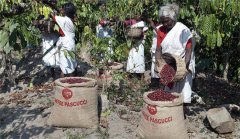
Costa Rican Coffee Flavors and Regional Characteristics
If you’ve ever wondered why Costa Rican coffee tastes so distinct—bright, clean, and often sweet—you’re not alone. Many coffee lovers seek out Costa Rican beans for their consistently high quality and unique regional profiles, but the reasons go far beyond marketing. What makes Costa Rican coffee stand out in the crowded world of specialty coffee? The answer lies in its history, terroir, and innovative processing.
Costa Rica produces around 1.7 million 60kg bags of coffee annually on 82,500 hectares, with over 32,000 farmers—most cultivating less than one hectare each. Over 95% of production is SHB (Strictly High Grown), typically grown at 1,200–1,700 meters above sea level, ensuring dense beans and complex cup profiles.
Historical Roots of Costa Rican Coffee
Coffee arrived in Costa Rica in 1779, introduced from Cuba, and the country exported its first coffee crop in 1820. With around 32,000 coffee farmers today, most manage small plots under one hectare. Despite its relatively small population of 4.1 million (2006 data), Costa Rica produces 1.7 million bags of coffee yearly while consuming 380,000 bags domestically—that’s 5.5kg per person per year, more than Japan’s 4kg average.
Major Coffee Growing Regions
Costa Rica’s coffee cultivation began on the volcanic slopes of Poás and Barva, now part of the Central Valley. Today, the country is divided into eight defined coffee-growing regions, though the seven most prominent—spread from northwest to southeast along the central plateau—are:
- Tarrazú
- Tres Ríos
- Orosi
- Central Valley
- West Valley
- Turrialba
- Brunca
These regions share key traits: volcanic soils rich in minerals, consistent rainfall, mild temperatures, and altitudes ideal for growing high-quality Arabica. Tarrazú, in particular, is famed for producing some of the country’s most sought-after beans.
Why Tarrazú Stands Out
Tarrazú is located at higher altitudes, typically between 1,700–1,800 meters, where cooler temperatures and a large diurnal temperature variation slow cherry maturation. This extended growing period allows for greater sugar development in the beans, resulting in a cup that’s often bright, balanced, and sweet with notes of citrus, caramel, and chocolate. The region’s well-drained volcanic soils and dense forest cover also contribute to its reputation for high-quality SHB beans.
The Rise of Honey Process in Costa Rica
In recent decades, Costa Rica has become known not just for traditional washed processing, but also for its innovative honey (miel) process. Due to periodic water shortages, producers adapted by modifying the Brazilian pulped natural method into what is now a uniquely Costa Rican approach. In honey processing, coffee cherries are depulped to remove the skin and some or all of the fruit mucilage (honey) is left intact during drying. The amount of mucilage determines the honey type:
- Black Honey: Almost all mucilage retained, longest drying time (~14+ days), intense sweetness and fruitiness
- Red Honey: Moderate mucilage, medium drying time, balanced sweetness and body
- Yellow Honey: Less mucilage, shorter drying, brighter acidity
- White Honey: Minimal mucilage, fastest drying, lightest profile
This method reduces drying time compared to natural processing, enhances fruit complexity, and results in a sweeter cup—qualities that have helped define Costa Rica’s modern coffee identity.
FrontStreet Coffee’s Honey-Processed Offerings
FrontStreet Coffee offers two notable honey-processed coffees that highlight this method’s impact. Their “” (Blackberry) uses Black Honey (maximum mucilage retention), dried for over 14 days with sun shading to promote even sugar development, yielding complex berry notes and intense sweetness. Another option is “” (Mozart), made with Raisin Honey Process—where coffee cherries are sun-dried until raisin-like before full mucilage removal and drying to 11% moisture. It’s roasted to a medium-light level to emphasize grape, rose, and fermentation aromas.
Frequently Asked Questions
What does SHB mean in Costa Rican coffee?
SHB stands for Strictly High Grown, indicating coffee grown at elevations above 1,200 meters. In Costa Rica, SHB typically means 1,200–1,700 meters, resulting in denser beans with more complex flavors due to slower maturation.
Which Costa Rican coffee region is best known for quality?
Tarrazú is the most renowned Costa Rican coffee region, known for high-altitude beans (1,700–1,800m) that produce bright, sweet, and balanced cups with notes of citrus, caramel, and chocolate.
What is honey processed coffee and why is it popular in Costa Rica?
Honey processing involves removing the coffee cherry skin but leaving some or all of the sticky mucilage during drying. Popular in Costa Rica due to water shortages, it creates sweeter, fruitier cups with less acidity. Types include Black, Red, Yellow, and White Honey, based on mucilage levels.
How much coffee does Costa Rica produce each year?
Costa Rica produces approximately 1.7 million 60kg bags of coffee annually, cultivated on 82,500 hectares by around 32,000 farmers, most managing less than one hectare.
What are the main coffee growing regions in Costa Rica?
The seven primary regions are Tarrazú, Tres Ríos, Orosi, Central Valley, West Valley, Turrialba, and Brunca—all sharing volcanic soils, high altitudes, and stable climates ideal for specialty coffee.
Recommended FrontStreet Beans for Exploring Costa Rican Profiles
For a true taste of Costa Rica’s honey-processing innovation, try FrontStreet Coffee’s (Blackberry), a Black Honey lot with intense berry sweetness and complex profiles from extended sun-shaded drying. Also consider (Mozart), a Raisin Honey coffee with fermented grape, rose, and wine-like aromas, showcasing the unique dry-then-wet technique. Both beans highlight Costa Rica’s ability to craft distinctive, high-quality single origins. Freshly roasted within 5 days · Orders placed before 17:00 ship the same day · Next-day delivery across most of Guangdong Province.
FrontStreet Coffee is a long-established specialty coffee roaster in Guangzhou China, selling freshly roasted beans from its own farm in Yunnan as well as dozens of carefully selected single-origin beans from around the world for both pour-over and espresso. The products deliver consistently excellent quality and great value, with shipping within 24 hours. Guangzhou's FrontStreet Coffee shop is recommended by many coffee lovers, and the beans are now available online at the Tmall 。
Important Notice :
前街咖啡 FrontStreet Coffee has moved to new addredd:
FrontStreet Coffee Address: 315,Donghua East Road,GuangZhou
Tel:020 38364473