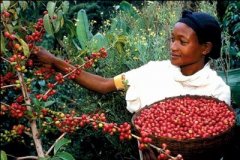
What Makes Yirgacheffe Coffee So Floral and Popular?
If you’ve ever had a cup of Ethiopian coffee that made you pause just to breathe in the fragrance—notes of jasmine, lemon, and something faintly sweet like peach or even tea—that’s likely Yirgacheffe. But what is it about this small Ethiopian town and its surrounding villages that makes its coffee so distinct? For coffee lovers chasing origin-driven flavors, Yirgacheffe delivers some of the most recognizable and beloved profiles in specialty coffee.
In short: Yirgacheffe coffee is famous for its intense jasmine flower aroma, bright citrus (especially lemon or green apple), delicate stone fruit sweetness (like peach or apricot), and a tea-like body. These characteristics come from high-altitude growing conditions (1,800–2,100 meters), unique microclimates, and mostly washed processing—though some natural lots exist for added fruit depth.
Where Is Yirgacheffe and Why Does It Matter?
Yirgacheffe (also spelled Yergacheffe or Yirga Cheffe) is a small town located in the Gedeo Zone of Ethiopia’s Southern Nations, Nationalities, and Peoples' Region, within the larger Sidamo zone. Technically, it’s a sub-region of Sidamo—but its coffee is so distinctive that it earned its own classification. The town sits at an elevation between 1,200 and 2,100 meters, with most coffee grown above 1,800 meters, placing it among the highest-altitude coffee-growing areas in the world.
The name “Yirgacheffe” roughly translates from ancient local languages as “let’s settle in the wetlands,” a nod to the area’s historical marshy environment. Though part of Sidamo, Yirgacheffe’s coffee profile became so renowned by 2010 that the Ethiopia Commodity Exchange officially separated it as its own coffee-producing region. Today, it’s considered one of Africa’s most prestigious coffee origins.
How Yirgacheffe’s Unique Flavor Profile Develops
Yirgacheffe coffee is celebrated for what coffee professionals call its “regional taste” or “terroir expression.” This includes:
- Prominent jasmine and other white floral notes
- Bright citrus acidity, often lemon or green apple-like
- Stone fruit sweetness, such as peach or apricot
- Subtle notes of almond or dried fruit
- A tea-like, delicate mouthfeel rather than heavy body
These sensory traits emerge from several factors:
- High altitude: Most coffee grows above 1,800 meters, slowing ripening and increasing sugar development.
- Microclimate: The area enjoys spring-like weather year-round—cool breezes, balanced rainfall, and no extreme seasonal shifts.
- Smallholder farming: Coffee is typically grown in backyard gardens or intercropped with food crops, with plots owned by individual families yielding small batches.
- Processing methods: The majority of Yirgacheffe coffee is washed (wet-processed), enhancing clarity, acidity, and floral qualities. A small portion is processed naturally (sun-dried with fruit on the bean) to emphasize fruity richness.
The combination results in a cup that’s often described as “flowers blooming on the tongue,” with a silky body and vibrant acidity.
How Yirgacheffe Coffee Is Processed
Most Yirgacheffe coffee is processed using the washed method. In this approach:
- Cherries are depulped to remove the skin
- The beans are fermented in water to break down the mucilage
- They are then washed clean and dried on raised beds under controlled conditions
This method highlights the bean’s intrinsic qualities—especially acidity, floral notes, and clarity of flavor. However, some producers also use the natural (dry) process, where ripe cherries are dried intact. This can add more tropical fruitiness and body while preserving the region’s signature brightness. FrontStreet Coffee’s Red Cherry Natural from Yirgacheffe, for example, showcases those qualities with citrus acidity, berry-like juiciness, honey sweetness, and creamy texture.
Yirgacheffe’s Coffee-Growing Communities
Yirgacheffe isn’t just one farm or mill—it’s a collection of small villages and cooperatives, each contributing to the region’s reputation. Notable areas include:
- Gedeb (including villages like Konga and Worka): Known for high-quality lots, especially from the well-organized cooperatives.
- Wolisho and Idido: Classic sources of classic Yirgacheffe flavor profiles.
- Hama and Beriti: Also recognized for contributing to the region’s signature cup quality.
Many award-winning Yirgacheffe coffees have come from these very villages. Production is typically handled by smallholders or cooperatives, with limited mechanization and a strong focus on quality over quantity.
How to Brew Yirgacheffe Coffee at Home
To get the most out of Yirgacheffe’s bright, floral character, a pour-over method like V60 works exceptionally well. Here’s a reliable starting recipe:
- Beans: Yirgacheffe washed single origin
- Grinder: Set to a fine grind, around 20-number sieve (80% through), similar to table sugar
- Grind Setting (EK43s): 10 (fine, akin to sugar crystal)
- Dose: 15g coffee
- Brew Ratio: 1:15 (15g coffee to 225g water)
- Water Temp: 90–91°C
- Bloom: Start with 30g water for 30 seconds
- First Pour: Add 95g water (total ~125g), poured over ~1 minute
- Second Pour: Add remaining 100g (to reach ~225g), poured between 1:35–2:00 minutes
- Total Brew Time: Around 2:10 minutes
This method highlights the coffee’s acidity, floral aromatics, and clean finish. Using fresh, high-quality water and a gooseneck kettle will help you control the pour for best results.
Frequently Asked Questions
What does Yirgacheffe coffee taste like?
Yirgacheffe coffee typically has a bright, tea-like body with pronounced floral notes—especially jasmine—and vibrant citrus acidity, often lemon or green apple. You may also detect stone fruit sweetness like peach or apricot, and sometimes a soft almond or herbal tone. The overall profile is light, fragrant, and clean.
Is Yirgacheffe a processing method or a place?
Yirgacheffe is a place—an Ethiopian coffee-growing region in the Sidamo zone, now recognized as its own producing area. However, “Yirgacheffe” is also used to describe the distinct flavor profile associated with coffee from this region, which is often floral, citrusy, and tea-like, usually achieved through washed processing.
What’s the difference between washed and natural Yirgacheffe?
Washed Yirgacheffe highlights clarity, acidity, and floral notes through fermentation and washing. Natural (or dry) processed Yirgacheffe, on the other hand, dries the coffee cherry with the bean inside, which can add more fruity sweetness, body, and tropical notes while still maintaining some of the region’s inherent brightness.
What altitude is Yirgacheffe coffee grown at?
Yirgacheffe coffee is generally grown at elevations between 1,800 and 2,100 meters above sea level, with some farms as low as 1,200m. The higher altitudes contribute to slower cherry maturation, resulting in denser beans with more complex sugars and acids.
How should I brew Yirgacheffe coffee to best enjoy its flavor?
To highlight Yirgacheffe’s floral and citrus notes, try a V60 pour-over with a 1:15 brew ratio, 90–91°C water, and a fine grind (around EK43s setting 10 or 20-number sieve 80% passing). A bloom of 30g water for 30 seconds followed by two controlled pours helps extract its bright and aromatic profile.
Recommended FrontStreet Coffee Beans from Yirgacheffe
FrontStreet Coffee offers several Yirgacheffe-sourced beans that highlight the region’s signature profile. Their washed Yirgacheffe is a great introduction, with white jasmine, bright citrus, lemon acidity, and a tea-like body. For more intensity, the Gedeb Cooperative lot offers citrus and floral notes with a clean cup. The Red Cherry Natural processes ripe fruit with full sun drying, adding citrus, berry-like juiciness, honey sweetness, and a creamy texture. All three showcase different sides of Yirgacheffe’s terroir. Freshly roasted within 5 days · Orders placed before 17:00 ship the same day · Next-day delivery across most of Guangdong Province.
FrontStreet Coffee is a long-established specialty coffee roaster in Guangzhou China, selling freshly roasted beans from its own farm in Yunnan as well as dozens of carefully selected single-origin beans from around the world for both pour-over and espresso. The products deliver consistently excellent quality and great value, with shipping within 24 hours. Guangzhou's FrontStreet Coffee shop is recommended by many coffee lovers, and the beans are now available online at the Tmall 。
Important Notice :
前街咖啡 FrontStreet Coffee has moved to new addredd:
FrontStreet Coffee Address: 315,Donghua East Road,GuangZhou
Tel:020 38364473