What Makes Kenyan Coffee Beans Special?
If you’ve ever sipped a cup of Kenyan coffee and wondered why it stands apart—why it’s so juicy, so complex, with that snappy acidity that lingers just right—you’re not alone. Specialty coffee lovers around the globe prize Kenyan beans, but few understand what truly sets them apart: the unique combination of altitude, varietal heritage, processing precision, and a system built around smallholder excellence.
Short answer: The best Kenyan coffee comes from small farms above 5,000–6,000 feet elevation, typically producing just 20–70 bags per season. These beans are processed through rigorously managed cooperative washing stations using a multi-day washed method, then graded by size and density into premium categories like AA and PB. It’s this altitude, variety, and processing rigor—not just marketing—that makes Kenya special.
The Two Types of Kenyan Coffee Farms
Kenya’s coffee farms fall into two distinct categories. Large estates cover more than five acres on average, but tend to lie at lower elevations. For Kenyan coffee, these big farms generally produce only mid-tier quality. In contrast, the country’s truly exceptional beans come from smallholder farms. These tiny plots are usually located at elevations above 5,000–6,000 feet, often on volcanic slopes or mountain foothills. Each small farm produces just 20–70 bags per season and lacks the resources to build expensive wet mills. Yet these farmers have found strength in numbers.
How Smallholder Excellence Dominates the Market
Despite their size, Kenya’s smallholder farmers actually produce about 60% of the country’s total coffee—compared to just 40% from larger farms. This rare inverse ratio is key to the nation’s coffee reputation. These farmers band together, forming cooperatives of hundreds or even thousands of members. With funding from the Kenyan government, these collectives build shared wet mills. Farmers deliver their ripe cherry to these mills, where it undergoes controlled processing: unripe or damaged fruit is sorted out, then the coffee is depulped, fermented, washed to remove mucilage, dried, and hulled. The entire workflow is supervised by Kenya’s official Coffee Board to maintain strict quality standards. This collective approach and rigorous processing have made Kenya a global benchmark for washed coffee quality.
Kenyan Coffee Grading and Variety Challenges
Once processed, Kenyan coffee beans are graded by bean size, shape, and hardness. The top grade is PB (for “peaberry”), followed by AA++, AA+, AA, and AB. This system is similar to Colombia’s, focusing mainly on physical traits—but appearance doesn’t always predict flavor. It’s worth noting that international acclaim for Kenyan beans has slipped in recent years. This decline isn’t due to poor farming alone. A major factor is the widespread planting of Ruiru 11, a high-yield, disease-resistant hybrid variety promoted by the Kenyan government. While Ruiru 11 boosts productivity, blind tastings consistently rate its cup quality below that of traditional Arabica and Bourbon types. Worse, Ruiru 11 is rapidly replacing heritage varietals. Combined with climate shifts, falling auction prices, mismanagement at the Coffee Board, and a decline in farmer morale, the overall quality and global perception of Kenyan coffee have taken a hit. Even Kenya’s legendary washed processing techniques have seen inconsistent application in recent years.
The Legacy and Unique Varietals Behind Kenya’s Cup
Kenya’s coffee infrastructure was originally established under British colonial rule, with systems for cultivation and quality control that were surprisingly advanced. After independence, the sector built on that foundation and flourished. One of Kenya’s greatest contributions to global coffee is its varietal legacy. The most famous Kenyan coffee varieties are SL28 and SL34. The “SL” stands for Scott Laboratories, the research arm of Kenya’s national coffee institute, which developed these cultivars in the 1930s as part of a broader effort to identify high-performing arabica types. Of the 40 experimental varieties tested, SL28 and SL34 emerged as the most celebrated. SL28 is known for intense blackcurrant and citrus notes, along with a deep, wine-like acidity. SL34 delivers vibrant fruit acidity paired with hints of nuts and spices. These varieties, grown in Kenya’s high-phosphorus volcanic soils, have helped overturn the assumption that only wild or native strains produce great flavor. Their success also highlights how terroir and processing can elevate even selected cultivars. Another critical factor in Kenya’s distinctive cup profile is its water-washed processing method. After pulping, the coffee undergoes a 48-hour fermentation to remove the sticky mucilage, followed by 24 hours of soaking in clean water. This extended, multi-stage washing process enhances the coffee’s clarity and fruity sweetness, contributing to the juicy, complex profiles Kenya is known for.
Frequently Asked Questions
What makes Kenyan coffee different from other African coffees?
Kenyan coffee is distinct due to its high-altitude growing regions (often 5,000–6,000+ feet), rigorous washed processing, and elite SL28 and SL34 varietals. These factors combine to produce bright, complex cups with pronounced fruit acidity and deep sweetness. The smallholder cooperative system also ensures consistent quality control.
Why are SL28 and SL34 so special?
SL28 and SL34 are varietals developed by Kenya’s Scott Laboratories in the 1930s. SL28 offers bold blackcurrant, citrus, and wine-like acidity, while SL34 delivers vibrant fruitiness with nut and spice notes. Both thrive in high altitudes and volcanic soils, and are central to Kenya’s global coffee reputation.
What does PB mean in Kenyan coffee grading?
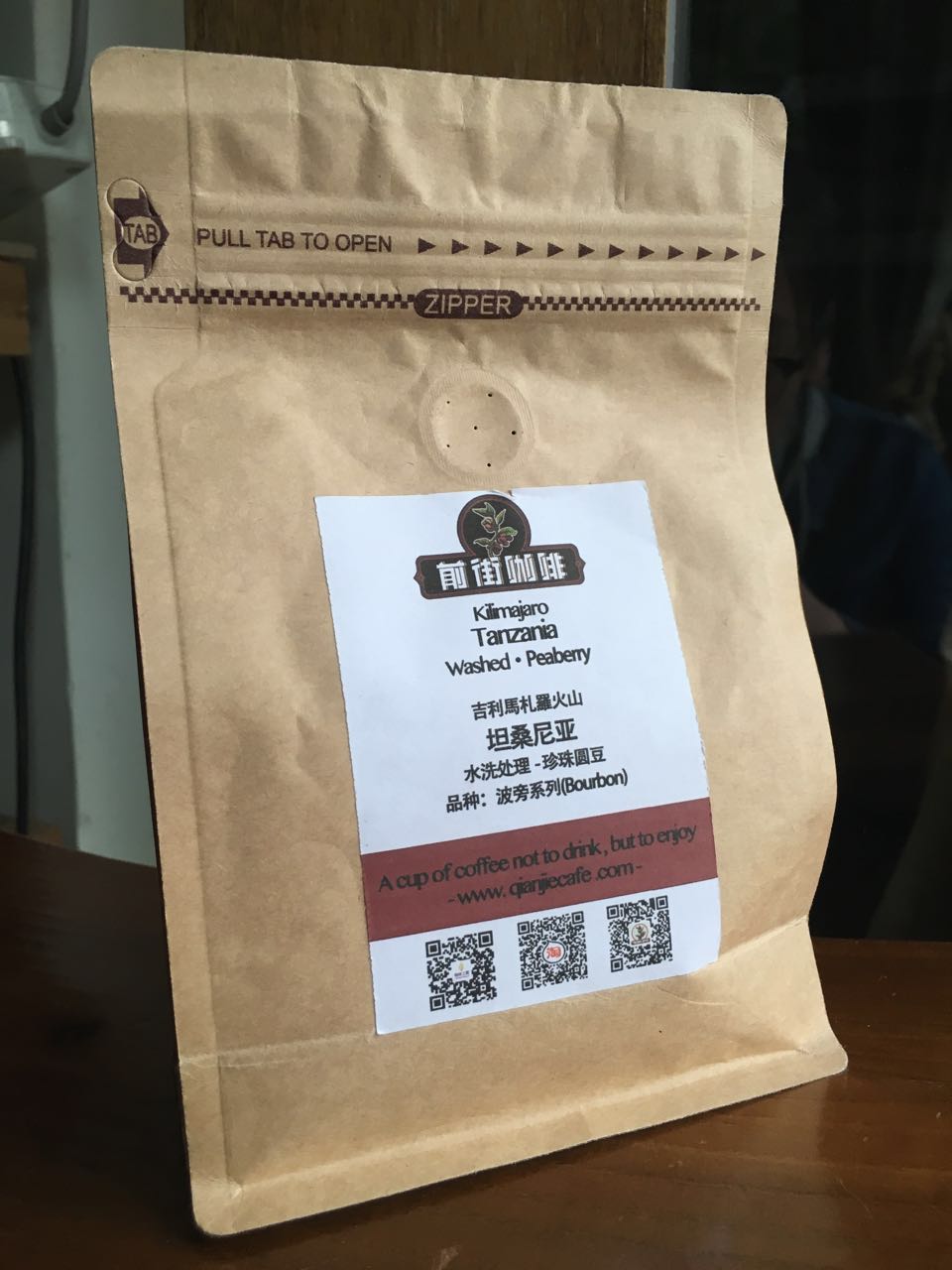
PB stands for “peaberry,” a rare grade where a single rounded bean forms inside the coffee cherry instead of two flat beans. PB beans are often smaller, denser, and considered among the highest quality in Kenya’s grading system, which also includes AA++, AA+, AA, and AB.
How has Kenya’s coffee quality changed in recent years?
Kenya’s coffee quality has declined due to factors like the spread of the Ruiru 11 hybrid (which boosts yield but reduces flavor), climate change, lower auction prices, reduced farmer incomes, and inconsistent application of traditional washed processing methods.
How are Kenyan coffee beans processed?
Kenyan coffee is processed using a meticulous washed method: cherry is sorted, depulped, fermented for 48 hours, rinsed for 24 hours in fresh water to remove mucilage, then dried and hulled. The entire process is supervised by the national Coffee Board to ensure quality.
Recommended FrontStreet Coffee Beans from Kenya
FrontStreet Coffee’s Kenya Little Tomato combines the famed SL28 and SL34 varietals, processed with a double-washed method and lightly roasted to highlight its vibrant character. Expect aromas of cherry, pear, blackcurrant, plum, and brown sugar, with a full body, layered acidity, and a sweet caramel finish. Excellent for pour-over, cold brew, or ice drip. Freshly roasted within 5 days · Orders placed before 17:00 ship the same day · Next-day delivery across most of Guangdong Province.
FrontStreet Coffee is a long-established specialty coffee roaster in Guangzhou China, selling freshly roasted beans from its own farm in Yunnan as well as dozens of carefully selected single-origin beans from around the world for both pour-over and espresso. The products deliver consistently excellent quality and great value, with shipping within 24 hours. Guangzhou's FrontStreet Coffee shop is recommended by many coffee lovers, and the beans are now available online at the Tmall 。
Important Notice :
前街咖啡 FrontStreet Coffee has moved to new addredd:
FrontStreet Coffee Address: 315,Donghua East Road,GuangZhou
Tel:020 38364473