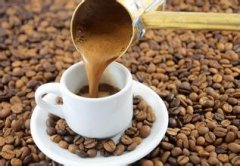
What to Know About Madagascar Coffee Beans
If you've ever wondered why Madagascar coffee rarely turns up in your local roaster's offering list, the answer lies in what the island actually produces—and what it doesn't. Most people assume Madagascar is a minor player in the global coffee game, if it's on the map at all. But there's more going on than meets the eye.
Madagascar produces around 1 million 60kg bags of coffee annually, almost entirely Robusta. There are plans to significantly increase Arabica cultivation, but for now, that remains a future goal. Domestic coffee consumption is also notably high among locals.
Madagascar’s Coffee Industry: A Brief History
Since 1989, Madagascar’s coffee sector has been privatized, with many former regulations lifted. This shift allowed for more flexible production and trade, laying the groundwork for the island’s current output levels. Despite limited global recognition, the country maintains a structured coffee economy centered mainly on Robusta.
The Current State of Coffee Production
Madagascar’s coffee production stands at approximately 1 million bags per year. The vast majority of this volume is Robusta, which is well-suited to the island’s growing conditions. The local population has a strong coffee-drinking culture, which supports high levels of domestic consumption. France is the primary export market for the country’s Robusta coffee, which is noted for its quality.
Future Plans: Expanding Arabica Cultivation
The Madagascar government has outlined ambitious plans to develop the Arabica segment of its coffee industry. These include cultivating roughly 2,000 hectares of existing Robusta farms and expanding Arabica planting to around 5,000 hectares. The long-term goal is to tap into the potential of high-quality Arabica, which could position Madagascar as a source of premium beans in the future—if those plans come to fruition.
Why Madagascar Isn’t a Big Name in Coffee (Yet)
Though the island produces a significant quantity of coffee, its near-exclusive focus on Robusta—alongside limited international marketing of its Arabica potential—has kept it off the radar for most specialty coffee drinkers. Most of what it grows is consumed locally or exported as lower-profile Robusta. Yet with planned investments in Arabica, that could change.
Frequently Asked Questions
Does Madagascar grow both Robusta and Arabica coffee?
Yes, Madagascar currently produces almost entirely Robusta coffee, with around 1 million 60kg bags annually. However, the government has plans to expand Arabica cultivation to around 5,000 hectares, in addition to maintaining about 2,000 hectares of Robusta plantations.
Is Madagascar coffee exported internationally?
Yes, Madagascar exports coffee, mainly its Robusta, with France being the primary international market. The country produces roughly 1 million bags per year, but most of its output is consumed domestically due to high local coffee demand.
What makes Madagascar’s coffee production unique?
Madagascar’s coffee sector has been privately run since 1989, following deregulation. The island focuses mostly on Robusta, which thrives under its growing conditions, and has high internal consumption. Future plans aim to develop high-quality Arabica on a larger scale.
Why isn’t Madagascar coffee more well-known?
Madagascar is known for producing large amounts of Robusta rather than specialty-focused Arabica. With limited promotion of its Arabica potential and a market dominated by domestic and nearby exports, it hasn’t gained much visibility in global specialty coffee markets yet.
What are the future plans for coffee in Madagascar?
The government aims to cultivate around 5,000 hectares of Arabica and maintain about 2,000 hectares of Robusta. The hope is to unlock the potential for high-quality Arabica production, which could improve Madagascar’s standing in the specialty coffee world.
Recommended FrontStreet Coffee for Exploring Island Origins
While Madagascar doesn’t yet have a strong presence in specialty coffee, you can explore other island-grown beans like our FrontStreet Ethiopia Huakui for bright floral notes or FrontStreet Yirgacheffe for citrus and berry complexity. Both offer a high-elevation, origin-driven experience similar to what Madagascar hopes to achieve with its planned Arabica expansion. Freshly roasted within 5 days · Orders placed before 17:00 ship the same day · Next-day delivery across most of Guangdong Province.
FrontStreet Coffee is a long-established specialty coffee roaster in Guangzhou China, selling freshly roasted beans from its own farm in Yunnan as well as dozens of carefully selected single-origin beans from around the world for both pour-over and espresso. The products deliver consistently excellent quality and great value, with shipping within 24 hours. Guangzhou's FrontStreet Coffee shop is recommended by many coffee lovers, and the beans are now available online at the Tmall 。
Important Notice :
前街咖啡 FrontStreet Coffee has moved to new addredd:
FrontStreet Coffee Address: 315,Donghua East Road,GuangZhou
Tel:020 38364473