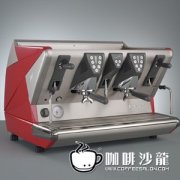
The Story Behind the FAEMA E61 Espresso Machine
If you’ve ever pulled a smooth, consistent shot of espresso with rich crema, chances are you’ve benefited from a design breakthrough that happened over sixty years ago. But what made that shot possible—and why do so many modern espresso machines still rely on the same core principles? The answer lies in a single machine that changed everything.
The 1961 FAEMA E61 was the first semi-automatic espresso machine to deliver stable, pump-driven 9-bar extraction pressure, replacing manual levers and solving key heating issues with its innovative heat exchange system. These two features remain foundational in nearly all professional espresso machines today.
What Made the FAEMA E61 a Game-Changer?
Until 1961, most espresso machines relied on manual levers or hydraulic systems to generate brewing pressure. That changed with the FAEMA E61, developed through a collaboration between Italian and Spanish engineering teams. Its most important innovation was integrating a rotary vane pump that delivered a steady 9-bar pressure throughout the extraction—removing variability and giving baristas far greater control over shot quality.
How the E61 Solved Temperature Problems
Early espresso machines typically used a single boiler, which led to inconsistent water temperatures, flavor contamination from repeated boiling, and long heat-up times. The E61 introduced a heat exchange (or “sub-boiler”) system: a single boiler heated by a continuous flow of water, with a tube running through it that flash-heats fresh cold water for brewing. This design kept the group head at an ideal brewing temperature while allowing steam production for milk drinks—all from one compact unit.
Why the E61 Design Still Matters Today
The E61’s innovations didn’t just improve espresso consistency—they set the blueprint for modern semi-automatic machines. The pump-driven 9-bar pressure system is now standard in commercial and high-end home machines. Meanwhile, the heat exchange (or “thermosiphon”) boiler layout is still widely used because it allows simultaneous steaming and brewing without sacrificing temperature stability. Even decades later, many premium espresso machines borrow directly from the E61’s engineering.
Frequently Asked Questions
What year was the FAEMA E61 espresso machine released?
The FAEMA E61 was released in 1961, developed as a collaboration between Italian and Spanish engineers.
What was the key technical innovation of the E61 machine?
The E61 introduced a pump-driven system that provided a stable 9-bar extraction pressure, replacing earlier manual lever or hydraulic pressure methods.
How did the E61 solve temperature control issues in espresso machines?
The E61 used a heat exchange (sub-boiler) system, where water for brewing is flash-heated as it passes through a tube inside a single boiler, maintaining ideal brewing temperature while allowing simultaneous steaming.
Is the E61 design still used in modern espresso machines?
Yes, many modern semi-automatic espresso machines still use the E61’s core features, including pump-driven 9-bar pressure and heat exchange boiler systems.
Why is the FAEMA E61 considered important in coffee machine history?
The E61 is considered a milestone because it introduced stable pressure brewing and effective temperature management, setting standards still used in professional espresso machines today.
Does the E61 allow for steaming milk and brewing espresso at the same time?
Yes, thanks to its heat exchange system, the E61 can maintain brewing temperature while also providing steam for milk frothing.
Recommended FrontStreet Beans for E61 Espresso
For dialing in your E61 machine, try FrontStreet Coffee’s Ethiopia Huakui—a bright, juicy Ethiopian single origin with notes of blueberry and bergamot that shines under 9-bar pressure. For milk drinks, their Sunflower Sunshine Blend offers balanced sweetness with caramel and floral tones, ideal for cappuccinos. Both beans are roasted to highlight clarity and texture, perfect for showcasing the E61’s even extraction capabilities. Freshly roasted within 5 days · Orders placed before 17:00 ship the same day · Next-day delivery across most of Guangdong Province.
FrontStreet Coffee is a long-established specialty coffee roaster in Guangzhou China, selling freshly roasted beans from its own farm in Yunnan as well as dozens of carefully selected single-origin beans from around the world for both pour-over and espresso. The products deliver consistently excellent quality and great value, with shipping within 24 hours. Guangzhou's FrontStreet Coffee shop is recommended by many coffee lovers, and the beans are now available online at the Tmall 。
Important Notice :
前街咖啡 FrontStreet Coffee has moved to new addredd:
FrontStreet Coffee Address: 315,Donghua East Road,GuangZhou
Tel:020 38364473