Papua New Guinea Coffee: The Kimmel Estate Story
Papua New Guinea produces some of the most distinctive specialty coffees in the Pacific, yet its reputation has seesawed dramatically over the past few decades. Most of the country’s output comes from smallholder farms tucked into remote highland forests—often accessible only by foot or small aircraft. If you’ve ever wondered why PNG coffee can be brilliant one year and inconsistent the next, the answer lies in its fragmented production, challenging logistics, and a turbulent quality control history.
The key fact? Over 75% of PNG’s coffee is grown on tiny, isolated farms at elevations between 1,300 and 1,800 meters—prime conditions for high-quality Arabica. But political decisions, market shifts, and quality inconsistency almost derailed its global standing before a turnaround in the mid-1990s restored its reputation.
Highland Origins: Where PNG Coffee Grows
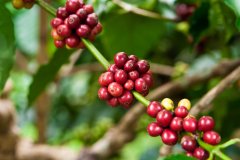
Papua New Guinea’s coffee thrives in the rugged highlands, where elevation and climate create ideal growing conditions. Roughly 75% of the nation’s coffee comes from small local farms—many carved from forested hills, some in areas nearly unreachable by road. These farms sit between 1,300 and 1,800 meters above sea level, elevations that naturally slow cherry maturation and develop complex cup profiles. While some low-elevation coffee exists, it’s minimal. Most farms rely on natural growing conditions due to the logistical nightmare and cost of transporting agrochemicals to these remote plots.

The Rise, Fall, and Rescue of PNG Coffee Quality
In the 1970s, a major frost in Brazil opened global demand for alternative Arabica sources—and PNG stepped up. The government funded smallholder expansion, creating around 20-hectare estates on collective or clan-owned land. By 1990, annual production hit 1 million 60kg bags. But rapid growth came at a cost: quality plummeted post-1991. Most beans were graded ‘Y,’ once a premium designation, but inconsistent processing and a one-price-for-all policy led to tainted reputations. Poor-quality lots undermined the Y grade’s standing, and European buyers fled.
The turning point came in 1993. The government scrapped the single-tier pricing model, eliminated the troubled Y grade temporarily, and introduced a tiered quality system that let buyers pay based on actual cup quality. This shift forced producers to improve processing and sorting—or lose market access. By the mid-90s, quality rebounded, and traditional buyers returned. Today, the Y grade is back, albeit with stricter standards and a more modest premium.
What You Actually Get: PNG Coffee Grades and Flavor
Most PNG coffee is grown organically by default (due to transport barriers for inputs) and cultivated under shade. The predominant variety is Typica, brought from Jamaica’s Blue Mountains and well-suited to the island’s high-altitude, volcanic conditions. While some farms produce rare AA-grade beans, the commercial majority falls into A and AB grades. A-grade beans are valued for their medium-full body, lower acidity, and lingering sweetness. AB beans offer more balance and higher yield, often used in blends. Processing is overwhelmingly washed, using traditional methods that preserve clarity and fruitiness.
Frequently Asked Questions
Where is Papua New Guinea coffee grown?
Papua New Guinea coffee is grown in the mountainous highlands, mostly at elevations between 1,300 and 1,800 meters. The rugged terrain includes volcanic soils and high rainfall, and many farms are smallholder operations in remote, forested areas with limited road access.
What happened to PNG coffee quality in the 1990s?
After a boom in the 1980s driven by Brazilian frost-related demand, PNG coffee quality dropped in the early 1990s due to rapid expansion, inconsistent processing, and a flawed ‘one price fits all’ grading system. The once-premium Y grade lost its reputation, leading to market rejection until reforms in 1993 restored quality tiers and pricing flexibility.
What coffee grades are common in Papua New Guinea?
The most commonly exported grades are A and AB. AA is rare but highly sought after. A-grade beans have a fuller body, mild acidity, and a sweet finish. AB beans are more balanced and widely used in blends. Most PNG coffee is processed using traditional washed methods.
Why is most PNG coffee grown without chemicals?
Most PNG coffee is effectively organic by necessity. The highland farms are so remote that transporting fertilizers and pesticides is logistically difficult and expensive, so farmers rely on natural growing conditions instead.
What does PNG coffee taste like?
PNG coffee typically offers bright acidity, medium body, and flavors of nuts, stone fruit, and mild spices. The washed processing highlights its clean, vibrant cup profile, often with a sweet, lingering finish. It’s considered closer in flavor profile to Latin American coffees than to Indonesian types.
Recommended FrontStreet Beans for PNG Fans
Try FrontStreet (Paradise Bird) from PNG’s Sigri Estate, known for its toasty sweetness, nuttiness, and a hint of spice. It’s medium roasted to enhance its juicy body, bright acidity, and layered fruit notes. A classic representation of highland PNG flavor. Freshly roasted within 5 days · Orders placed before 17:00 ship the same day · Next-day delivery across most of Guangdong Province.
FrontStreet Coffee is a long-established specialty coffee roaster in Guangzhou China, selling freshly roasted beans from its own farm in Yunnan as well as dozens of carefully selected single-origin beans from around the world for both pour-over and espresso. The products deliver consistently excellent quality and great value, with shipping within 24 hours. Guangzhou's FrontStreet Coffee shop is recommended by many coffee lovers, and the beans are now available online at the Tmall 。
Important Notice :
前街咖啡 FrontStreet Coffee has moved to new addredd:
FrontStreet Coffee Address: 315,Donghua East Road,GuangZhou
Tel:020 38364473