Costa Rican Coffee Flavors: Berries, Caramel, Cream & Spice
If you’ve ever sipped a Costa Rican coffee and wondered why it tastes like ripe berries with a creamy caramel finish and a whisper of spice, you’re not imagining it. These defining characteristics come from a unique mix of terroir, processing, and elevation—factors that set Costa Rican beans apart in the specialty coffee world. But what exactly makes them taste this way?
The short answer: altitude, volcanic soil, and careful processing. Most premium Costa Rican coffee grows above 1,500 meters, where cool nights and rich, well-drained volcanic soils slow ripening, boost acidity, and develop complex fruit, caramel, and spice flavors. The best lots, like those from Tarrazú, often show juicy berry notes, sweet caramel, creamy textures, and gentle spice.
What Makes Costa Rican Coffee Unique?
Costa Rica produces some of the most organized and high-yielding specialty coffee in the world. Since coffee was introduced from Cuba in 1729, the country has refined its production to reach yields of up to 1,700 kilograms per hectare. With just 3.5 million people, Costa Rica has over 400 million coffee trees, and coffee accounts for 25% of its exports.
The country’s volcanic soils are exceptionally fertile and well-draining—ideal for coffee. These conditions, combined with an early focus on commercial coffee farming, helped establish Costa Rica as a leader in Latin American coffee quality. The government also supported research through institutions like the IAAC in Turrialba, further strengthening the industry.
Key Coffee-Growing Regions in Costa Rica
Costa Rica has eight main coffee-growing regions, but the most celebrated is Tarrazú. Located south of the capital San José, Tarrazú is known for bright acidity, full body, and complex fruit and spice notes. The region benefits from high altitudes between 1,700–1,800 meters, cool temperatures, and dense forest cover providing natural shade.
One of Tarrazú’s most famous microlots is La Minita Tarrazú, grown on a single estate owned by the McAlpine family for three generations. This lot is produced in limited quantities—just 72,600 kilograms per year—and is hand-harvested and sorted without mechanical sorting to preserve bean integrity. Though the land could produce over 450 tons annually, the limited edition La Minita is renowned for its clean, balanced profile.
Other notable coffees include Juan Vinas, H. Tournon, Windmill SHB, Monte Bello, Santa Rosa, and Sarchi. Sarchi, located near the Poás Volcano, is part of Costa Rica’s famous “Coffee Route” and offers distinct profiles thanks to its volcanic slopes just 53 kilometers from San José.
Why Elevation Matters in Coffee Flavor
Higher elevation is one of the biggest factors influencing Costa Rican coffee flavor. Beans grown above 1,500 meters tend to have higher acidity, slower maturation, and more intense flavors. Cool night temperatures slow the coffee plant’s growth, allowing more time for sugars and acids to develop. Steep terrain also contributes to better drainage and consistent rainfall—all of which contribute to a more complex cup.
However, growing at elevation increases transportation costs, which can affect profitability. To counter this, Costa Rican coffee producers have adopted efficiency technologies such as electronic eye sorting to identify and remove off-sized or defective beans early in processing.
The Rise of Honey Process in Costa Rica
Traditionally, Costa Rican coffee was washed processed. But due to water shortages, producers innovated by adapting the Brazilian pulped natural method into what is now known globally as the honey process—a hallmark of Costa Rican specialty coffee.
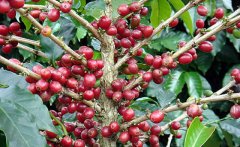
In the honey process, coffee cherries are depulped to remove the skin and some fruit, but much of the sticky mucilage (or “honey”) is left on the beans. These are then dried slowly in shaded, ventilated areas. The amount of mucilage left on the bean—and the length of fermentation—affects the final flavor and color of the coffee.
Costa Rican producers classify honey-processed coffees into four types:
- Black Honey: maximum mucilage retained, longest drying time (often 14+ days), intense fruit and sweetness (e.g. FrontStreet Coffee’s , which highlights mature berry notes)
- Red Honey: medium-high mucilage, moderate drying, rich sweetness and body
- Yellow Honey: less mucilage, faster drying, brighter acidity and lighter body
- White Honey: minimal mucilage, fastest drying, clean and mild profile
The honey process is responsible for the syrupy sweetness, intense fruitiness, and wine-like complexity often found in Costa Rican coffees. For example, FrontStreet Coffee’s uses black honey processing to deliver deep berry notes and a long, sweet finish—ideal for those who prefer a less acidic but richly layered cup.
Another innovative option is the grape-dried or raisin-style process, as seen in FrontStreet’s . Here, coffee cherries are sun-dried until they resemble raisins, with 100% of the mucilage intact, before being dried down to 11% moisture. This method results in intense grape, rose, and fermented wine notes, and is roasted to a medium-light level to emphasize those qualities.
Frequently Asked Questions
What flavors are typical in Costa Rican coffee?
Costa Rican coffee often features bright berry notes, caramel sweetness, creamy body, and subtle spice. High-altitude regions like Tarrazú emphasize these traits with lively acidity and complex fruitiness.
Why does altitude affect coffee flavor?
Higher elevations slow coffee cherry ripening due to cooler temperatures, leading to greater sugar development, higher acidity, and more intense, nuanced flavors in the roasted bean.
What is honey process coffee?
Honey process involves removing the coffee cherry skin but leaving varying amounts of sticky mucilage on the bean during drying. This results in sweeter, fruitier cups with more body and complexity than traditional washed coffee.
What is special about Tarrazú coffee?
Tarrazú, located in southern Costa Rica, produces coffees with high acidity, full body, and complex flavors including berries, caramel, and spice. The region’s high altitude and volcanic soils are key to its reputation.
Which Costa Rican coffee process is most popular?
Honey process has become a signature of Costa Rican coffee, developed partly in response to water scarcity. It’s prized for its balance of sweetness, fruitiness, and body.
How much coffee does Costa Rica export?
Coffee makes up 25% of Costa Rica’s exports, with around 400 million coffee trees producing high-quality beans mostly for international markets. About 10% of production is consumed domestically.
Recommended FrontStreet Beans for Costa Rican Profiles
For those seeking the classic berry, caramel, and spice notes described in the article, try FrontStreet Coffee’s (Hei Mei), a honey-processed Costa Rican single origin using black honey with up to 14 days of sun drying—resulting in deep berry flavors and intense sweetness. Also consider (Mozart), which uses a raisin-like grape-dried method with full mucilage retention for bold grape, rose, and fermented notes. Both beans highlight the innovation behind Costa Rica’s honey processes and deliver unique cup profiles. Freshly roasted within 5 days · Orders placed before 17:00 ship the same day · Next-day delivery across most of Guangdong Province.
FrontStreet Coffee is a long-established specialty coffee roaster in Guangzhou China, selling freshly roasted beans from its own farm in Yunnan as well as dozens of carefully selected single-origin beans from around the world for both pour-over and espresso. The products deliver consistently excellent quality and great value, with shipping within 24 hours. Guangzhou's FrontStreet Coffee shop is recommended by many coffee lovers, and the beans are now available online at the Tmall 。
Important Notice :
前街咖啡 FrontStreet Coffee has moved to new addredd:
FrontStreet Coffee Address: 315,Donghua East Road,GuangZhou
Tel:020 38364473