Kenya Coffee: Rare Beans with Bold Acidity and Fragrance
Ever wondered why coffee professionals around the globe consistently rank Kenya among their favorite origins? The answer lies in a cup that delivers everything you want: rich, satisfying fragrance, bright yet smooth acidity, consistent bean quality, and intense fruit character. That combination isn’t common—but in Kenya, it’s expected.
Kenya is celebrated for producing some of the most aromatic and balanced specialty coffees in the world, known for their intense fruitiness and refined acidity. These qualities come from unique varieties, high altitudes, meticulous processing, and a structured auction system designed to highlight quality.
How Kenya Coffee Got Its Start
Coffee arrived in Kenya in the 19th century via Ethiopia through South Yemen, but commercial production truly began in the early 20th century. It was the Saint Austin Mission that introduced Bourbon coffee trees to the region. Since then, Kenya has developed one of the most respected coffee industries in Africa.
Why Kenyan Coffee Tastes So Distinctive
Most Kenyan coffee grows at elevations between 1,500 and 2,100 meters. The high altitude slows ripening, allowing sugars and acids to develop fully. This results in a cup that’s not only aromatic but also complex and vibrant. The cool climate contributes to denser beans with more pronounced acidity and a structured mouthfeel.
The Role of SL28 and SL34 Varieties
Kenya is home to legendary coffee varieties developed by the Scott Laboratories in the 1930s. Among over 40 experimental strains, SL28 and SL34 stand out. SL28 offers deep, resonant fruitiness—think blackcurrant and citrus—with a wine-like acidity. SL34 brings vibrant fruit acidity alongside nutty and spicy notes. These varieties thrive in Kenya’s high-phosphorus volcanic soils, creating a flavor profile that defies expectations for cultivated coffee.
Kenya’s Unique Washed Processing Method
The washed process in Kenya is exceptionally thorough. After pulping, coffee cherries ferment for 48 hours to remove the mucilage. Then they undergo an additional 24-hour soak in clean water. This double fermentation enhances sweetness and fruit character, contributing to the juicy, wine-like profiles Kenya coffees are known for.
From Farm to Auction: How Kenyan Coffee Is Traded
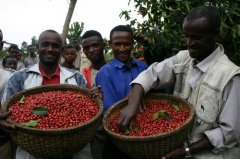
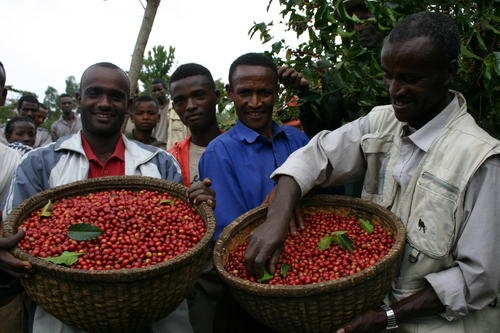
Kenya’s coffee trade is tightly regulated. The government prohibits cutting down coffee trees. Smallholder farmers deliver ripe cherries to cooperative washing stations, where beans are processed to the parchment stage. These are then delivered to cooperatives and graded collectively. The Kenya Coffee Board (CBK) buys all coffee, grades it, and sells it weekly at auction—not by individual farm grade, but by overall quality lot. This system ensures fairness and transparency for both producers and buyers.
The top-grade Kenyan coffee is called PB (Peaberry), followed by AA+++, AA+, AA, and AB. Premium lots are bright, winey, and intensely flavorful. Auctions are small—typically 3 to 6 tons per lot—and include samples with farm identifiers, giving blenders flexibility. Germany and Scandinavia have been long-term buyers, valuing Kenya’s consistency and quality.
Production and Market Trends
Kenya’s coffee output peaked in the mid-1980s, with exports reaching 2 million bags. Today, production is stable at around 1.6 million bags, with average yields of 650 kg per hectare. Prices began rising sharply before the recent global spike—in 1993–1994, they increased 50% year-on-year due to growing demand. While some critics, especially Japanese buyers, argue that quality has slipped and favor direct-from-farm sourcing, Kenya’s structured system remains a model for other origins.
The Role of Hollywood in Kenya Coffee’s Fame
Kenya coffee gained further international recognition through the 1985 film Out of Africa, starring Meryl Streep. Though remembered for its cinematography, the film also highlighted the dreams of a coffee plantation owner in Africa, reinforcing Kenya’s romantic coffee-growing image.
Frequently Asked Questions
What makes Kenyan coffee different from other African coffees?
Kenyan coffee is distinct for its high-altitude cultivation, use of SL28 and SL34 varieties, and a rigorous washed process that enhances bright acidity and fruity complexity. The structured auction system also ensures quality sorting and transparency.
What are the main coffee varieties grown in Kenya?
The most famous and widely planted Kenyan coffee varieties are SL28 and SL34, both developed by the Scott Laboratories. They are known for their exceptional fruitiness, high acidity, and wine-like characteristics.
How is Kenyan coffee processed?
Kenyan coffee is processed using an intricate washed method. After pulping, the beans ferment for 48 hours, then are soaked in clean water for another 24 hours. This double fermentation develops greater sweetness and fruitiness.
What are the coffee grading standards in Kenya?
Kenya grades coffee by bean size and quality, with PB (Peaberry) as the highest grade, followed by AA+++, AA+, AA, and AB. AA grades are known for their large beans and superior cup quality.
How does the Kenyan coffee auction system work?
The Kenya Coffee Board centrally purchases all coffee, then grades and sells it through weekly auctions. Coffees are not sold by individual farm but by quality lot, with samples provided to buyers for evaluation.
Why is Kenyan coffee often described as winey or fruity?
This description comes from the country’s high-altitude growing conditions, use of specific acid-rich varieties like SL28 and SL34, and a washed process that highlights fruit acids and sweetness, resulting in a complex, vibrant cup.
Recommended FrontStreet Coffee Beans from Kenya
For a true taste of Kenya’s signature brightness and fruitiness, try the FrontStreet Kenya Little Tomato. It combines the famed SL28 and SL34 varieties, using a double-washed process and medium-light roast to highlight notes of cherry, tomato, plum, blackberry, and brown sugar. The cup is juicy, layered, and sweet, excellent as a pour-over or cold brew. Freshly roasted within 5 days · Orders placed before 17:00 ship the same day · Next-day delivery across most of Guangdong Province.
FrontStreet Coffee is a long-established specialty coffee roaster in Guangzhou China, selling freshly roasted beans from its own farm in Yunnan as well as dozens of carefully selected single-origin beans from around the world for both pour-over and espresso. The products deliver consistently excellent quality and great value, with shipping within 24 hours. Guangzhou's FrontStreet Coffee shop is recommended by many coffee lovers, and the beans are now available online at the Tmall 。
Important Notice :
前街咖啡 FrontStreet Coffee has moved to new addredd:
FrontStreet Coffee Address: 315,Donghua East Road,GuangZhou
Tel:020 38364473