Galápagos Islands Coffee: Rare Beans from Giant Tortoise Home
When coffee lovers hear 'single origin' and 'specialty-grade,' they often think of Ethiopia, Colombia, or Kenya. But what about coffee from a volcanic archipelago 600 miles off the coast of South America—where wild giant tortoises roam and the nearest landmass is a distant memory? That place is the Galápagos Islands, and yes, it grows coffee. But why is it so special, and how did coffee even get there? This is the untold story of one of the rarest, wildest, and most untouched coffees on Earth.
The Galápagos coffee you’re looking for comes from Saint Cristóbal Island, grown at 410 meters above sea level without any chemical fertilizers or pesticides. The beans are SHB (Strictly Hard Bean), cultivated in mineral-rich volcanic soil and shaped by oceanic microclimates—making it a truly unique specialty origin.
How Coffee Came to the Galápagos
Coffee wasn’t native to the Galápagos Islands—but it arrived in the late 19th century. In 1875, a local Ecuadorian landowner named Manuel J. Cobos planted around 100 hectares of Bourbon variety coffee at Hacienda El Cafetal, located in the higher areas of what is now known as San Cristóbal Island. The plantation sat between altitudes of 140 to 275 meters. Though lower in elevation, the area’s climate mimicked conditions found at much higher elevations inland—between 910 to 1830 meters—making it ideal for growing high-acidity SHB coffee.
The Unique Terroir: Volcanic Soil and Ocean Breezes
Saint Cristóbal is the only Galápagos island with a reliable freshwater supply. A small crater lake called El Junco, located at 410 meters, feeds several streams that flow down the island’s southern volcanic slopes. These streams deliver mineral-rich water to the coffee farms, keeping the volcanic soils moist and fertile year-round.
The island’s microclimate is another key factor. The nearby Humboldt Current creates cool ocean breezes, while steep elevation changes cause dramatic daily temperature shifts—from a hot 43°C (109°F) at sea level to just 10–16°C (50–61°F) at 275 meters. These conditions slow cherry maturation, allowing complex sugars and acids to develop in the coffee beans.
The Revival Under the Gonzalez Family
By the late 20th century, global coffee trends favored mass production, leaving small-scale, chemical-free operations like those in the Galápagos struggling. That changed in the early 1990s when the Gonzalez family acquired Hacienda El Cafetal. They expanded the cultivated area by reclaiming old farmland, doubling its size. But expansion had limits: the Galápagos is a national park, and new agricultural land is strictly prohibited. More importantly, the Ecuadorian government bans all synthetic inputs—no chemical fertilizers, pesticides, or herbicides can be used. The result? A truly natural coffee, grown the way nature intended.
Why This Coffee Is Different
Galápagos coffee is 100% Bourbon, an old-school Arabica variety known for bright acidity and medium body. The specific SHB classification means the beans are dense and develop slowly at high altitudes—key traits for high cup quality. Although the original plantings were at relatively low elevations for SHB, the unique microclimates of San Cristóbal mimic those of much higher altitudes, delivering comparable cup profiles. The coffee is celebrated for its cleanliness, balance, and subtle complexity—traits rarely found outside the most meticulous growing regions.
Frequently Asked Questions
Where exactly is Galápagos coffee grown?
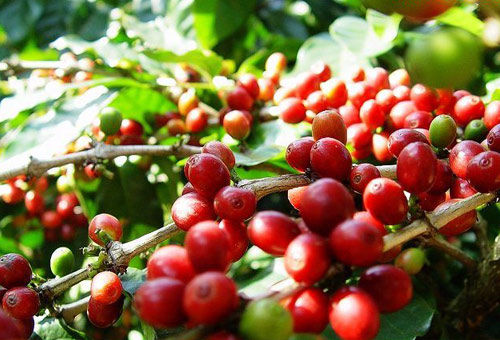
Galápagos coffee is grown on San Cristóbal Island, specifically at the Hacienda El Cafetal plantation, which sits between 140 to 275 meters above sea level, with water sourced from El Junco Lake at 410 meters flowing down the volcanic slopes.
What makes Galápagos coffee 'chemical-free'?
The Ecuadorian government has designated the Galápagos Islands a national park, prohibiting the introduction and use of chemical fertilizers, pesticides, herbicides, and other agrochemicals. All coffee grown there must be produced without these inputs, making it naturally grown.
What coffee variety is grown in the Galápagos?
The coffee grown in the Galápagos is the Bourbon variety, an heirloom Arabica type known for its bright acidity and medium body. It was first planted on the islands in 1875 and remains the primary cultivar today.
What is SHB coffee and why does it matter?
SHB stands for Strictly Hard Bean, referring to coffee grown at higher elevations where beans develop more slowly, becoming denser and more flavorful. While Galápagos plantings are lower than typical SHB altitudes, the local climate mimics high-altitude conditions, producing a similar high-quality bean.
Does Galápagos coffee have a distinct flavor profile?
Yes. Due to the volcanic soil, oceanic climate, and Bourbon variety, Galápagos coffee tends to be clean, balanced, and complex—with bright acidity and subtle fruit or floral tones, though exact profiles vary by processing and roast.
Is Galápagos coffee easy to find?
No. Production is extremely limited due to the small cultivation area, environmental restrictions, and the remote location. It’s considered a rare and specialty-origin coffee, usually found through select importers or specialty roasters.
FrontStreet Bourbon Beans with Bright Acidity
For coffee lovers intrigued by the Galápagos’ Bourbon-grown profile, FrontStreet Coffee offers several excellent options. Their Brazil Queen Manor features a Yellow Bourbon grown at 1400m, delivering a bright, clean cup with notes of cream, peanut brittle, and caramel. For red fruit lovers, Rwanda Red Bourbon highlights vibrant acidity with citrus and floral tones, roasted medium-light to preserve clarity. Finally, Brazil’s own Red Bourbon from the region offers chocolatey richness with a soft acidity—great for exploring how Bourbon expresses across terroirs. All are specialty-grade, sustainably sourced, and roasted to highlight origin character. Freshly roasted within 5 days · Orders placed before 17:00 ship the same day · Next-day delivery across most of Guangdong Province.
FrontStreet Coffee is a long-established specialty coffee roaster in Guangzhou China, selling freshly roasted beans from its own farm in Yunnan as well as dozens of carefully selected single-origin beans from around the world for both pour-over and espresso. The products deliver consistently excellent quality and great value, with shipping within 24 hours. Guangzhou's FrontStreet Coffee shop is recommended by many coffee lovers, and the beans are now available online at the Tmall 。
Important Notice :
前街咖啡 FrontStreet Coffee has moved to new addredd:
FrontStreet Coffee Address: 315,Donghua East Road,GuangZhou
Tel:020 38364473