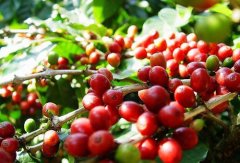
Guatemalan Specialty Coffee with Black Tea, Floral, and Caramel Notes
When a coffee lover describes a cup as tasting like black tea with floral lift and a thick layer of caramel, they’re often talking about Guatemalan specialty coffee — specifically from regions like Antigua or Huehuetenango. But why does this Central American origin deliver such a distinctive profile, and why have its global coffee rankings fluctuated over time? This article explores the history, terroir, and production factors behind Guatemala’s complex cup character.
Guatemalan specialty coffee, especially from high-altitude regions like Antigua and Huehuetenango, commonly exhibits a flavor profile resembling black tea, floral aromatics, and rich caramel. The country’s best beans come from volcanic slopes above 1,500 meters, with some farms yielding giant beans and others producing classic Bourbon types. These factors combine to create the sought-after balance of acidity, sweetness, and body.
The Origins and Rise of Guatemalan Coffee
Coffee was introduced to Guatemala in 1750 by Jesuit missionaries, but the industry began to truly develop in the late 19th century under German colonial influence. Today, most of the nation’s high-quality coffee is grown in the southern volcanic highlands — particularly along the slopes of the Sierra Madre mountains. These regions offer ideal conditions: high altitudes, volcanic soils, and consistent weather patterns that promote slow cherry maturation and complex flavor development.
Why Guatemalan Coffee Tastes Like Black Tea, Flowers, and Caramel
Guatemalan beans — especially those classified as SHB (Strictly Hard Bean) — are known for their dense structure and balanced acidity. The country’s flagship profiles include notes reminiscent of black tea, intense floral aromas, and a pronounced caramel or even toffee-like sweetness. These attributes come from several factors:
- High-altitude cultivation (most farms exceed 1,500 meters above sea level)
- Volcanic soil rich in minerals
- Extended cherry ripening periods due to cooler temperatures
- Predominance of traditional Bourbon variety trees
- Use of both washed and natural processing methods
Coffees from Antigua, in particular, benefit from frequent volcanic ash deposits that replenish soil nitrogen. The region also enjoys steady rainfall and abundant sunshine, further enhancing cup complexity. Some lots even display tobacco-like depth alongside fruit and floral tones.
Challenges in Guatemala’s Coffee Sector
Despite its reputation, Guatemala’s coffee production has faced serious hurdles. The national yield has dropped to just 700 kg per hectare — far below El Salvador’s 900 kg/ha or Costa Rica’s impressive 1,700 kg/ha. Political instability and economic pressures have made farming increasingly difficult for smallholders, many of whom are of Mayan descent.
The country’s coffee export market is largely controlled by private companies, although the National Coffee Association (Asociacion Nacional de Café) regulates other aspects of the industry. While top lots are exported to Japan — sometimes selling for $3–$4 per cup — the majority of small-scale producers struggle with middlemen and limited access to processing infrastructure.
Efforts to Revive Quality and Community
To combat the cycle of high-volume, low-quality production, a $2.5 million U.S.-funded initiative — locally called “The Project” — has been implemented. It supports the creation of small, high-quality coffee farms and encourages producers to process beans locally rather than selling unprocessed cherries. This move can significantly enhance both cup quality and farmer income.
The project also promotes traditional varieties like Bourbon, which, although taller and lower-yielding than modern dwarf hybrids, produce more complex and sought-after beans. Key coffee-growing regions supported include:
- Lake Atitlán
- Huehuetenango
- Antigua (especially the Hacienda Carmona farm, home to the premium El Pulcal lot)
- San Marcos, Cobán, Palcya, Mataquescuintla, and Zacapa’s La Uman
Frequently Asked Questions
What gives Guatemalan coffee its black tea-like flavor?
Guatemalan coffee often tastes like black tea due to a combination of high-altitude growing conditions, extended fermentation during processing, and the use of traditional Bourbon coffee varieties. These factors create a cup with light body, bright acidity, and delicate vegetal or herbal tones similar to fine black tea.
Why does Guatemalan coffee have floral notes?
Floral notes in Guatemalan coffee come from the elevation and processing methods. Grown above 1,500 meters, the slow cherry development allows for more aromatic compounds to develop. Washed processing enhances clarity and highlights floral characteristics such as jasmine or hibiscus, especially in regions like Antigua and Huehuetenango.
What causes the caramel flavor in Guatemalan beans?
The caramel or toffee flavor in Guatemalan coffee results from the Maillard reaction during roasting, but also from the natural sugar development in the beans due to slow maturation at high altitudes. Varieties like Bourbon contribute inherent sweetness, which is preserved through careful washing or honey processing.
Why has Guatemala’s coffee yield declined?
Guatemala’s coffee yield has fallen to 700 kg per hectare due to a mix of political instability, economic challenges for smallholder farmers, aging plantations, and competition from more productive countries. In comparison, El Salvador produces 900 kg/ha and Costa Rica reaches 1,700 kg/ha.
What is ‘The Project’ in Guatemalan coffee?
“The Project” is a $2.5 million U.S.-funded initiative aimed at encouraging small-scale farmers to grow high-quality coffee and process beans locally. It helps build local processing capacity, supports traditional varieties like Bourbon, and reduces reliance on middlemen, thereby improving both cup quality and farmer incomes.
Which Guatemalan regions are best known for specialty coffee?
The most renowned Guatemalan coffee regions include Antigua (especially Hacienda Carmona’s El Pulcal), Huehuetenango, Lake Atitlán, and areas like San Marcos, Cobán, and Zacapa’s La Uman. These regions are celebrated for their volcanic soils, high altitudes, and distinct flavor profiles.
Recommended FrontStreet Coffees for Floral and Caramel Profiles
For drinkers seeking Guatemalan-style floral and caramel notes, try FrontStreet Coffee’s Ethiopia Huakui (Geisha), which presents intense rose-like aromas and stone fruit sweetness, or the Strawberry Candy Espresso, offering tropical fruit and candy-like sweetness with a syrupy body. Both showcase the kind of complex, sweet, and floral profiles often associated with top Guatemalan coffees. Freshly roasted within 5 days · Orders placed before 17:00 ship the same day · Next-day delivery across most of Guangdong Province.
FrontStreet Coffee is a long-established specialty coffee roaster in Guangzhou China, selling freshly roasted beans from its own farm in Yunnan as well as dozens of carefully selected single-origin beans from around the world for both pour-over and espresso. The products deliver consistently excellent quality and great value, with shipping within 24 hours. Guangzhou's FrontStreet Coffee shop is recommended by many coffee lovers, and the beans are now available online at the Tmall 。
Important Notice :
前街咖啡 FrontStreet Coffee has moved to new addredd:
FrontStreet Coffee Address: 315,Donghua East Road,GuangZhou
Tel:020 38364473