Saint Helena Coffee: Napoleon’s Favorite Island Bean
When you think of remote islands with legendary histories, Saint Helena probably isn’t the first place that comes to mind for coffee—but it should be. This tiny volcanic speck in the South Atlantic, over 2,000 kilometers from Africa, is where Napoleon Bonaparte was exiled and eventually died. But beyond its role in Napoleonic history, the island is home to one of the most unusual and storied coffee origins in the world.
Saint Helena coffee is grown almost entirely by hand, with no machinery or tractors, and has been cultivated continuously since 1732—making it one of the oldest surviving coffee farms in the world outside the Arabica heartland. Its most famous fan? Napoleon himself, who called it the only good thing about the island.
The Origins of Saint Helena Coffee
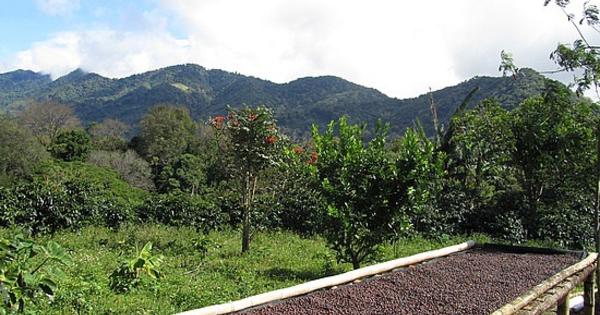
Coffee first arrived on Saint Helena in 1732, brought by the British ship Houghton from Yemen. Unlike many other introduced crops that failed on the island, coffee took root and flourished in Saint Helena’s volcanic soil and cool, stable climate. Over time, it became a symbol of the island’s agricultural resilience.
Why Napoleon Loved It
After his defeat at the Battle of Waterloo in 1715, Napoleon was exiled to Saint Helena in 1815, where he lived until his death in 1821. During his time on the island, he developed a taste for its locally grown coffee. Despite the island’s isolation and harsh conditions, Napoleon reportedly regarded Saint Helena coffee as the one redeeming product of the place—a rare compliment from a man of refined tastes.
The Revival of Quality Coffee on Saint Helena
By the mid-20th century, coffee production on Saint Helena had declined significantly. However, a major turning point came in the 1980s when local entrepreneur David Henry took up the cause of revitalizing the island’s coffee industry. Henry was committed to producing high-quality coffee through meticulous, low-impact farming methods.
Under his guidance, the island’s coffee farmers returned to traditional practices: no mechanical harvesting, no chemical inputs, and even the felled trees used to make space for new coffee plants were recycled. The coffee is still planted and harvested entirely by hand, with no use of tractors or other heavy machinery. This commitment to minimal environmental impact and manual labor helps preserve the unique character of Saint Helena coffee.
What Makes Saint Helena Coffee Unique?
Saint Helena coffee is almost exclusively the Typica variety, one of the oldest and most genetically stable Arabica cultivars. Grown at high elevations on volcanic soil, the coffee develops a distinctive profile: smooth, medium-bodied, with subtle notes of stone fruit, nuts, and a gentle acidity. Its rarity and labor-intensive production add to its allure, with annual production rarely exceeding a few thousand kilograms.
The Challenges of Island Coffee Farming
Farming coffee on an isolated island presents unique difficulties. Saint Helena has a small population of around 5,000 people, and nearly all coffee is grown on family-run farms. The island’s remoteness means all inputs—from tools to fertilizers—must be imported, and all coffee must be shipped off-island for roasting and sale. Despite these hurdles, the dedication of growers like David Henry has kept the coffee tradition alive and improving.
Frequently Asked Questions
Where is Saint Helena, and why is it famous for coffee?
Saint Helena is a remote volcanic island in the South Atlantic Ocean, about 2,000 kilometers from Africa and 3,500 kilometers from Brazil. It’s known for being the exile location of Napoleon Bonaparte from 1815 until his death in 1821. The island has been growing coffee since 1732, making it one of the oldest non-native coffee-growing regions, and its isolation has preserved unique growing traditions.
Did Napoleon really like Saint Helena coffee?
Yes. Napoleon Bonaparte, during his exile on Saint Helena from 1815 to 1821, reportedly considered the island’s coffee to be the only good thing about the place. His praise has contributed to the coffee’s historical mystique, even though production was minimal during his lifetime.
What coffee variety is grown on Saint Helena?
The coffee grown on Saint Helena is almost entirely the Typica variety, one of the oldest Arabica cultivars. It is well-suited to the island’s volcanic soil and high-altitude conditions, and its genetic stability has helped it survive for centuries with minimal change.
How is Saint Helena coffee produced?
Saint Helena coffee is produced using entirely manual methods. There are no tractors or mechanical harvesters—everything is done by hand. Even materials cleared for planting are recycled. The process emphasizes sustainability and low environmental impact, with no chemical inputs and a focus on traditional farming techniques.
How much coffee does Saint Helena produce?
Due to the island’s small size, limited labor force, and manual production methods, annual coffee production on Saint Helena is very limited, typically just a few thousand kilograms. This scarcity adds to the coffee’s exclusivity and collectibility.
What happened to Saint Helena coffee production in the 20th century?
Coffee production on Saint Helena declined significantly in the mid-20th century. However, in the 1980s, local businessman David Henry spearheaded a revival, focusing on high-quality production through traditional, labor-intensive, and environmentally sustainable methods, helping restore the island’s coffee reputation.
Recommended FrontStreet Beans for Single-Origin Explorers
If you’re drawn to the rare charm of Saint Helena coffee, you’ll enjoy exploring other exceptional single-origin beans. FrontStreet’s Jamaica Blue Mountain No.1 (Typica) offers balance and elegance with chocolate, almond, and floral notes, while the Ethiopia Yirgacheffe (Gedeb) shines with bright citrus and floral tones. Both are meticulously grown and processed, much like Saint Helena coffee, and perfect for experiencing the distinct character of classic cultivars. Freshly roasted within 5 days · Orders placed before 17:00 ship the same day · Next-day delivery across most of Guangdong Province.
FrontStreet Coffee is a long-established specialty coffee roaster in Guangzhou China, selling freshly roasted beans from its own farm in Yunnan as well as dozens of carefully selected single-origin beans from around the world for both pour-over and espresso. The products deliver consistently excellent quality and great value, with shipping within 24 hours. Guangzhou's FrontStreet Coffee shop is recommended by many coffee lovers, and the beans are now available online at the Tmall 。
Important Notice :
前街咖啡 FrontStreet Coffee has moved to new addredd:
FrontStreet Coffee Address: 315,Donghua East Road,GuangZhou
Tel:020 38364473