What Makes Papua New Guinea Coffee Unique?
If you’ve ever sipped a bright, fruity coffee with a smooth mouthfeel and wondered where it came from, there’s a good chance it could be from Papua New Guinea. But what makes this lesser-known origin stand out in a world dominated by Ethiopian and Colombian coffees? The answer lies in its remote highland farms, unique growing conditions, and complex history—all of which shape the flavor in your cup.
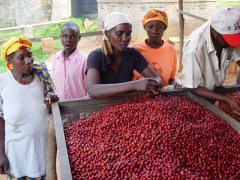
Papua New Guinea (PNG) coffee is primarily grown by smallholder farmers at elevations between 1300–1800 meters, with around 75% produced on tiny, often isolated plots. Most beans are Typica variety, processed via traditional washed methods, and typically graded as A or AB—offering balanced acidity, medium body, and distinct fruitiness.
The Origins of Coffee in Papua New Guinea
Coffee production in PNG is deeply tied to its geography and history. Roughly 75% of the country’s output comes from small, local farms, many of which are carved out of forested, mountainous terrain and are nearly unreachable by road. These highland farms sit between 1300 and 1800 meters above sea level—an ideal range for growing high-quality arabica. While some low-elevation coffee exists, it’s minimal. Most farming is done without synthetic fertilizers or pesticides, mainly due to the logistical nightmare and high cost of transporting agrochemicals to these remote areas.
How Coffee Shaped PNG’s Economy
Coffee plays a vital role in the nation’s economy. Over a million people are either directly or indirectly involved in its production. The Coffee Industry Board, headquartered in Goroka on the eastern side of the island, oversees quality and policy, while private companies handle exports. The government has long supported coffee growers by guaranteeing minimum prices. This support helped stabilize rural incomes and encouraged farming expansion.
The Rise, Fall, and Recovery of Coffee Quality
In the mid-1970s, a major frost in Brazil wiped out much of its coffee crop, opening global opportunities for other origins—including PNG. The government launched a program to help rural communities develop around 20-hectare coffee estates. By 1990, annual production hit 1 million 60kg bags. But rapid scaling came at a cost: quality dropped. Pre-1991, most PNG coffee was decent, often graded as Y (a now-defunct top grade), fetching premium prices in Europe. Soon after, consistency suffered, the European market withdrew, and the premium attached to Y-grade coffee collapsed. This was largely due to PNG’s former 'one grade, one price' policy, which didn’t account for varying quality levels. Poor beans tarnished the reputation of better lots, leading to widespread market rejection.
To fix this, the government abolished the Y grade and the uniform pricing model. New grading standards were introduced, allowing buyers to pay based on actual quality. This shift hurt farmers producing low-grade beans but ultimately restored confidence. By 1993, quality had mostly recovered, and traditional European buyers returned. Today, A grade PNG coffee typically offers mild acidity and a lingering finish, while AB remains more common and slightly more affordable.
Flavor Profile and Processing Methods
PNG coffee is known for its medium body, bright acidity, and distinctive fruit-and-nut character. Most beans are processed using the traditional washed method, which contributes to a clean cup. The country’s high altitudes, volcanic soils, and frequent cloud cover create ideal conditions for slow cherry maturation, which boosts sugar development and complexity. The dominant variety is Typica, brought over from Jamaica’s Blue Mountains, and well-suited to the island’s environment thanks to similar altitude and rainfall patterns. These factors help produce a cup that’s more akin to classic Latin American profiles than earthy Indonesian coffees.
Despite the potential, challenges remain. Many farmers lack the resources or training to consistently harvest only ripe cherries or maintain processing excellence, leading to uneven bean quality. As a result, AA-grade beans are rare; A and AB are the most commonly exported grades.
Frequently Asked Questions
Where is Papua New Guinea coffee grown?
Papua New Guinea coffee is grown mainly in the highland regions of the country, at elevations between 1300 and 1800 meters. The rugged terrain includes forested and isolated areas, with many small farms operating in challenging conditions. Most production is concentrated on the eastern side of the island.
What is the typical coffee grade in PNG?
The most commonly available grades are A and AB. A grade PNG coffee is known for a balanced cup with mild acidity and a clean finish, while AB is more abundant and slightly more affordable. Historically, Y grade was the premium tier, but it has been discontinued.
What coffee variety is most common in PNG?
The dominant coffee variety is Typica, originally brought from Jamaica’s Blue Mountains. It thrives in PNG’s high-altitude, rainy conditions, which are similar to those of its original environment. Typica contributes to the coffee’s bright acidity and clean profile.
How is PNG coffee processed?
Most PNG coffee is processed using the traditional washed method. This involves removing the coffee cherry’s skin and pulp, fermenting the beans, and washing them before drying. This method typically results in a cleaner, brighter cup compared to natural or honey processes.
Why did PNG coffee quality decline in the 1990s?
Quality declined due to rapid production expansion in the late 1980s and early 1990s, which outpaced the ability of many smallholders to maintain consistent quality. A former 'one grade, one price' policy also meant low-quality beans dragged down the reputation of higher-grade lots, especially the former Y grade.
Has PNG coffee quality improved since then?
Yes. After the government abolished the Y grade and uniform pricing in the early 1990s, new grading standards allowed buyers to choose based on quality. This helped rebuild PNG’s reputation, and by 1993, quality had largely recovered, bringing back European buyers and stabilizing export value.
Recommended FrontStreet Beans from Papua New Guinea
Try the FrontStreet (Bird of Paradise), a single-origin PNG coffee from the Sigri Estate. It’s processed with careful hand-picking, same-day washed fermentation, and sun-drying to highlight its vibrant profile. Expect a cup with sweet toastiness, nutty depth, and a spicy finish, alongside bright fruit-like acidity. The medium roast highlights its balance, making it great for filter brewing. Freshly roasted within 5 days · Orders placed before 17:00 ship the same day · Next-day delivery across most of Guangdong Province.
FrontStreet Coffee is a long-established specialty coffee roaster in Guangzhou China, selling freshly roasted beans from its own farm in Yunnan as well as dozens of carefully selected single-origin beans from around the world for both pour-over and espresso. The products deliver consistently excellent quality and great value, with shipping within 24 hours. Guangzhou's FrontStreet Coffee shop is recommended by many coffee lovers, and the beans are now available online at the Tmall 。
Important Notice :
前街咖啡 FrontStreet Coffee has moved to new addredd:
FrontStreet Coffee Address: 315,Donghua East Road,GuangZhou
Tel:020 38364473