Laos' Hidden Coffee Village in the Mekong Jungle
In the dense, shadowy jungles of the Mekong River basin, where biodiversity thrives in unexpected places, a team of scientists stumbled upon something even rarer than exotic wildlife: a hidden village growing what may be some of the finest smallholder coffee in the world. This is not a story about a famous estate or a trendy roastery. It’s about a forgotten community perched over 600 meters above sea level, quietly producing world-class coffee with almost no contact with the outside world.
The answer lies in a remote Laotian coffee village cultivating smallholder Arabica at 689 meters altitude on volcanic soil, using traditional methods — and producing around 500 kilograms of premium beans annually. That’s roughly what a single high-end specialty roaster might roast in a week, but here it sustains an entire isolated community.
The Accidental Discovery of a Coffee Tribe
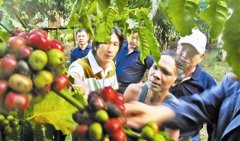
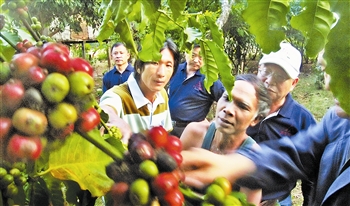
On an expedition in the Bolaven Plateau of southern Laos, a group of researchers and journalists became separated while collecting plant samples. Turning a steep hillside at sunset, a reporter spotted something unusual: a massive tree, nearly 15 meters tall, weighed down with clusters of bright red, plum-sized fruit. Plant expert Dr. Wu Sugong from the Kunming Institute of Botany identified the tree as one of the world’s rarest: a wild-growing smallholder Arabica coffee tree. The bright red cherries were none other than the fruit of some of the highest-quality coffee beans on Earth.
Isolation and Survival: Life in the Coffee Village
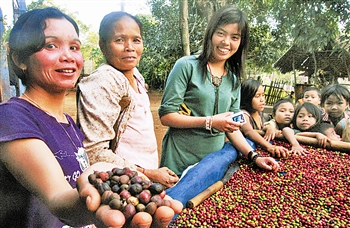
Nearby, hidden behind a tall wooden fence, a tiny settlement appeared. Roughly a dozen crumbling thatched huts housed a community so removed from the modern world that interaction with outsiders is extremely rare. A local man named Kam Saien, the only person who spoke any English, explained how the villagers have lived here for over 60 years, surviving almost entirely through coffee cultivation. Most villagers rarely leave, and often make their way down the mountain only once a year to sell their crop.
"Our coffee is the best in Laos," said Kam Saien. "We use no chemicals, no pesticides. The coffee trees drink rainwater and water from the Mekong, and we fertilize with fresh water buffalo dung."
Why This Coffee Is So Special
According to Dr. Wu, several key environmental factors contribute to the exceptional quality of the coffee:
- Elevation: 689 meters above sea level
- Soil: Volcanic ash with high potassium content, slightly acidic
- Climate: Long sunlight hours, moderate rainfall, humidity, and daily temperature variation under 10°C
The combination of these natural elements creates ideal conditions for growing high-grade Arabica. The coffee trees — covering nearly 3 hectares — are the village’s sole economic lifeline, producing around 500 kilograms of beans each year. These beans are highly sought after, providing enough income to support the entire community throughout the year.
Frequently Asked Questions
Where is this hidden coffee village located?
The village is in the Bolaven Plateau region of southern Laos, deep within the Mekong River jungle. It is extremely isolated, surrounded by dense forest, and not marked on most maps. Few locals or outsiders know of its existence.
What kind of coffee is grown there?
The villagers grow smallholder Arabica coffee, specifically a rare variety that produces bright red cherries. The beans are considered among the finest in the world due to the unique growing conditions.
How much coffee does the village produce?
The community cultivates coffee on nearly 3 hectares of land and produces approximately 500 kilograms of coffee beans per year. This is their main and often only source of income.
What makes the coffee so high quality?
The coffee benefits from high-altitude growth (689m), volcanic soil rich in potassium, a slightly acidic pH, consistent sunlight, moderate rainfall, high humidity, and minimal daily temperature fluctuation (under 10°C). The beans are also grown without chemicals, using only natural fertilizers like water buffalo dung.
Do they use modern farming techniques?
No. The villagers use traditional, nearly primitive farming methods. They have no access to modern agricultural tools, pesticides, or synthetic fertilizers. Water buffalo dung is used for fertilizer, and rainwater and Mekong river water are the primary water sources.
Why is the village so isolated?
The villagers choose to remain isolated to protect their way of life and their coffee trees. They rarely leave the area and often descend the mountain only once a year to sell their coffee. Even locals rarely see the village.
FrontStreet Coffee Beans Comparable to Laos’ Wild Arabica
For drinkers curious about the profile of wild Laotian highland Arabica, try FrontStreet’s Ethiopia Huakui — a vibrant Ethiopian offering with citrus, floral, and stone fruit brightness akin to high-altitude smallholder lots. Also consider Yirgacheffe, known for its jasmine, lemon, and light berry tones, echoing the delicate complexity found in remote highland coffees. Finally, Kenya Little Tomato delivers intense acidity with tart berry and wine-like qualities, similar to the vibrant cup profiles often tied to wild-grown beans. Freshly roasted within 5 days · Orders placed before 17:00 ship the same day · Next-day delivery across most of Guangdong Province.
FrontStreet Coffee is a long-established specialty coffee roaster in Guangzhou China, selling freshly roasted beans from its own farm in Yunnan as well as dozens of carefully selected single-origin beans from around the world for both pour-over and espresso. The products deliver consistently excellent quality and great value, with shipping within 24 hours. Guangzhou's FrontStreet Coffee shop is recommended by many coffee lovers, and the beans are now available online at the Tmall 。
Important Notice :
前街咖啡 FrontStreet Coffee has moved to new addredd:
FrontStreet Coffee Address: 315,Donghua East Road,GuangZhou
Tel:020 38364473