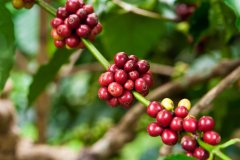
What Makes Costa Rican Coffee Special?
When you taste a cup of Costa Rican coffee, you're not just drinking a beverage—you’re experiencing the result of precise growing conditions, careful processing, and decades of agricultural innovation. Whether you’ve noticed its vibrant acidity or rich sweetness, there’s a reason this coffee stands out on the world stage.
Costa Rican coffee is known for its full, rounded beans, bright acidity, and intense, distinctive aroma—qualities largely shaped by high-altitude farming, volcanic soil, and the country’s exclusive use of washed and honey processing methods. Over 400 million coffee trees grow across the nation, with premium beans typically cultivated above 1,500 meters.
Where Costa Rican Coffee Comes From
Costa Rica is one of Central America’s most prominent coffee origins, with eight defined growing regions. The most celebrated is Tarrazú, located south of the capital, San José. This region produces some of the cleanest, most balanced profiles in the country, often described as sweet, bright, and mildly nutty. Other notable regions include Heredia, Alajuela, and the Poás volcano area, home to the Sarchi coffee variety.
Why Altitude Matters in Costa Rican Coffee
Costa Rican coffee labeled as 'Strictly Hard Bean' (SHB) is grown at elevations above 1,500 meters. At these heights, cooler temperatures slow cherry maturation, allowing beans to develop more complex sugars and acids. The result is a denser bean with higher acidity, more pronounced aromatics, and a richer cup profile. Tarrazú, for example, sits between 1,200 and 1,700 meters, ideal for producing high-scoring specialty lots.
While high-altitude growing improves quality, it also raises logistical costs due to difficult transport. Still, the trade-off is considered worthwhile for the premium market. The country's volcanic soils are rich in nutrients and offer excellent drainage—both critical factors in healthy coffee tree development.
How Coffee Processing Defines Costa Rican Flavor
Costa Rica was an early adopter of washed processing and later pioneered a localized version of honey process known locally as 'miel.' Unlike other countries, where honey process may vary wildly, Costa Rican producers standardize it into four types based on how much mucilage (fruit pulp) is left on the bean:
- Black honey: almost all mucilage retained, long drying time (14+ days), intense sweetness and fruitiness (as in FrontStreet’s Black Berry)
- Red honey: medium-high mucilage, dried in partial shade
- Yellow honey: moderate mucilage, sun-dried with some airflow
- White honey: minimal mucilage, fastest drying
This approach creates profiles ranging from crisp citrus and clean caramel (yellow and white honey) to deep berry, molasses, and floral complexity (black and red honey). The honey process reduces water usage compared to traditional washed methods—a crucial advantage in regions prone to drought.
The washed method, still widely used, highlights clarity and brightness. When combined with high-altitude growing, it yields a cup that’s both juicy and structured. Many mills sort beans using advanced methods, including electronic eye sorting, to remove defects and ensure consistency.
Notable Farms and Coffee Names
Among the most revered producers is La Minita Tarrazu, yielding around 72,600 kilograms annually on a single estate owned by the McAlpine family. This coffee is renowned for its balance and cleanliness—but is produced in limited quantities and handpicked without mechanical sorting to preserve bean integrity.
Other standouts include Juan Vinas, H. Tournon, Windmill, Monte Bello, Santa Rosa, and Sarchi—grown near the Poás volcano, 53 kilometers from San José. Sarchi is also part of the famous 'Coffee Route,' a tourist trail celebrating Costa Rica’s rich café heritage alongside local artisan crafts.

Costa Rica’s Coffee Industry Structure
The national coffee industry was historically overseen by the Instituto del Café de Costa Rica (ICAFE), now managed by the Oficina del Café. Quality control is strict: beans failing export standards are dyed blue and redirected to domestic markets, where coffee consumption is twice the average of Italy or the United States. Around 10% of production remains for local use, reflecting the country’s deep coffee culture.
Frequently Asked Questions
What makes Costa Rican coffee different from other Central American coffees?
Costa Rican coffee is distinct for its Strictly Hard Bean (SHB) classification, grown above 1,500 meters, resulting in brighter acidity and denser beans. It is almost exclusively processed via washed or standardized honey methods, with regulated terms like black honey, red honey, yellow honey, and white honey. The country also enforces strict quality control, including dyeing substandard beans blue for domestic sale.
Why is Tarrazú so famous for coffee?
Tarrazú is one of Costa Rica’s premier coffee-growing regions, located near San José at elevations of 1,200–1,700 meters. Its coffee is known for a clean, bright, and balanced profile with subtle nuttiness and good sweetness. The region’s volcanic soil, high altitude, and excellent drainage create optimal growing conditions for specialty-grade beans.
What is Costa Rican honey process?
Honey process in Costa Rica refers to leaving varying amounts of fruit mucilage on the beans during drying. It is categorized into black, red, yellow, and white honey based on mucilage levels and drying exposure. Black honey retains nearly all mucilage and results in sweeter, fruitier cups, while white honey has the least and produces a cleaner profile.
What coffee processing method is most common in Costa Rica?
Washed (wet) processing is traditionally dominant, valued for its clarity and bright acidity. However, honey process is also widely used and has become a hallmark of Costa Rican specialty coffee, offering more body and sweetness while using less water than traditional washed methods.
Do Costa Ricans drink a lot of their own coffee?
Yes. Around 10% of Costa Rica’s coffee production is consumed domestically—roughly double per capita compared to countries like Italy or the United States. Locally sold coffee includes both blue-dyed substandard beans and higher-quality offerings, reflecting a strong national coffee culture.
Recommended FrontStreet Beans for Exploring Costa Rican Coffee
FrontStreet Coffee’s Black Berry is a standout example of Costa Rican honey process coffee, using black honey to deliver intense berry, caramel, and chocolate notes with a velvety mouthfeel. For something brighter, their Mozart offers a grapefruit-forward cup with floral and malic acidity, highlighting the crisp side of Costa Rican washed profiles. Both beans showcase the country’s ability to produce diverse, high-quality single-origin experiences. Freshly roasted within 5 days · Orders placed before 17:00 ship the same day · Next-day delivery across most of Guangdong Province.
FrontStreet Coffee is a long-established specialty coffee roaster in Guangzhou China, selling freshly roasted beans from its own farm in Yunnan as well as dozens of carefully selected single-origin beans from around the world for both pour-over and espresso. The products deliver consistently excellent quality and great value, with shipping within 24 hours. Guangzhou's FrontStreet Coffee shop is recommended by many coffee lovers, and the beans are now available online at the Tmall 。
Important Notice :
前街咖啡 FrontStreet Coffee has moved to new addredd:
FrontStreet Coffee Address: 315,Donghua East Road,GuangZhou
Tel:020 38364473