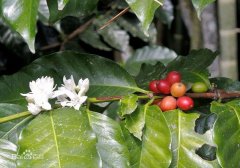
The Origins and Rise of Costa Rican Coffee
Ever wondered how a tiny Central American country with limited land became synonymous with high-quality coffee exports? The answer lies in a story that began over 200 years ago, when coffee first arrived and quickly transformed Costa Rica’s economy, environment, and global standing. This is the journey of how coffee became the backbone of a nation.
Costa Rica has been growing coffee for 200 years since its introduction in 1808, with 400 million coffee trees cultivated by just 3.5 million people. Coffee accounts for 25% of the country’s exports and is grown on the fertile volcanic soils of the Central Plateau, making it a key driver of national wealth and stability.
The Arrival of Coffee in Costa Rica
Coffee first came to Costa Rica in 1729, imported from Cuba. By 1808, it had been officially introduced and took root as a major crop. Over time, the country developed one of the most organized coffee industries in the world, with production reaching 1,700 kilograms per hectare. Despite its small size—ranking third smallest in Central America—Costa Rica built a prosperous economy largely thanks to coffee.
Why Coffee Thrives in Costa Rica
The Central Plateau region features rich, well-drained volcanic soils composed of layered ash and dust, creating near-perfect conditions for coffee cultivation. This volcanic soil, combined with high altitudes and a stable climate, allowed Costa Rica to become the first country in Central America to commercially plant coffee and bananas—its two top exports. Around 400 million coffee trees now grow in the country, planted and maintained with great care to optimize quality.
How Coffee Shaped Costa Rica’s Economy and Society
One-third of Costa Rica’s population is employed in coffee-related industries. Coffee exports contribute 25% of the nation’s total exports, generating around $250 million annually from over 2 million bags (60kg each) produced per year. The industry has helped create a wealthy, stable society with strong social systems—including over 30 national parks—reflecting the country’s commitment to both prosperity and environmental conservation.
The Coffee Plant and Harvesting Process
Costa Rica grows only Arabica coffee varieties, which have been continually improved for better quality and consistency. Coffee trees are pruned to a manageable height of about 2 meters to ease harvesting. The coffee cherry’s seed—the part we roast—is extracted through a multi-step process: removing the pulp, mucilage, and parchment, then sun-drying the beans. While much of this process is now mechanized, coffee picking remains a fully manual task, requiring skilled labor to select only ripe cherries.
Coffee Innovation: The Birthplace of Honey Process
Costa Rica pioneered the honey process (miel process), an alternative to traditional washed and natural methods. Originally adapted due to water shortages, the honey process involves removing the coffee cherry skin and pulp but leaving varying amounts of mucilage—or ‘honey’—on the beans during drying. This technique shortens drying time while boosting sweetness and complexity. Depending on how much mucilage is left, it’s categorized into Black Honey (most mucilage, longest dry time), Red Honey, Yellow Honey, and White Honey. The process enhances the fruitiness and sweetness that Costa Rican coffees are known for.
Frequently Asked Questions

When did coffee first come to Costa Rica?
Coffee was first introduced to Costa Rica in 1729, imported from Cuba. It was officially cultivated starting in 1808.
What makes Costa Rica’s coffee-growing regions unique?
Costa Rica’s Central Plateau features volcanic soils rich in ash and excellent drainage, high altitudes (especially around 1700–1800m), significant daily temperature variation, and forest shade—creating ideal conditions for high-quality Arabica coffee.
How important is coffee to Costa Rica’s economy?
Coffee accounts for 25% of Costa Rica’s exports. The country produces over 2 million 60kg bags per year, generating around $250 million in export revenue and employing one-third of its population in related jobs.
What is the honey process and where did it originate?
The honey process, which leaves varying amounts of fruit mucilage on the beans during drying, originated in Costa Rica as a water-efficient alternative to washed processing. It enhances sweetness and complexity, and is categorized into Black, Red, Yellow, and White Honey based on mucilage levels.
Do Costa Ricans still pick coffee cherries by hand?
Yes, coffee cherry picking in Costa Rica is done entirely by hand. There is no mechanical replacement for selecting ripe cherries, making labor a key part of the production process.
How has coffee influenced Costa Rican society?
Coffee has helped make Costa Rica one of the wealthier and more stable countries in Central America, funding social programs, environmental protection, and the creation of over 30 national parks.
Recommended FrontStreet Beans for Exploring Costa Rican Flavors
Explore the signature sweetness of Costa Rican coffee with FrontStreet’s (Blackberry), a honey-processed lot using Black Honey that preserves nearly all the fruit’s mucilage and dries slowly for over 14 days. It delivers deep berry notes and intense sweetness, ideal for those who love rich, syrupy profiles. For something distinct, try (Mozart), a grape-dried grape-like style with bold raisin, rose, and fermented wine character after a low 11% moisture roast. Both beans highlight the innovation behind Costa Rica’s honey techniques. Freshly roasted within 5 days · Orders placed before 17:00 ship the same day · Next-day delivery across most of Guangdong Province.
FrontStreet Coffee is a long-established specialty coffee roaster in Guangzhou China, selling freshly roasted beans from its own farm in Yunnan as well as dozens of carefully selected single-origin beans from around the world for both pour-over and espresso. The products deliver consistently excellent quality and great value, with shipping within 24 hours. Guangzhou's FrontStreet Coffee shop is recommended by many coffee lovers, and the beans are now available online at the Tmall 。
Important Notice :
前街咖啡 FrontStreet Coffee has moved to new addredd:
FrontStreet Coffee Address: 315,Donghua East Road,GuangZhou
Tel:020 38364473