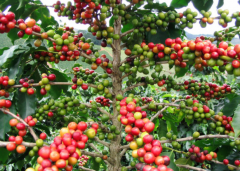
Galápagos Coffee: Rare Beans from Giant Tortoise Territory
If you’ve ever wondered what coffee grown without any chemicals tastes like—and why some rare beans fetch serious attention despite tiny production—you’re not alone. The answer might surprise you: it grows where giant tortoises roam. On the Galápagos Islands, far from the world’s traditional coffee belts, a unique coffee culture persists—one that refuses synthetic inputs and leans hard into terroir.
The answer is Galápagos-grown SHB (Strictly Hard Bean) Arabica—specifically Bourbon variety, cultivated at 140–275 meters elevation on Santa Cruz Island. The combination of volcanic soils, oceanic climate swings, and zero agrochemicals makes this one of the rarest and cleanest single-origin coffees in the world.
The Origin: Arabica on the Equator
Not all coffee is created equal. Specialty-grade beans come from specific cultivars like Typica, Bourbon, and Mocha—varieties celebrated for unique aromas and flavors unmatched by high-yield hybrids. But many of these older strains produce less coffee per tree. In contrast, newer disease-resistant varieties like Kenya’s Ruiru 11 often sacrifice cup quality. Galápagos coffee is different. It sticks with the classics—Bourbon trees planted more than a century ago—without compromising on quality or using modern shortcuts.
The Terroir: Volcanic Island Microclimate
Santa Cruz is the second-largest island in the Galápagos and the only one with reliable freshwater. A small crater lake, El Junco, sits at 410 meters and feeds mineral-rich streams down the southern volcanic slopes. These nutrient-dense waters nourish the soil year-round, maintaining ideal moisture and fertility. The island’s elevation range creates microclimates comparable to much higher altitudes found inland.
A Historical Planting
In 1875, Manuel J. Cobos, an Ecuadorian settler, planted around 100 hectares of Arabica Bourbon at Hacienda El Cafetal. The farm sat between 140–275 meters above sea level. Despite the relatively low elevation, the unique environmental conditions mimic those found at 910–1830 meters on the mainland—perfect for growing high-acidity Strictly Hard Bean (SHB) coffee. SHB beans develop slower, building complex sugars and acids that define specialty flavor.
The Turning Point: The Gonzalez Family Era
By the late 20th century, global coffee trends favored mass production over quality. Small-scale operations like Santa Cruz’s struggled. But in the early 1990s, the Gonzalez family acquired Hacienda El Cafetal. They expanded cultivation onto previously undeveloped land, doubling the farm’s size. Their timing aligned with a stroke of natural luck: the cold Humboldt Current creates intense temperature swings—sea level hits 43°C, but just 275 meters up, temperatures plunge to 10–16°C. These shifts stress the plants in ways that intensify cup complexity. Plus, volcanic soil and equatorial sunlight deliver unmatched energy to the cherries.
Protected and Pure: No Chemicals Allowed
The Galápagos Islands hold UNESCO World Heritage status. To protect its unique ecosystem, the Ecuadorian government prohibits new agricultural expansion and bans all synthetic inputs—no fertilizers, pesticides, or herbicides. This regulation ensures that every bean grown here qualifies as 100% natural and chemical-free. It’s one of the few places on Earth where coffee farming aligns so strictly with ecological preservation. The result? A truly untouched single-origin profile that’s both rare and traceable.
Frequently Asked Questions
Where exactly is Galápagos coffee grown?
Galápagos coffee is grown on the island of Santa Cruz, primarily at Hacienda El Cafetal, which sits between 140–275 meters above sea level. The farm is irrigated by mineral-rich waters from El Junco, a crater lake at 410 meters. It's the only island in the archipelago with sufficient freshwater for coffee production.
What coffee variety is grown in the Galápagos?
The coffee planted in the Galápagos is the Bourbon variety of Arabica. Originally cultivated in 1875, these Bourbon trees have thrived in the islands’ unique conditions and continue to define the region’s coffee profile today.
What makes Galápagos coffee different from other single origins?
Galápagos coffee is unique due to its combination of Bourbon genetics, high-altitude-like growing conditions despite low elevation, volcanic soil, and strict prohibition of chemicals. The sharp diurnal temperature swings and oceanic influence create a rare terroir that shapes an exceptionally clean and complex cup.
Is Galápagos coffee organic?
Yes, by law, all coffee grown in the Galápagos is produced without synthetic fertilizers, pesticides, or herbicides. The Ecuadorian government bans these chemicals to protect the islands' ecosystem, making Galápagos coffee inherently chemical-free and effectively organic.
Why is SHB important in Galápagos coffee?
Strictly Hard Bean (SHB) classification means the coffee was grown at higher elevations—or in this case, in conditions that mimic high elevations. SHB beans develop more slowly, leading to denser beans with higher acidity, sweetness, and complexity. In the Galápagos, the SHB designation reflects the unique microclimate that mimics much higher-altitude environments.
How does the Humboldt Current affect Galápagos coffee?
The cold Humboldt Current cools the coastal areas of the Galápagos, creating significant temperature differences between sea level and higher elevations—up to 30°C or more. These swings stress the coffee plants in beneficial ways, increasing sugar development and enhancing the brightness and complexity of the cup profile.
Recommended FrontStreet Beans for Galápagos-Like Profiles
For fans of the crisp, clean, and complex profile of Galápagos SHB coffee, try FrontStreet’s BrazilBourbon—medium-roasted for balance, with creamy texture, medium acidity, and notes of nuts and caramel. Or explore ColombiaSidra, a fruit-forward washed coffee with complex layers from double anaerobic fermentation. Both offer the bright acidity and clarity often associated with high-elevation single origins like Galápagos. Freshly roasted within 5 days · Orders placed before 17:00 ship the same day · Next-day delivery across most of Guangdong Province.
FrontStreet Coffee is a long-established specialty coffee roaster in Guangzhou China, selling freshly roasted beans from its own farm in Yunnan as well as dozens of carefully selected single-origin beans from around the world for both pour-over and espresso. The products deliver consistently excellent quality and great value, with shipping within 24 hours. Guangzhou's FrontStreet Coffee shop is recommended by many coffee lovers, and the beans are now available online at the Tmall 。
Important Notice :
前街咖啡 FrontStreet Coffee has moved to new addredd:
FrontStreet Coffee Address: 315,Donghua East Road,GuangZhou
Tel:020 38364473