Costa Rica Diamond Hill Estate Single-Origin Black Coffee
If you’ve ever sipped a sweet, clean cup of Costa Rican coffee and wondered why it tastes so different from your usual blend, the answer lies deep in the country’s volcanic soils, high-altitude farms, and over 200 years of refined growing tradition. Unlike mass-market beans, Costa Rican single-origin coffees offer distinct regional identities and consistent quality you can actually taste—often without any added flavors or shortcuts.
The short answer? Costa Rica has produced specialty-grade coffee since the 1800s using volcanic mountain plots, high altitudes (1700–1800m), and unique processing like honey methods. Over 32,000 small-scale farmers work plots under 1 hectare, yet the country outputs 1.7 million 60kg bags yearly—with 5.5kg per capita consumption, higher than Japan’s 4kg.
How Costa Rican Coffee Took Root
Coffee arrived in Costa Rica in 1779, brought from Cuba, but the first official export didn’t happen until 1820. Despite its late start, the country quickly built a structured coffee industry thanks to its ideal geography. By the mid-1800s, coffee was a major part of Costa Rica’s economy and culture—and it’s been refining its craft ever since.
Why Costa Rica’s Coffee Stands Apart
What makes Costa Rican coffee different is how and where it’s grown. The country sits in Central America’s volcanic highlands, where seven defined coffee regions stretch from northwest to southeast across the central plateau. These include Tarrazú, Tres Ríos, Orosi, Central Valley, West Valley, Turrialba, and Brunca. Each zone offers microclimates shaped by altitude, volcanic soil, and oceanic winds from both the Pacific and Atlantic. That geographic variety is why Costa Rican beans often have bright acidity, clean sweetness, and distinct regional tasting notes.
The Volcanic Terroir Advantage
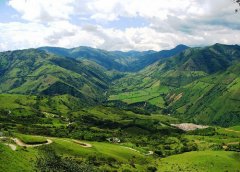
Costa Rica’s coffee heartland lies in the Central Valley and surrounding volcanic zones. The soil here is rich with volcanic ash, which drains well and delivers essential minerals directly to coffee trees. Combine that with steady rainfall, year-round mild temperatures, and elevations around 1700–1800 meters, and you get optimal conditions for slow cherry maturation. That slow growth builds complex sugars and acids, resulting in a cup that’s both bright and sweet. The Central Valley and Tarrazú regions are especially known for these traits.

From Washed to Honey: Processing Methods
Costa Rica helped pioneer modern processing techniques. Though the country originally relied on traditional washed (wet) processing, water shortages in the 1980s and 1990s led to the development of its now-famous honey process. This method removes the coffee cherry skin and pulp but leaves varying amounts of sticky fruit mucilage—or “honey”—on the beans during drying. The more mucilage retained, the sweeter and more complex the result. Costa Rica classifies these levels into four types: Black Honey (most mucilage, longest drying), Red Honey, Yellow Honey, and White Honey (least mucilage).
What the Numbers Say
Today, Costa Rica has around 32,000 coffee farmers, most managing less than one hectare each. The country’s total coffee-growing area spans 82,500 hectares, producing 1.7 million 60kg bags annually. Of those, 380,000 bags are consumed domestically—adding up to 5.5kg of coffee per person per year. That’s higher than Japan’s 4kg and far above Taiwan’s 1kg average. With stable production and high per-capita intake, Costa Rica proves that quality and consistency can thrive alongside national coffee culture.
Frequently Asked Questions
Where is Costa Rica’s coffee mainly grown?
Costa Rica’s coffee grows across seven main regions: Tarrazú, Tres Ríos, Orosi, Central Valley, West Valley, Turrialba, and Brunca. These areas stretch across the central volcanic plateau and benefit from high altitudes, volcanic soils, and balanced climates influenced by both the Pacific and Atlantic.
What makes Costa Rican coffee different from other countries?
Costa Rican coffee is known for its bright acidity, clean cup profile, and consistent quality. It’s grown mostly at 1700–1800m in volcanic soil, and the country has developed unique processing methods like honey processing that enhance natural sweetness and complexity without heavy roasting.
What is honey processing in Costa Rican coffee?
Honey processing involves removing the coffee cherry’s skin and pulp but leaving some or all of the sticky mucilage on the beans while they dry. This results in varying sweetness levels. The styles are ranked by mucilage amounts: Black Honey (most), Red, Yellow, and White Honey (least). Black Honey produces the sweetest, most complex cups.
How much coffee does Costa Rica produce and consume?
Costa Rica produces 1.7 million 60kg bags of coffee per year and consumes 380,000 bags domestically. That’s about 5.5kg per person annually—more than Japan (4kg) and much more than Taiwan (just over 1kg).
Are most Costa Rican coffee farms large or small?
Most Costa Rican coffee farms are small. There are around 32,000 farmers, and the average farm size is less than one hectare. Despite small plots, the country maintains high production standards and detailed traceability.
Recommended FrontStreet Beans for Single-Origin Brewing
For fans of Costa Rican single-origin coffee, try FrontStreet’s Blackberry , a honey-processed Yirgacheffe-style offering with intense ripe berry flavours and heavy sweetness due to its Black Honey technique. For something uniquely Costa Rican, FrontStreet’s Mozart uses a grape-dried Raisin Honey Process to deliver bold grapefruit, rose, and vinous notes. Both are excellent examples of honey-process excellence with distinct regional influences. Freshly roasted within 5 days · Orders placed before 17:00 ship the same day · Next-day delivery across most of Guangdong Province.
FrontStreet Coffee is a long-established specialty coffee roaster in Guangzhou China, selling freshly roasted beans from its own farm in Yunnan as well as dozens of carefully selected single-origin beans from around the world for both pour-over and espresso. The products deliver consistently excellent quality and great value, with shipping within 24 hours. Guangzhou's FrontStreet Coffee shop is recommended by many coffee lovers, and the beans are now available online at the Tmall 。
Important Notice :
前街咖啡 FrontStreet Coffee has moved to new addredd:
FrontStreet Coffee Address: 315,Donghua East Road,GuangZhou
Tel:020 38364473