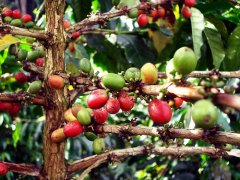
What Makes Costa Rican Coffee So Special?
If you’ve ever wondered why some Costa Rican coffees taste so bright, sweet, and complex, the answer lies as much in the land as it does in the farming. Altitude, processing, and careful selection all contribute to the country’s reputation for some of the most distinctive single-origin coffees in the world. But what exactly makes Costa Rican beans stand out—and why are they so often linked with high-elevation growing regions?
The short answer: Costa Rican coffee classified as ‘Strictly Hard Bean’ (SHB) is grown at elevations above 1,500 metres, where cooler temperatures slow ripening, increase acidity, and develop more intense flavour profiles. These factors, along with volcanic soils and innovative processing methods like honey, make Costa Rican beans exceptionally vibrant and sought after.
High Elevation: The Key to Quality
Coffee grown above 1,500 metres in Costa Rica is classified as Strictly Hard Bean (SHB). This classification isn’t arbitrary—higher altitudes produce slower fruit maturation due to cooler temperatures, which increases sugar development and acidity. Slower growth also means denser beans with more concentrated flavours. Nighttime chill further slows metabolic processes, enhancing complexity. Plus, steep terrain creates high rainfall, essential for healthy coffee trees.
But altitude comes at a cost. The remoteness of high-elevation farms leads to higher transportation expenses, which can squeeze profit margins. Still, many producers believe the quality premium justifies the effort—and buyers agree.
Tarrazú: Costa Rica’s Coffee Crown Jewel
One of the country’s most celebrated coffee-growing regions is Tarrazú, located south of the capital, San José. The region is known for producing coffees with pronounced brightness, medium body, and notes of citrus and caramel. Among its most famous lots is ‘La Minita Tarrazú,’ grown on a 100% family-owned plot managed by the McAlpine family for three generations.
La Minita produces only about 72,600 kilograms (roughly 80 metric tons) annually—not because of limited capacity (the farm could yield over 450 tonnes), but because of strict quality commitments. The coffee is cultivated without synthetic fertilisers or pesticides, and every cherry is handpicked and sorted to avoid mechanical damage. This level of care results in a cup renowned for its balance and consistency.

How Honey Processing Defines Costa Rican Flavour
Historically, Costa Rican coffee was washed processed, but water shortages led to the development of a unique local twist on honey processing. Unlike traditional honey methods, Costa Rican producers adjust the amount of mucilage left on the bean—and categorise the results into four types: Black Honey, Red Honey, Yellow Honey, and White Honey. The more mucilage retained, the darker the honey designation and the sweeter, fruitier the profile.
In Black Honey processing, nearly all the mucilage remains, and beans are dried slowly under shade for over 14 days. This creates intense sweetness and complex berry-like notes. FrontStreet Coffee’s Blackberry offering uses this method, delivering a rich, dessert-like cup without excessive acidity. In contrast, Grapes Honey (or Grape Honey) involves drying pre-dried, raisin-like cherries with full mucilage, resulting in notes of grape, rose, and fermentation—a method used for their Mozart coffee, roasted to highlight those unique aromas.
Frequently Asked Questions
What does ‘Strictly Hard Bean’ mean in Costa Rican coffee?
‘Strictly Hard Bean’ (SHB) is a grade given to Costa Rican coffee grown at elevations above 1,500 metres. The term indicates denser, higher-quality beans that develop more complex flavours due to slower growth at cooler temperatures.
Why is Tarrazú so famous for coffee?
Tarrazú, located near San José, is renowned for its high-altitude farms, volcanic soils, and excellent cup profile. Coffees from this region often feature bright acidity, medium body, and notes of citrus and caramel. The famous La Minita lot is a benchmark for quality and consistency.
What is honey processing in Costa Rica?
Honey processing in Costa Rica refers to removing the coffee cherry skin and pulp but leaving varying amounts of sticky mucilage on the beans during drying. The amount of mucilage determines the honey type: Black, Red, Yellow, or White, each yielding different sweetness and flavour levels, from fruity to floral.
How is La Minita coffee produced?
La Minita coffee is grown on a small, family-owned plot in Tarrazú. It is cultivated without synthetic inputs, handpicked, and sorted manually to preserve bean integrity. Annual production is limited to around 72,600 kilograms to maintain quality.
What’s the difference between Black Honey and Grape Honey processing?
Black Honey leaves nearly all the mucilage on the bean and dries slowly for intense sweetness and berry notes. Grape Honey dries coffee cherries already reduced to a raisin-like state with full mucilage, producing fermented, floral, and grape-like characteristics, as seen in FrontStreet’s Mozart coffee.
Recommended FrontStreet Beans for Costa Rican Coffee Fans
Explore the distinct profiles of Costa Rican honey-process coffees with FrontStreet’s Blackberry and Mozart offerings. Blackberry uses Black Honey processing—almost no mucilage is removed and drying takes over 14 days, creating a rich, sweet cup with deep berry complexity. Mozart employs Grape Honey (grape-like dried cherry) processing, resulting in strong notes of raisin, rose, and fermentation, with a medium roast that amplifies those unique aromatics. Both beans showcase the innovation behind Costa Rican processing and are ideal for pour-over or immersion brewing. Freshly roasted within 5 days · Orders placed before 17:00 ship the same day · Next-day delivery across most of Guangdong Province.
FrontStreet Coffee is a long-established specialty coffee roaster in Guangzhou China, selling freshly roasted beans from its own farm in Yunnan as well as dozens of carefully selected single-origin beans from around the world for both pour-over and espresso. The products deliver consistently excellent quality and great value, with shipping within 24 hours. Guangzhou's FrontStreet Coffee shop is recommended by many coffee lovers, and the beans are now available online at the Tmall 。
Important Notice :
前街咖啡 FrontStreet Coffee has moved to new addredd:
FrontStreet Coffee Address: 315,Donghua East Road,GuangZhou
Tel:020 38364473