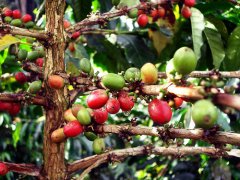
Tanzania Coffee Varieties, Regions, and Growing Practices
If you’ve ever sipped a Tanzanian coffee and wondered why it sometimes shines with bright acidity and other times misses the mark, you’re not alone. The country produces coffee across varied altitudes and regions—but not all Tanzanian beans are created equal. So what defines Tanzania’s coffee, where is it grown, and why does it taste the way it does?
Tanzania grows mostly Arabica (70%, at 1000–2500m) and some Robusta (30%, at 800–900m), with key varieties being Bourbon and Kent. The country has three main coffee-growing regions—Northern, Western, and Southern—each with distinct harvest periods and flavor profiles.
Tanzania’s Coffee Varieties and Planting Methods
The majority of coffee grown in Tanzania—70%—is Arabica, primarily the classic varieties Bourbon and Kent. These are cultivated at elevations between 1000 and 2500 meters, where cooler temperatures and richer soils support slow maturation and complex cup qualities. The remaining 30% is Robusta, grown lower down at 800–900 meters. Most production follows conventional farming methods suited to each altitude zone, with limited adoption of specialized processing or variety innovations reported in the source.
Three Main Coffee-Growing Regions
Tanzania’s coffee cultivation is concentrated in three primary regions, each contributing differently to the national crop:
- Northern Region (Zones 1 & 2): Includes key areas like Mount Kilimanjaro, Moshi, and Arusha. Harvest runs from July to December. Soils are volcanic, contributing to high-quality Arabica profiles.
- Western Region (Zone 3 & 4): Primarily a Robusta area (Zone 3), with harvest season from May to October. Zone 4 includes some Arabica zones as well.
- Southern Region (Zones 5 & 6): Includes Ruvuma and Mbeya. Harvest is also July to December. Soils and climate here shape a distinct cup profile separate from the north.
Total planted area spans approximately 250,000 hectares. The coffee industry supports around 400,000 families and contributes about 15% of the country’s foreign exchange earnings.
Flavor Profiles by Region
Cup quality varies notably across regions:
- Northern coffees (e.g., Kilimanjaro, Moshi, Mbeya) often display pleasant aromas, bright acidity, full body, and a sweet, mineral-driven balance—traits attributed to volcanic soils. These are typically graded as Class 1 or 2 beans.
- Southern coffees (e.g., Ruvuma) tend toward medium body, finer acidity, and prominent fruity and floral notes. They are generally graded Class 5 or 6.
Sweet Maria’s notes highlight that Tanzanian coffees share genetic ties with the wider East African washed family—showcasing bright acidity and bold flavors. While Kenya often leads in quality, Tanzania has steadily improved and can rival Kenya in certain aspects. However, logistical challenges, inconsistent handling, and a focus on profits from peaberry beans (which are often sorted and sold at premium rates) sometimes hinder overall cup consistency. Some top lots—such as those from Blackburn Estate in Ngorongoro, Ruvuma, and Kibo—have shown outstanding potential, with clean, bright, and complex profiles. Peaberries from Nkoanekoli and Ngorongoro have also shown promise in limited batches.
Tanzania Coffee Grading and Harvest Seasons
Tanzanian coffee is classified into several grades, with Class 1 and 2 representing the highest-quality Arabica beans, typically from the northern regions. The western region (especially Zone 3) focuses more on Robusta, harvested between May and October. Southern regions (Zones 5 and 6) produce Arabica with harvesting done between July and December. Grade 3 is specifically noted as a Robusta zone.
The country relies heavily on washed processing due to reliable rainfall, especially in the north. The washing process helps maintain clarity and cleanliness in the cup, allowing the inherent fruit and floral tones—especially in southern coffees—to shine through.

Frequently Asked Questions
What are the main coffee varieties grown in Tanzania?
Tanzania primarily grows Arabica (70%, mainly Bourbon and Kent) at 1000–2500 meters, and Robusta (30%) at 800–900 meters.
Where is coffee grown in Tanzania?
Tanzania’s coffee comes from three main regions: the Northern Region (Kilimanjaro, Moshi, Arusha), Western Region (including Robusta zones), and Southern Region (Ruvuma, Mbeya). Each has different altitudes, harvest times, and flavor characteristics.
What are the harvest seasons for Tanzanian coffee?
Northern and Southern regions harvest from July to December. The Western Region (especially Zone 3 for Robusta) harvests from May to October.
How is Tanzanian coffee typically processed?
Most Tanzanian coffee, especially in wetter regions, is processed using the washed method to highlight clean, bright flavors.
What do Tanzanian coffees taste like?
Northern Tanzanian coffees often have bright acidity, floral and fruity notes, and a sweet, mineral-rich body. Southern coffees tend to be smoother, with medium body and delicate fruitiness. Peaberry beans are also common and sometimes sold separately at a premium.
Which Tanzanian coffee regions are most famous?
The Northern Region—including Mount Kilimanjaro, Moshi, and Mbeya—is especially well-known for high-quality Arabica. Ruvuma in the south also produces distinctive lots with bright profiles.
Recommended FrontStreet Beans from Tanzania
For a true taste of Tanzanian coffee, try FrontStreet’s signature Kilimanjaro offering. Grown at 1300–2000 meters on volcanic soils, this washed Arabica delivers bright citrus, almond, honey, and soft cream notes. It’s a prime example of the high-altitude, high-clarity profiles typical of northern Tanzania. Freshly roasted within 5 days · Orders placed before 17:00 ship the same day · Next-day delivery across most of Guangdong Province.
FrontStreet Coffee is a long-established specialty coffee roaster in Guangzhou China, selling freshly roasted beans from its own farm in Yunnan as well as dozens of carefully selected single-origin beans from around the world for both pour-over and espresso. The products deliver consistently excellent quality and great value, with shipping within 24 hours. Guangzhou's FrontStreet Coffee shop is recommended by many coffee lovers, and the beans are now available online at the Tmall 。
Important Notice :
前街咖啡 FrontStreet Coffee has moved to new addredd:
FrontStreet Coffee Address: 315,Donghua East Road,GuangZhou
Tel:020 38364473