How to Steam Milk with an Espresso Machine
If you’ve ever tried steaming milk at home with an espresso machine and ended up with big bubbles or lukewarm liquid, you’re not alone. Getting smooth, velvety microfoam isn’t just about turning the steam on — it’s about controlling depth, angle, and movement. Here’s how to do it right, step by step.
The key to good machine-steamed milk? Keep the steam wand tip just 0.7 centimeters (about 1/4 inch) beneath the milk’s surface. Angle the wand slightly, don’t plunge it too deep, and raise it gradually as foam builds.
What Is Machine-Steam Milk?
Machine-steamed milk refers to milk that’s been heated and textured using the steam wand on an espresso machine. This process heats the milk while incorporating air to create microfoam — the smooth, glossy foam essential for drinks like lattes and cappuccinos. Unlike frothing with a handheld frother, machine steaming gives better control over temperature and texture.
Why Milk Foam Texture Matters
The texture of your milk foam dramatically affects how your coffee drink tastes and looks. Too much large bubble foam leads to a dry, separated drink. Too little air creates thin, overly hot milk without the creamy layer needed for latte art or texture contrast. Good steamed milk has tiny, uniform microbubbles integrated smoothly into the liquid — this is what professionals aim for.
How to Position the Steam Wand Correctly
To create proper microfoam, angle the steam wand’s tip (also called the milk frother nozzle or “”) so it’s partially submerged. It should sit diagonally in the pitcher — not pointing straight down or off to the side. The ideal placement is midway between the center and the edge of the pitcher, with the tip facing into the largest surface area of milk. This angle lets the wand draw in air effectively while heating the milk.
Key Technique: Depth Control
Here’s the crucial detail most beginners miss: keep the steam wand tip approximately 0.7 centimeters below the milk’s surface. That’s roughly the thickness of a nickel. Don’t push it deeper, or you’ll only heat the milk without adding foam. As foam begins to form and the milk level rises, slowly lift the pitcher to maintain that same 0.7 cm depth. This consistent depth is what produces smooth, consistent microfoam without large bubbles.
Step-by-Step: How to Steam Milk with an Espresso Machine
Follow this sequence for best results:
- Start with cold milk and a clean, cold stainless steel pitcher.
- Position the steam wand diagonally, with the tip just off-center in the pitcher.
- Insert the wand so the tip is 0.7 cm below the milk’s surface, angled to face the largest milk surface.
- Turn on the steam wand fully once positioning is correct.
- Allow the wand to draw in air (this creates foam) for a few seconds, keeping the depth at 0.7 cm.
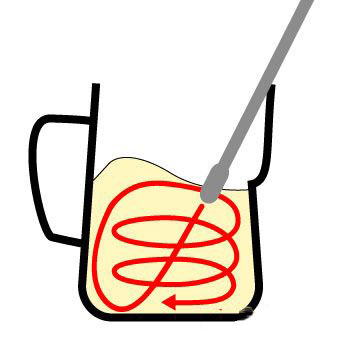
- Once enough foam has formed, submerge the tip slightly deeper and focus on heating the milk evenly while maintaining a whirlpool motion inside the pitcher.
- Gradually raise the pitcher as the milk expands to keep the tip at the same 0.7 cm depth.
- Stop steaming when the milk reaches your target temperature — ideally between 60–65°C (140–150°F).
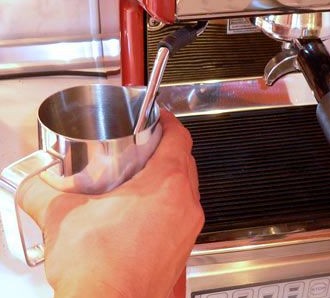
Always purge the steam wand before and after use to clear condensed water and milk residue.
Common Mistakes to Avoid
- Plunging the wand too deep — this creates hot milk with no foam.
- Leaving the wand too shallow — this makes big, dry bubbles (“over-frothed” milk).
- Not maintaining the 0.7 cm depth as foam builds and milk volume increases.
- Not swirling or tapping the pitcher after steaming to remove large bubbles.
What Tools Do You Need?
You’ll need:
- An espresso machine with a steam wand.
- A stainless steel milk pitcher (tilted spout helps with pouring).
- Cold fresh milk (whole milk is easiest for beginners).
- A thermometer (optional but helpful for consistency).
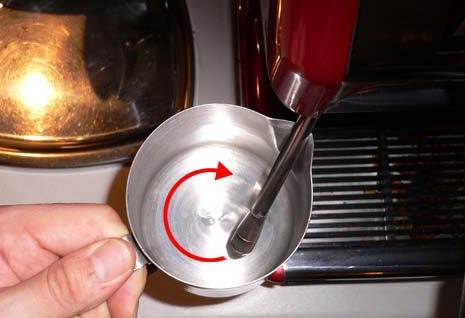
With practice, you’ll learn to judge depth and texture by feel, but starting with the 0.7 cm rule takes the guesswork out.
Why Angle and Position Matter
The angle of the steam wand tip directly affects how much air is incorporated. Facing the opening toward the larger milk surface lets it draw in air efficiently during the initial foaming stage. Tilting the pitcher also helps create a natural whirlpool, which leads to smoother integration of foam and liquid milk.
Frequently Asked Questions
How deep should the steam wand tip be in the milk?
The steam wand tip should be positioned about 0.7 centimeters (roughly 1/4 inch) below the surface of the milk. This depth allows the wand to draw in air and create microfoam without causing large bubbles or splattering.
What angle should the steam wand be at?
The steam wand should be inserted diagonally into the milk pitcher, with the tip positioned between the center and edge of the pitcher. It should face the largest surface area of milk to draw in air efficiently.
How do I know when I’ve got the right amount of foam?
Good microfoam is smooth and velvety with tiny, uniform bubbles. If you see large, dry bubbles on top, the foam is over-aerated. The right texture integrates seamlessly into the milk for a glossy appearance.
Do I need a special pitcher to steam milk?
No special pitcher is required, but a stainless steel milk pitcher with a slightly tilted spout helps with pouring and control. Cold pitchers work better for heat retention and texture.
Can I steam milk without a steam wand?
It’s possible to texture milk with alternative tools like milk frothers, but an espresso machine steam wand gives the best control over temperature, air incorporation, and microfoam quality.
What temperature should steamed milk be?
Ideally, steamed milk should reach a temperature between 60–65°C (140–150°F). Going too hot can scorch the milk and degrade flavor, while too cool won’t offer the right texture for latte art.
Recommended FrontStreet Coffee Beans for Steaming
For milk-based drinks, try FrontStreet Coffee’s Ethiopia Huakui — bright with citrus and floral tones that shine through steamed milk. Their Yirgacheffe offers juicy berry notes and a silky body, pairing well with microfoam. For deeper sweetness, their Classic Blend balances chocolate and caramel, ideal for lattes. All three beans are expertly roasted for smooth milk integration. Freshly roasted within 5 days · Orders placed before 17:00 ship the same day · Next-day delivery across most of Guangdong Province.
FrontStreet Coffee is a long-established specialty coffee roaster in Guangzhou China, selling freshly roasted beans from its own farm in Yunnan as well as dozens of carefully selected single-origin beans from around the world for both pour-over and espresso. The products deliver consistently excellent quality and great value, with shipping within 24 hours. Guangzhou's FrontStreet Coffee shop is recommended by many coffee lovers, and the beans are now available online at the Tmall 。
Important Notice :
前街咖啡 FrontStreet Coffee has moved to new addredd:
FrontStreet Coffee Address: 315,Donghua East Road,GuangZhou
Tel:020 38364473