
Specialty Coffee Beans
Latest articles, industry insights and brewing guides

Why Coffee Bean Size Matters More in Colombia Than You Think
Colombian specialty coffee quality hinges on origin, not just grade. Supremo beans aren’t always better—region and variety define flavor.

How Costa Rica Boldly Processes Its Coffee Beans
Costa Rica dares to use long sun-drying honey processes despite high humidity, creating sweet, complex coffees. Discover how this risky method defines its coffee identity.

What Is Kopi Luwak Coffee? Indonesian Civet Coffee Explained
Learn what makes Kopi Luwak, or civet coffee, unique: how it’s processed, its origins in Indonesia, and why it’s rare and controversial.

What Makes Colombian Geisha Coffee Unique?
Learn the origin, flavor, and quality traits of Colombian-grown Geisha coffee, including its award-winning history and sensory profile.

What Makes Jamaican Blue Mountain Coffee So Special?
Learn why true Jamaican Blue Mountain coffee demands premium pricing, how elevation and processing define its flavor, and where most of it really goes.

Vietnamese Coffee Beans: Flavor, Roast, and Origins
Vietnam’s coffee is mostly Robusta, often medium-to-dark roasted. 96% comes from small farms, with French colonial influence shaping its profile.
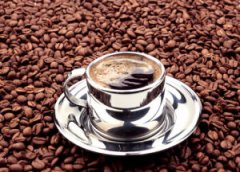
What Makes Rwandan Coffee Unique? Flavour & Facts
Explore Rwanda’s specialty coffee profile: Bourbon-grown highlands, fruity sweetness, and full-body notes with citrus, chocolate, and almond tones.

La Minita: Costa Rica’s Legendary Single-Origin Coffee Bean
La Minita Estate selects just 25% of harvested beans by hand—here’s why this Costa Rican coffee is a benchmark for balance and quality.
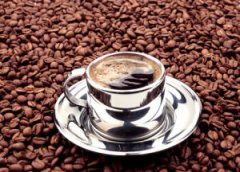
How Jamaica Blue Mountain Coffee Is Made
Learn why Jamaica Blue Mountain coffee is so rare and highly prized, from strict production rules to traditional wooden barrel exports.
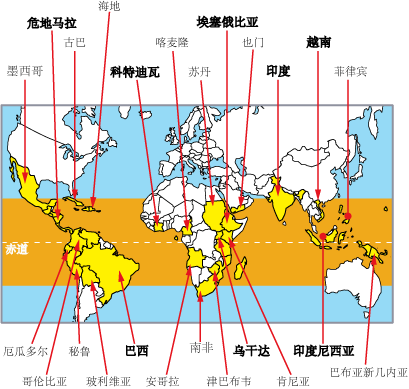
Zimbabwean Arabica Coffee Beans: What Makes Them Special?
Explore Zimbabwe's high-altitude Arabica coffee scene, known for smooth profiles and fruity brightness akin to Kenya AA.
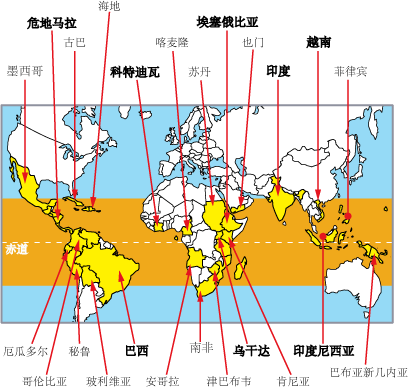
Zaire Coffee: What Makes It Unique Among Arabicas
Explore why Zaire (now DRC) once produced prized Arabica beans, where the best came from, and how political shifts changed its coffee landscape.
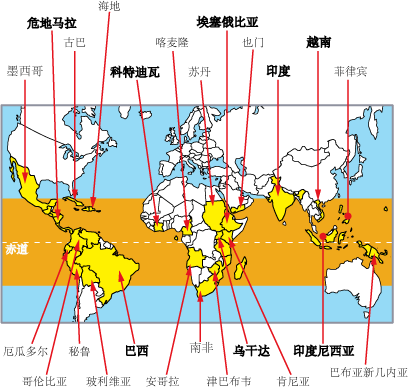
Zambia Coffee vs Kenya: Flavor, Size & Value
Zambia coffee is lighter than Kenya’s but shares similar flavors—ideal for afternoon cups. Learn why its giant beans and fair pricing matter.
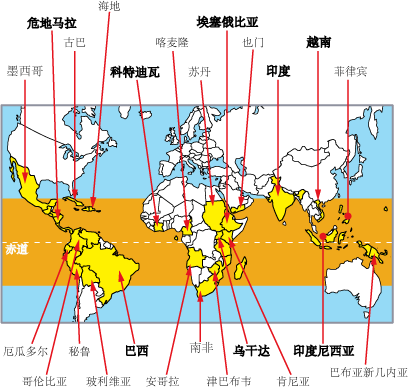
Uganda's Arabica Coffee: What Makes It Special?
Uganda produces just 10% Arabica coffee, mostly from Mount Elgon, Bugisu, and Rwenzori regions. Learn why this minority crop still matters.

Yemeni Coffee Beans: Origins, Flavor & Challenges
Explore Yemen’s historic coffee beans, their unique flavors, and why quality varies. Learn about Mocha, Mattari, and traditional processing methods.
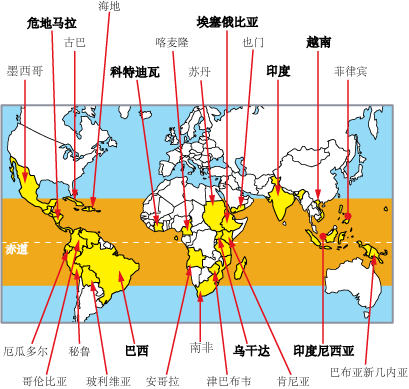
Sudan’s Coffee Legacy: Arabica and Robusta in Conflict
Sudan’s coffee production is nearly extinct after decades of war. Learn how Arabica and Robusta survived in different regions—and why exports are now rare.
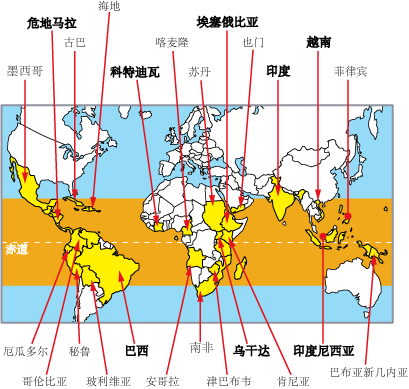
Tanzania Coffee: Flavor, Origin & What Makes It Special
Tanzania produces bright, aromatic Arabica with soft acidity. Learn why its high-altitude beans from Kilimanjaro are highly valued by specialty roasters.
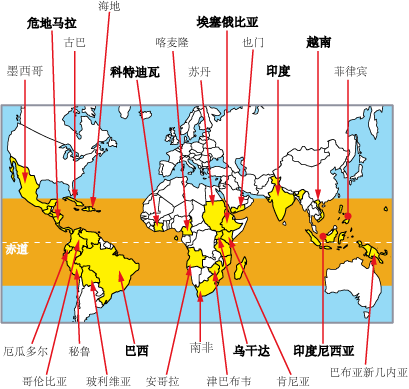
South African & Surinamese Coffee: Flavor, Origins & Production
Discover the aromatic, low-acid coffee profiles of South Africa and Suriname, their origins, farming zones, and surprising Central American taste resemblance.
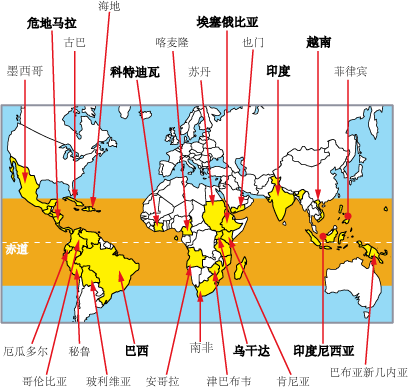
São Tomé and Príncipe’s Rare Arabica Coffee Beans
São Tomé and Príncipe produces small batches of high-quality, softly balanced Arabica coffee with a unique island terroir.
Saint Helena Coffee: Napoleon’s Favorite Arabica Bean
Learn why Saint Helena coffee is so unique, from its 18th-century Yemeni roots to its remote Atlantic island cultivation.

What Is Hawaiian Kona Coffee? Flavor & Profile Explained
Discover the unique taste, origin, and characteristics of Hawaiian Kona coffee, famed for its smooth acidity and volcanic sweetness.