
"16mm"
600 article(s) found

Introduction to Fine Taste treatment of Coffee Bean Grinding scale varieties in Columbia Hope Manor
Columbia Hope Manor Coffee Bean Grinding scale varieties taste treatment boutique introduction Colombian coffee varieties are mainly small-grain coffee. Plants are small trees or large shrubs, 5-8 m tall, usually much branched at base; old branches gray-white, nodes dilated, young branches glabrous, compressed. Leaves thinly leathery, ovate-lanceolate or lanceolate, 6-14 cm long, 3.5-5 cm wide, tip long acuminate

A brief introduction to the Origin, Development, History and Culture of Fine Coffee beans in Santa Rita Manor, Colombia
In order to better promote Colombian coffee, the Colombian Coffee Growers Association (FNC) launched a live-action version of Juan based on this image. Waldez. Now the uncle is the third-generation real-life version. Juan on behalf of Colombian coffee farmers? Uncle Valdez, as the ambassador of Colombian Coffee, will travel around the world to promote Colombian Coffee.

About Coffee World Map
COFFEE WORLD MAP Most coffee production areas are located between the Tropic of Cancer, that is, 25 degrees north of the equator and 30 degrees south of the equator in the tropics or subtropics. Areas with an annual average temperature of 16-25 degrees Celsius, frost-free and rainfall of 1600-2000 mm. At present, there are more than 70 major coffee producing countries, and the Greater China is located at an altitude of 300-400 meters.

Columbia Hope Manor Rosa Coffee Flavor description characteristics Grinding scale quality taste introduction
Colombian coffee rose summer coffee seeds were taken from Geisha Mountain (Mount Rosa) in southwestern Ethiopia in 1931, transplanted to Kenya in 1931 and 1932, replanted in Tanzania in 1936 and introduced to Costa Rica in 1953. It is not known when it will be introduced to Jaramillo Manor in Panama, except for the Jade Farm of Panama (Hacienda).

The source of Colombian coffee. Colombian coffee producing areas.
The main varieties of Colombian coffee are small grains of coffee. Plants are small trees or large shrubs, 5-8 m tall, usually much branched at base; old branches gray-white, nodes dilated, young branches glabrous, compressed. Leaves thinly leathery, ovate-lanceolate or lanceolate, 6-14 cm long and 3.5-5 cm wide, tip long acuminate, acuminate part 10-15 mm long, base cuneate or slightly obtuse, rarely rounded, entire or

Coffee trees grow around the equator.
Coffee trees grow in tropical or subtropical agricultural gardens centered around the equator and called coffee belts. Most of the coffee production is between the Tropic of Cancer, 25 degrees north of the tropical or subtropical equator and 30 degrees south of the equator. An area with an annual average temperature of 16-25 degrees Celsius, no Frosts Descent and rainfall of 1600-2000 mm. At present, coffee is mainly produced by seven countries.

Treatment method of Grinding degree and Baking degree of AA Carragoto Fine Coffee beans in Guoli, Kenya
For professional baristas, please pay attention to the coffee workshop (official Wechat account cafe_style) the processing method of grinding degree and baking degree of AA Karoguto boutique coffee beans in Guili, Kenya. 2) the raw beans that have not been treated by the official standard grading are UG (ungrade) EMagi AABJI (Note: 17 mesh (6.8mm) above A grade, 16 mesh (6.3mm) above.
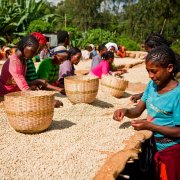
Kenyan coffee grading system Kenyan specialty SL28&34 coffee varieties Kenyan coffee origin
Professional coffee knowledge exchange more coffee bean information please follow the coffee workshop (Wechat official account cafe_style) Kenya Coffee KENYA is located in East Africa Kenya is one of the major coffee producing countries, the country's population of more than 6 million people are engaged in the coffee industry, mostly in the form of small farmers, wet processing plants and cooperatives. Kenyan coffee is mainly treated with water washing, coffee trees

Rich flavor of Colombian coffee the characteristics of Santa Rita Manor are introduced.
One: it is said to come from the sea island of the Caribbean and from El Salvador in Central America. Second: in 1808, a priest introduced coffee beans to Colombia for the first time from the French Antilles via Venezuela. One of them is that Colombia's first coffee seeds were imported from Venezuela through the province of Santander. [1] third: the earliest coffee cultivation in Colombia

Classification and classification of coffee beans | meaning of the name of coffee
For more information on coffee beans, please follow the coffee workshop (Wechat official account cafe_style)-- how coffee is named-- G1, G2, G3, G4, AA, PB, SHB, SHG, EP, PLANTATION. Have you ever wondered what the difference is? Are you curious about what they are referring to? Today we are going to start talking about what we usually buy

Kenyan grade coffee bean boutique coffee
Usually, Kenyan coffee is classified as follows: 1) Common categories: coffee fruits picked by hand, picked by hand, picked out immature fruit (unripe), overripe fruit (overripe) and other defects, peeled, after about 36 hours of fermentation, placed on a metal grid for sun drying, in the processing plant to remove the seed shell (parchment) to become a blue-green appearance

Species Planning of Coffee beans in Kenya
1) Common classification: hand-picked coffee fruit, picked by hand, picked out immature fruit (unripe), overripe fruit (overripe) and other defects, peeled, after about 36 hours of fermentation, placed on a metal grid for sun drying, in the processing plant to remove the seed shell (parchment), become a blue-green appearance of attractive Kenyan raw beans. These beautiful raw beans, roots

Characteristics of Flavor and Taste in Colombian Coffee producing area introduction of Fine Coffee beans in Manor
The main varieties of Colombian coffee are small grains of coffee. Plants are small trees or large shrubs, 5-8 m tall, usually much branched at base; old branches gray-white, nodes dilated, young branches glabrous, compressed. Leaves thinly leathery, ovate-lanceolate or lanceolate, 6-14 cm long and 3.5-5 cm wide, tip long acuminate, acuminate part 10-15 mm long, base cuneate or slightly obtuse, rarely rounded, entire or

Coffee trees grow around the equator.
Coffee trees grow in tropical or subtropical agricultural gardens centered around the equator and called coffee belts. Most of the coffee production is between the Tropic of Cancer, 25 degrees north of the tropical or subtropical equator and 30 degrees south of the equator. An area with an annual average temperature of 16-25 degrees Celsius, no Frosts Descent and rainfall of 1600-2000 mm. At present, coffee is mainly produced by seven countries.

Boutique coffee Colombian coffee the latest coffee introduces a unique flavor
Colombian coffee (Cafe de Colombia), which originated in Colombia, is one of the few individual coffees sold in the world under the name of the country. In terms of quality, it has won praise unmatched by other coffee. Compared with other producing countries, Colombia is more concerned with developing products and promoting production. It is this, coupled with its superior geographical and climatic conditions, that makes Goran
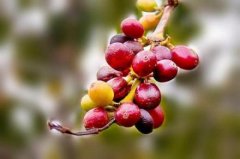
Coffee knowledge equator-centered coffee belt
Most of the coffee production is between the Tropic of Cancer, 25 degrees north of the tropical or subtropical equator and 30 degrees south of the equator. An area with an annual average temperature of 16-25 degrees Celsius, no Frosts Descent and rainfall of 1600-2000 mm. At present, coffee is mainly produced in more than 70 countries. The Big self is located at an altitude of 300,400m, sometimes between 2000 and 2500 meters above sea level.
Coffee Basics Where is the coffee belt distributed
Coffee production occurs mostly between Tropic of Cancer, 25 degrees north of the equator and 30 degrees south of the equator in tropical or subtropical regions. Areas with an annual average temperature of 16-25 degrees Celsius, frost-free and rainfall of 1600-2000 mm. At present, there are more than 70 major coffee producing countries. The largest one is located at an altitude of 300-400 meters, and sometimes at an altitude of 2000-2500 meters.

Introduction to the description of coffee grindability, taste, price and flavor in Lazmus Manor, Colombia
Colombia is the second largest Arabica producer in the world. The country spans the northern and southern hemispheres, and the coffee garden is mainly distributed at 2-8 degrees north latitude. From north to south, due to the different rainy season, there are two major harvest periods, the main harvest period is from October to February, and the harvest period is from April to September. In other words, Colombian coffee (Cafe de Colombia) is harvested all the year round.

Description of Colombian Coffee Flavor with Super aroma introduction to the characteristics of Fine Coffee in producing areas
Colombian coffee has a silky taste. Colombian coffee is equated with high quality and good taste. It is sweet in acid, low in bitterness, rich in nutrition, with a unique sour and mellow taste, and the sour, bitter and sweet flavors of Colombian super coffee match well. Unique fragrance, after drinking, the aroma fills the whole mouth. Put the fragrance in the mouth
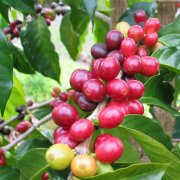
Classification of Kenyan coffee beans African boutique coffee
Usually, Kenyan coffee is classified as follows: 1) Common categories: coffee fruits picked by hand, picked by hand, picked out immature fruit (unripe), overripe fruit (overripe) and other defects, peeled, after about 36 hours of fermentation, placed on a metal grid for sun drying, in the processing plant to remove the seed shell (parchment) to become a blue-green appearance