
"1970s"
2591 article(s) found

Boutique coffee beans Rosa coffee the latest coffee flavor introduction is full of taste
The species of Geisha was discovered in the Rose Summer Forest of Ethiopia in 1931 and sent to the Coffee Institute in Kenya; it was introduced to Uganda and Tanzania in 1936, in Costa Rica in 1953, and Panama was introduced in the 1970s by Francesca of Dongba Seven Farm Garden. Mr. Serraxin got the seeds from CATIE in Costa Rica and started growing Rosa Coffee because

The flavor and taste of Panama Rosa Coffee Manor introduces the Emerald Manor.
The species of Geisha was discovered in the Rose Summer Forest of Ethiopia in 1931 and sent to the Coffee Institute in Kenya; it was introduced to Uganda and Tanzania in 1936, in Costa Rica in 1953, and Panama was introduced in the 1970s by Francesca of Dongba Seven Farm Garden. Mr. Serraxin got seeds from CATIE, Costa Rica, and started growing Rosa Coffee.

Introduction to the description of taste and flavor of El Salvador Himalayan coffee
In the early 1990s, guerrilla warfare greatly damaged the country's national economy, reducing coffee production from 3.5 million bags in the early 1970s to 2.5 million bags in 1990 and 1991. The eastern part of the country was most affected by guerrilla warfare, and many farmers and workers were forced to leave the manor. The shortage of funds has led to a sharp drop in coffee production, from 1200 kg per hectare in the past to less than 9 per hectare today.

Flavor description of El Salvador Himalayan coffee beans with mild taste introduction to grinding scale varieties
El Salvador is one of the small countries in Central America with a dense population. The flavor of its coffee is characterized by excellent balance. Today, this coffee accounts for 40% of the country's exports. 35% of the extra hard beans of the best coffee are exported to Germany from January to March. In the early 1990s, guerrilla warfare greatly damaged the country's national economy and increased coffee production from the 1970s.

Tropical fruit-flavored Nicaraguan coffee growing environment brewing method production process wind
In many countries, coffee production will be seriously affected for political reasons. Nicaraguan coffee industry is no exception. The 1979 revolution forced coffee planters to flee to Miami. A period of indecision followed, when the government considered whether to redistribute land (including many plantations), which led to a shortage of coffee and a decline in production since the early 1970s

Introduction to boutique coffee with flavor and taste characteristics of El Salvador Himalayan coffee varieties
In the early 1990s, guerrilla warfare greatly damaged the country's national economy, reducing coffee production from 3.5 million bags in the early 1970s to 2.5 million bags in 1990-1991. The eastern part of the country was most affected by guerrilla warfare, and many farmers and workers were forced to leave the manor. The shortage of funds has led to a sharp drop in coffee production, from 1200 kg per hectare in the past to no yield per hectare today.

Introduction to the characteristics of Coffee Grinding degree treatment in Joy Manor, Nicaragua
In many countries, coffee production will be seriously affected for political reasons. Nicaraguan coffee industry is no exception. The 1979 revolution forced coffee planters to flee to Miami. A period of indecision followed, when the government considered whether to redistribute land (including many plantations), which led to a shortage of coffee and a decline in production since the early 1970s

Flavor Flavor Aroma Description Introduction
Nicaragua is now one of the poorest countries in Central America. Because of its poor economic base, the coffee industry is still in a relatively backward state, while coffee farmers are in an extremely poor state. Fortunately, Nicaragua's coffee has received some foreign aid funds to improve the quality of its coffee. Nicaragua's Madagerba, Chinodega, Segovia region of coffee

Flavor description of Panama Kasha Coffee Cooperative introduction to planting environment of varieties in producing areas
Species of Geisha were discovered in the Rose Summer Forest of Ethiopia in 1931 and sent to the Coffee Research Institute in Kenya, introduced to Uganda and Tanzania in 1936, introduced to Costa Rica in 1953, and Panama was introduced in the 1970s by Mr. Francico Serraxin of the Tonba Seven Farm Garden from CATIE in Costa Rica and began to grow Rose Summer Coffee. G

Rose summer coffee Colin coffee rose summer coffee beans death wish coffee
The species of Geisha, the editor of Rose Summer Coffee, was discovered in the Rose Summer Forest of Ethiopia in 1931 and sent to the Coffee Research Institute in Kenya; it was introduced to Uganda and Tanzania in 1936, in Costa Rica in 1953, and Panama was introduced by Franco Seven Farm Garden in Dongba in the 1970s. Mr. Serraxin got the seed from CATIE, Costa Rica.

Panamanian Cupid Coffee Flavor description Variety characteristics introduction of Fine Coffee Bean taste Grinding degree
Species of Geisha were discovered in the Rose Summer Forest of Ethiopia in 1931 and sent to the Coffee Institute in Kenya, introduced to Uganda and Tanzania in 1936, introduced to Costa Rica in 1953, and Panama was collected in the 1970s by Mr. Franci Coselazin of the Dongba Seven Farm Garden from CATIE in Costa Rica and began to grow Rose Summer Coffee. Gei

Practical information: what is the difference between Panamanian Rosa coffee beans and Guatemalan Rosa coffee beans?
Species of Geisha were discovered in the Rose Summer Forest of Ethiopia in 1931 and sent to the Coffee Research Institute in Kenya, introduced to Uganda and Tanzania in 1936, introduced to Costa Rica in 1953, and Panama was introduced in the 1970s by Mr. Francico Serraxin of the Tonba Seven Farm Garden from CATIE in Costa Rica and began to grow Rose Summer Coffee.

Introduction to the taste of supple and clear Panama Cupid boutique coffee beans
Species of Geisha were discovered in the Rose Summer Forest of Ethiopia in 1931 and sent to the Coffee Research Institute in Kenya, introduced to Uganda and Tanzania in 1936, introduced to Costa Rica in 1953, and Panama was introduced in the 1970s by Mr. Francico Serraxin of the Tonba Seven Farm Garden from CATIE in Costa Rica and began to grow Rose Summer Coffee. G

Introduction to the characteristics of Panamanian Cupid Cupid Coffee Flavor Manor
Species of Geisha were discovered in the Rose Summer Forest of Ethiopia in 1931 and sent to the Coffee Research Institute in Kenya, introduced to Uganda and Tanzania in 1936, introduced to Costa Rica in 1953, and Panama was introduced in the 1970s by Mr. Francico Serraxin of the Tonba Seven Farm Garden from CATIE in Costa Rica and began to grow Rose Summer Coffee. G

Taste of Nicaraguan boutique coffee beans an introduction to the characteristics and flavor of the manor area
In many countries, coffee production will be seriously affected for political reasons. Nicaraguan coffee industry is no exception. The 1979 revolution forced coffee planters to flee to Miami. A period of indecision followed, when the government considered whether to redistribute land (including many plantations), which led to a shortage of coffee and a decline in production since the early 1970s

A brief introduction to the treatment method of grinding degree and baking degree of Nicaraguan boutique coffee beans with mellow flavor
In many countries, coffee production will be seriously affected for political reasons. Nicaraguan coffee industry is no exception. The 1979 revolution forced coffee planters to flee to Miami. A period of indecision followed, when the government considered whether to redistribute land (including many plantations), which led to a shortage of coffee and a decline in production since the early 1970s
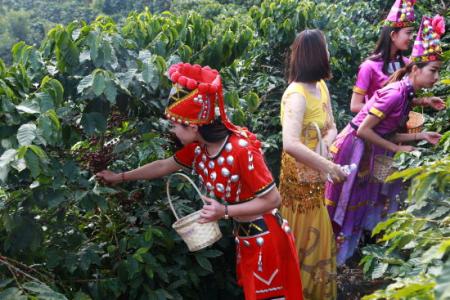
There is an urgent need to "polish" the local brand consciousness of Yunnan coffee with a hundred-year history of ups and downs.
The second stage of groping planting in the land reclamation system in the 1970s was 1978-1988, and most of the land reclamation systems tried to plant. This stage is a stage of ups and downs, and it is also in the exploratory stage. Until the end of 1976, the shadow of coffee trees could only be seen by the roadside of Yunnan-Burma Road, or in the courtyard of farmers. The coffee planted by missionaries in the remote village of Zhukula due to geographical reasons.

Grinding scale treatment of coffee beans in Mercedes Manor in El Salvador
In the early 1990s, guerrilla warfare greatly damaged the country's national economy, reducing coffee production from 3.5 million bags in the early 1970s to 2.5 million bags in 1990 and 1991. The eastern part of the country was most affected by guerrilla warfare, and many farmers and workers were forced to leave the manor. The shortage of funds has led to a sharp drop in coffee production, from 1200 kg per hectare in the past to less than 90 per hectare today.

Introduction to the Origin of the Grinding scale of aromatic and Pure Salvadoran Coffee Flavor
In the early 1990s, guerrilla warfare greatly damaged the country's national economy, reducing coffee production from 3.5 million bags in the early 1970s to 2.5 million bags in 1990-1991. The eastern part of the country was most affected by guerrilla warfare, and many farmers and workers were forced to leave the manor. The shortage of funds has led to a sharp drop in coffee production, from 1200 kg per hectare in the past to no yield per hectare today.

Ethiopian coffee began to subdivide the varieties of Jiulumi, Degas and Walliso, respectively.
Ethiopian coffee varieties are often described as family heirlooms in recognition of their long history and to distinguish Ethiopia's production environment from other coffee producers that identify themselves as technology. Although Ethiopia has many mountain forests filled with wild coffee, most of the coffee grown and harvested for export today is selected or grown in some form. Essel out