
"33"
1298 article(s) found

Description of Historical and Cultural Origin and Flavor of Chinese Coffee cultivation introduction of Grinding scale varieties
Description of the Historical and Cultural Origin of Coffee in China Flavor description Grinding scale Variety introduction Coffee production in Yunnan Province has been developed since the mid-1950s, mainly planted in Shuangjiang Farm and Dehong Sub-Bureau in Lincang area, covering an area of 18.67 hectares. it is also planted in small areas in Shaofang, Hekou, Lujiang, Jinghong, Olive Dam and other fields. Since 1957, the local environment is suitable for coffee growth.

Chimere Manor, Lutesilo production area, Western Province of Rwanda
Rwandans have been growing coffee since colonial times, but until 1999, its products were still classified as below Class C and were not popular in the global market. The reason for the poor quality is that farmers do not have a fixed procedure for washing coffee beans and do not process coffee fruits according to specifications in time. Buyers buy coffee beans at $0.33 per kilogram, and farmers keep warm by the meagre profits earned at low prices.

The flavor characteristics of Yunnan coffee brand Aiyi Manor Kaduai coffee beans. How about Yunnan coffee?
Professional coffee knowledge exchange more coffee bean information please follow Coffee Workshop (Wechat official account cafe_style) since 2011, Yunnan coffee brand Aixing Group, with the help of Starbucks and Yunnan provincial government, has introduced 33 high-quality coffee varieties, including Rosa, Bourbon, Kaddura, Kadoue, Iron pickup, Verasaci, Regina and so on, from major coffee producing areas around the world.

Yunnan Coffee Industry adds World Top Coffee Variety Rose Xia
Geisha, pronounced like a geisha in Japanese, is also called geisha coffee. Its species was discovered in the Rose Summer Forest of Ethiopia in 1931 and sent to the Coffee Research Institute in Kenya. It was introduced to Uganda and Tanzania in 1936, Costa Rica in 1953, and Panama from Francesca in the Dongba Seven Farm Garden in the 1970s. Mr. Serraxin is from Costa Rica.

3D Sadako climbed out of the coffee cup and took 6 minutes to finish.
Professional barista exchange please follow the coffee workshop (Wechat official account cafe_style) Huashan coffee industry in Gukeng Township, Yunlin County, with the launch of Ghost Moon 3D Sadako Coffee, the use of flowers to create a situation of Zhenzi climbing out of the coffee cup, so that many young people feel fresh and interesting, photos uploaded to the Internet, but also attracted Japanese backpackers to Huashan, designated to drink Sadako coffee. A 33-year-old coffee

History of Origin and Development of imported Micro-batch Fine Coffee beans in Ethiopia washing Sidamo G1 Honey language
The Oromia region is one of the sources of coffee in the world, and its native Oromo is the first person in the world to use coffee as a food, dating back to the 5th century AD. Oromia is located at about 3-15 degrees north latitude and 33-40 degrees longitude. The region is famous for its primordial plant species and species diversity. This is where coffee was born. Yes

What is Aldumara Coffee Mexican Coffee Bean Flavor description treatment Variety introduction
Mexican boutique coffee beans Irish coffee 25. Cappuccino coffee 26. Provence lover 27. Russian coffee 28. Blue sea and blue sky coffee 29. Hawaiian ice cream coffee 30. Swedish coffee 31. Greco-Roman coffee 32. Naples style coffee 33. Milanch coffee 34. Maria coffee (rose appointment) 35. Belgian coffee 36. Love coffee 37. Royal coffee

O.C.F.C.U Ethiopia Oromia Coffee Farmers Cooperative Union
The Oromia area is one of the sources of coffee in the world. Oromo, the indigenous people here, was the first person in the world to use coffee as a food, dating back to the 5th century AD. Oromia is located at about 3-15 degrees north latitude and 33-40 degrees longitude. Because of the primordial nature and diversity of plant species in this area

A Taiwanese man takes a picture of his pet dog and pedals a tricycle around the island to sell coffee.
Zhong Changlin, who usually sells coffee on tricycles in Hualien City, Taiwan, died of illness after raising a golden retriever for 10 years. He once agreed with him that he would play around while selling coffee together. Now, as promised, he takes a photo of a silly girl and rides a tricycle around the island to fulfill his promise. With the coffee tricycle, I didn't expect the silly girl to leave. Recalling his dog, Zhong Changlin, 33, was full of reluctance and just left the army 10 years ago.

Rwanda Coffee Flavor treatment method
Rwandans have been growing coffee since colonial times, but until 1999, its products were still classified as below Class C and were not popular in the global market. The reason for the poor quality is that farmers do not have a fixed procedure for washing coffee beans and do not process coffee fruits according to specifications in time. Buyers buy coffee beans at $0.33 per kilogram, and farmers keep warm by the meagre profits earned at low prices.

Tokyo Blue Bottle seventh branch! "San Xuan Tea House" into the renovation of 50 years old house!
Professional barista exchanges, please pay attention to coffee workshop (Weixin Official Accounts cafe_style) Following the news that the brand celebrated its 15th anniversary in September and Nestle acquired, Blue Bottle, a crazy boutique coffee brand all over the world, has been talking about wave after wave. The discussion heat in October has been extended again due to the news that the seventh branch in Tokyo is about to open! The footsteps have spread to Tokyo

Taste and flavor of Sidamo Honey Coffee
Professional baristas please follow the coffee workshop (Wechat official account cafe_style) Oromia area is one of the sources of coffee in the world, where the aboriginal Oromo, people are the world's first people to use coffee as food, the time can be traced back to the 5th century AD. Oromia is located at about 3-15 degrees north latitude and 33-40 degrees longitude. Because of the origin of its plant species,

History, geography and climate of coffee in Rwanda
Rwandans have been growing coffee since colonial times, but until 1999, its products were still classified as below Class C and were not popular in the global market. The reason for the poor quality is that farmers do not have a fixed procedure for washing coffee beans and do not process coffee fruits according to specifications in time. Buyers buy coffee beans at $0.33 per kilogram, and farmers keep warm by the meagre profits earned at low prices.

Ethiopia washed Sidama G1 Miyu imported micro-batch fine coffee beans story allusions
Professional barista exchanges, please pay attention to coffee workshop (Weixin Official Accounts cafe_style ) Oromia region is one of the origins of coffee in the world. The famous Oromo people here are the earliest people in the world to use coffee as food, dating back to the 5th century AD. Oromia is located approximately between 3 ° and 15 ° north latitude and between 33 ° and 40 ° longitude. The area is known for its plant species origin.
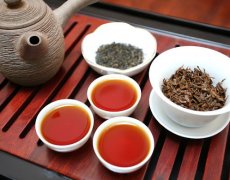
Can black tea kill Helicobacter pylori? The efficacy and function of black tea taboos and unsuitable people
Health benefits 1. Many studies have shown that black tea has a positive effect on heart health. A study published in 2017 examined the effects of tea drinking on the risk of ischemic heart disease. The study surveyed more than 350000 men and women aged between 30 and 79 in 10 regions of China. When the researchers followed up about seven years later, they found

Introduction to the flavor and taste characteristics of Malaba coffee in southern Rwanda
Rwandans have been growing coffee since colonial times, but until 1999, its products were still classified as below Class C and were not popular in the global market. The reason for the poor quality is that farmers do not have a fixed procedure for washing coffee beans and do not process coffee fruits according to specifications in time. Buyers buy coffee beans at $0.33 per kilogram, and farmers keep warm by the meagre profits earned at low prices.
What are the costa of Beijing costa coffee chain
Beijing (76 shops) [3] Beijing Sanlitun Store, Beijing Ginza Shop, 1st floor, 3.3 Building, Sanlitun East Road, Chaoyang District, Beijing, 2nd floor, Oriental Ginza Shopping Mall, 48 Dongzhimenwai Street, Chaoyang District, Beijing. Beijing Huamao Center Store, 2nd floor, Chaoyang Dayue City, 101 Chaoyang North Road, Beijing, Office Building 3, Huamao Center, 77 Jianguo Road, Chaoyang District, Beijing

Rwanda Coffee Flavor
Rwandans have been growing coffee since colonial times, but until 1999, its products were still classified as below Class C and were not popular in the global market. The reason for the poor quality is that farmers do not have a fixed procedure for washing coffee beans and do not process coffee fruits according to specifications in time. Buyers buy coffee beans at $0.33 per kilogram, and farmers keep warm by the meagre profits earned at low prices.
How much is Kopi Luwak how much is a gram of fine coffee like shit coffee price
Coffee beans, known as black ivory, are naturally extracted by Asian elephants. the coffee fruit is enzymatic to break down the protein in the coffee beans during the digestion of the elephant stomach, so this elephant poop coffee does not taste bitter and has aromas of milk chocolate, nuts, red berries and a few spices. [1] the Chinese name is like shit coffee.
Like shit coffee how much is like shit coffee like shit coffee characteristics like shit coffee what does shit coffee have to the body
The process of producing dung-like coffee is quite cumbersome. Ding Jin employs Arabian coffee beans hand-picked by local mountain tribal women as raw materials, and then mixes coffee beans with bananas, sugar cane and other vegetarian foods often eaten by elephants to feed elephants. This gives the coffee a unique earthy and fruity flavor. After thorough cleaning, the semi-finished coffee beans will be sent to Bangkok and finally baked into finished products. [1] this one