
"Bolivian"
877 article(s) found

Multi-floral Bolivian Coffee Manor introduces the flavor of Bolivian coffee producing areas
The goal of planting coffee in the whole Takesi manor is 200ha, but only 13ha is planted and harvested very little Typica species, and the annual yield is only 120bags. This is not only fine agriculture, but also a farming model that respects nature. Takesi is the name of the local aborigines, the place name and the snow water from the mountains, also known as Takesi. After the publication of the CoE final in 2009, Takesi is no longer without.

Bolivian Coffee Snow vein Manor Flavor Taste introduces the characteristics of Bolivian coffee beans
Bolivia's high-quality estates, very high altitude, perennial low temperature environment, so that coffee fruit growth is slow, tight enough, aroma is also charming, floral aroma is obvious, such as careful handling, cherries with the same maturity, often have a clean and meticulous high-end taste, this elegant vanilla and honey aromas are very attractive, this champion bean has a variety of floral aromas, vanilla and sweet very long-lasting. To

Coffee mellow Tour (25) Bolivian Coffee
Just as Colombia is named in honor of Columbus, the discoverer of the New World, Brazil is named because Brazil is rich in trees called Brazilian trees. Bolivia commemorates Simon Bolivar, the hero who made an important contribution to the liberation of all Latin America. This is a strange country, the legal capital is Sucre, and the seat of government is La Paz. Sucre.

A brief introduction to the cultivation of exquisite Bolivian boutique coffee beans, geographical location, climate and altitude
If the coffee fruit is not delivered to the processing plant in time, it is easy to ferment and rot on the wet mountain road. As a result, the coffee of good quality has been destroyed. Bolivia has made a lot of efforts to improve the quality of coffee, stimulate the enthusiasm of coffee farmers and make coffee farmers have a deeper understanding of fine coffee. After the introduction of COE events, 2004
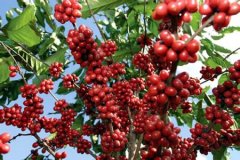
Varieties, Taste characteristics and roasting degree of Bolivian Coffee
■ Bolivia is rich in coffee beans in South America, and Bolivia is no exception. The unique tropical rain forest environment in some parts of Bolivia provides excellent natural conditions for the growth of organic coffee. The aroma of Bolivian coffee is rich and unique, whether it is the aroma of ground beans or the aroma of coffee, similar to the mixture of flower and fruit aroma.

Bolivian Snow Veins Manor Coffee Flavor Description Grindness Characteristics Variety Producing Area Price Taste Introduction
We know that Arabica coffee cannot be grown at altitudes higher than 2000 meters, and if the altitude is too high, the coffee trees will freeze due to the low temperature. Bolivian coffee is mainly grown in the Yungas region northeast of La Paz. Bordering the Amazon River basin, it is about 1500-2500 meters above sea level and has an average annual temperature of about 10-15 ° C. Therefore guarantee

Bolivian Coffee Karanawi Flavor description Grinding scale Variety production area Manor
Bolivian coffee Karanawi flavor describes the grinding scale variety produced in the region manor. The annual output is between 6000 and 10000 tons. The main reason is that the hardware is relatively backward. The important reason is that the altitude is too high. But the delicious and low-yield Tibica is also to blame. In recent years, under the advice of experts. Kaddura, which has a high yield and good flavor, is also planted. Kaduai. It is hoped that midwifery can be improved. Generally speaking, the boutique coffee beans of the producing countries are better than those of the other countries.

Introduction to the planting environment of Bolivian coffee with dry flavor of almonds
(1) the Movement for Socialism (Movimiento Al Socialismo): founded in 1995. The ruling party. The emerging leftist political parties are widely participated in the national democratic forces. Oppose neoliberal economy and economic globalization. The largest political force in the Bolivian parliament. The party's leader is President Juan Evo Morales Emma (Juan Evo MORALES Ayma). (2) Poly

Bolivian boutique coffee what is Bolivia's unique coffee bean treatment?
Some time ago, the front street coffee on the shelves of a coffee from glass via, called Bolivian cocoa sun Kaddura. We often hear that the altitude of coffee planting will have a great impact on the flavor of beans, the higher the altitude, the better the flavor of coffee beans, so coffee will also be planted at high altitude. However, there is one strange thing you may not know.

Where on earth is Bolivia? Bolivian coffee cultivars Bolivian coffee flavor
Professional coffee knowledge exchange more coffee bean information please follow the coffee workshop (Wechat official account cafe_style) where on earth is Bolivia? It is a landlocked country in South America, or you will know that it has the largest salt lake in the world, the Uyuni Salt Marsh, commonly known as the Mirror of the Sky, but you may not know that there are actually many small producing countries like Poland that are not well known.

Bolivian coffee grown in Yongas, northeast of La Paz
Arabica coffee cannot be grown in cold places above 2000 meters above sea level. if the altitude is too high, coffee trees will frost because the temperature is too low. So Bolivian coffee is mainly grown in the Yungas region northeast of La Paz. It borders the Amazon basin and is about 1500-2500 meters above sea level with an average annual temperature of about 10-15 ℃. Therefore, it ensures the growth of coffee.

Introduction of Bolivian coffee producing areas with excellent coffee varieties
Arabica coffee cannot be grown in cold places above 2000 meters above sea level. if the altitude is too high, coffee trees will frost because the temperature is too low. So Bolivian coffee is mainly grown in the Yungas region northeast of La Paz. It borders the Amazon basin and is about 1500-2500 meters above sea level with an average annual temperature of about 10-15 ℃. Therefore, it ensures the growth of coffee.

Introduction of Bolivian Coffee Flavor Snow vein Manor Bolivian Coffee producing area
Bolivia's high-quality estates, very high altitude, perennial low temperature environment, so that coffee fruit growth is slow, tight enough, aroma is also charming, floral aroma is obvious, such as careful handling, cherries with the same maturity, often have a clean and meticulous high-end taste, this elegant vanilla and honey aromas are very attractive, this champion bean has a variety of floral aromas, vanilla and sweet very long-lasting. To

High quality and sour Bolivian coffee beans introduce boutique coffee
Arabica coffee cannot be grown in cold places above 2000 meters above sea level. if the altitude is too high, coffee trees will frost because the temperature is too low. So Bolivian coffee is mainly grown in the Yungas region northeast of La Paz. It borders the Amazon basin and is about 1500-2500 meters above sea level with an average annual temperature of about 10-15 ℃. Therefore, it ensures the growth of coffee.

Introduction to Xuemai Manor, Flavor Manor in Bolivian Coffee producing area
Rich in mineral resources, mainly tin, antimony, tungsten, silver, zinc, lead, copper, nickel, iron, gold and so on. Mineral deposits are rich, with tin reserves of 1.15 million tons, ranking second in the world; iron reserves of 45 billion tons, second only to Brazil in Latin America; and lithium reserves of 100 million tons, ranking first in the world. [7] Oil and gas Bolivia is rich in oil and gas resources. Proven oil reserves are 929 million barrels, as of 2013

Sour Bolivian Coffee Flavor description Grinding degree Taste characteristics of Fine Coffee in producing area
The early Bolivian coffee was of low quality and the market was very poor. Usually the picked coffee fruit is bumped all the way to the processing plant after a simple peeling treatment. Due to the imperfect infrastructure, the traffic is underdeveloped. Coffee farmers have to overcome the rugged mountain road and transport the beans to the higher altitude area of La Paz for washing. If the coffee fruit can not be delivered to the processing in time

Bolivian Yonggas Koraca Association small Farmer Coffee beans _ Bolivian Sun Project Coffee
Professional coffee knowledge exchange more coffee bean information please follow Coffee Workshop (Wechat official account cafe_style) Bolivian Coffee-tomorrow Sun Project Yungas South Yonggas Illupana District Koraca Association small Farmers 1650-1950m Bolivia Sol de Manana Sud Yongas Irupana Coraca 1650-1950m Flavor: dry aroma mixed with orange and plum aroma

Bolivian Coffee Flavor description Grinding degree Variety characteristics of producing area introduction of Fine Coffee beans
Bolivia is 1/3 of the Andean mountains, rugged terrain, mainly road transport, accounting for more than 85% of transportation. The main railway and road networks are concentrated in the west, and remote areas rely on air communication. But road coverage is the lowest in South America. And there is also the Ronggas Highway, the world's first insurance road known as the road to death. There is no developed economy here. It is the poorest in South America.

The Bolivian coffee producing area of Tibica, which produces excellent coffee varieties.
Arabica coffee cannot be grown in cold places above 2000 meters above sea level. if the altitude is too high, coffee trees will frost because the temperature is too low. So Bolivian coffee is mainly grown in the Yungas region northeast of La Paz. It borders the Amazon basin and is about 1500-2500 meters above sea level with an average annual temperature of about 10-15 ℃. Therefore, it ensures the growth of coffee.

Bolivian Coffee Bean Flavor Bolivia Coffee Manor South America is rich in coffee beans, Bolivia
South America is rich in coffee beans, and Bolivia is no exception. The unique tropical rain forest environment in some parts of Bolivia provides excellent natural conditions for the growth of organic coffee. The aroma of Bolivian coffee is rich and unique, both the aroma of ground beans and the aroma of coffee are obviously rich, similar to the mixture of flower and fruit aroma, which is impressive.