
"Century"
18591 article(s) found

Century Coffee | past Life and present Life of Old St. Paul Coffee, the first coffee chain in the world
Professional baristas follow Coffee Workshop (Wechat official account cafe_style) this century-old coffee shop in Ginza was once a favorite of literary celebrities such as Ryunosuke Akutagawa and John Lennon and music stars. A hundred years of history must not be skipped in a hurry. Let the editor tell you the story of this old coffee shop in detail and explore its past life and this life.

How did coffee enter the Chinese market?
Coffee is said to have begun in the early 11 th century and can be found in ancient Arabic documents. Before that, coffee beans in the Arab region were dried and boiled as stomach medicine, and later learned that coffee also had a refreshing effect, coupled with the strict prohibition of alcohol by Muslim precepts. Muslims use roasted juice instead of alcohol as an exciting drink. It is said that the local people know how to use
History of Coffee Culture on the Source of Coffee
The history of coffee can be traced back to the tenth century AD, but those are unverifiable history. For example, the widely spread story of shepherds, the story of monks across the desert and so on. What is really well documented is the spread time of coffee beans, that is, from Africa to Europe and the whole world, probably around the 16th-17th century AD, which is known to be a great voyage.

A century-old coffee inheritance of a Brazilian family
Professional baristas Please follow the Coffee Workshop (official Wechat account cafe_style) there is a coffee shop in the pedestrian street of San Lorenzo, a famous mineral water city in Minas Gerais, southeast of Brazil. The modern decoration and equipment stand out in the old city. The coffee shop belongs to the local Pereira family. The shop has been open for about 10 years, but his coffee is already available.

The taste of Ugandan coffee is lubricated. Introduction to the characteristics of fine coffee in manor area.
There was an emirate called Kitala in present-day western Uganda before the 13th century AD. In the 13th and 14th century, the nomadic Bachwezi conquered the country. From the end of the 15th century to the beginning of the 16th century, the Luo people who originally lived in southern Sudan went south to replace the rule of the Bachwezi, established the kingdom of Buniolo and established the Babito dynasty in Buganda. These foreign rulers were soon engaged in local farming.

Coffee training Culture Coffee and Japanese Culture
As early as the end of the 17th century, the Dutch brought coffee to Asia in the early 18th century, and coffee was soon introduced to Japan. Before and after the Meiji Restoration, Japan advocated total westernization, and the coffee culture with Dutch flavor took root in Japan. During the Taisho period (1879-1926), due to the pervasive atmosphere of freedom and democracy, fresh and luxuriant culture, cafes have been very prosperous. But with the Japanese army,

Coffee Chronicle the Historical Development of Coffee Culture
In the 6th century, on the plateau of Abyssinia, a shepherd named Caldai drove goats to the new prairie for grazing, and accidentally found coffee fruit due to the accidental feeding of goats. In the early 10th century, Dr. Daggers, a famous doctor in Iraq, admitted and documented the pharmacological effects of coffee. This is one of the earliest valuable medical records of coffee. The Arabs invented the whole coffee in the 11th century.

Coffee and the Story of Coffee Culture in Japan
As early as the end of the 17th century, the Dutch brought coffee to Asia in the early 18th century, and coffee was soon introduced to Japan. Before and after the Meiji Restoration, Japan advocated total westernization, and the coffee culture with Dutch flavor took root in Japan. During the Taisho period (1879-1926), due to the pervasive atmosphere of freedom and democracy, fresh and luxuriant culture, cafes have been very prosperous. But with the Japanese army,

A century-old coffee inheritance of a Brazilian family-- Saydang Manor in Brazil
In the southeastern Brazilian state of Minas Gerais, which is famous for its mineral water, the pedestrian street in the center of San Lorenzo has a coffee shop full of customers, and the modern decoration and equipment stand out in the old city. The coffee shop belongs to the local Pereira family. The shop has been open for about 10 years, but his coffee has a history of more than a hundred years. In 1890, Jos é Isidro Pereira and his wife Nazarrett

Bezerra Century Golden Eagle Coffee Machine High-end Limited Edition products
On the left is the Bezerra century-old golden eagle coffee machine known as Rolls-Royce in the coffee machine, and the top right is the first payment for university students to perform and mix drinks. The lower right holds a live coffee-making competition for baristas. (Wen / Luo Weiwei and Chen Xiaohong) Cake plus coffee is the perfect match for afternoon tea. Where there is cake, how can it be accompanied without coffee? Coffee is also a major protagonist in this baking exhibition. Except

Pakamara, a new hybrid born in El Salvador in 1958, was not planted on a large scale until the 21st century.
For more information on coffee beans, please follow the Coffee Workshop (Wechat official account cafe_style) Pacamara, a new hybrid born in El Salvador in 1958, but it was not until the 21st century that it was slightly more cultivated. When Robin filmed a coffee documentary in Melbourne in 2014, it was still a legendary rare bean species, and many people only knew its name but never tasted it.

Real mellow thickness of Ugandan coffee flavor taste manor characteristics of boutique coffee beans
There was an emirate called Kitala in present-day western Uganda before the 13th century AD. In the 13th and 14th century, the nomadic Bachwezi conquered the country. From the end of the 15th century to the beginning of the 16th century, the Luo people who originally lived in southern Sudan went south to replace the rule of the Bachwezi, established the kingdom of Buniolo and established the Babito dynasty in Buganda. These foreign rulers were soon engaged in local farming.

Introduction to the unique and mellow coffee flavor and taste characteristics of Ethiopia's Xida Motede Manor.
Monlinique I reigned in 975 BC. The Kingdom of Nubia was established in the 8th century BC. From the 1st century to 976 AD, the Ethiopian Empire, also known as the Kingdom of Aksum, was established in Aksum in the north. Christianity was introduced into Ethiopia in the 4th and 5th century. From the 12th century to 1270, the Zagvi dynasty was established. In 1270, the Abyssinian Empire was established. [3] Western colonialism

The source of coffee beans when did coffee beans become popular
Coffee beans became popular in China in the 19th century. There are many legends about the discovery of coffee beans in every country. One of them is according to Rothschild, a Roman linguist. Neroy (1613-1707) records: about the sixth century AD, an Arab shepherd Kardai saw each goat when he was herding sheep to the Isabian prairie.

Wonderful fruit-flavored coffee Kenyan coffee beans
It entered Kenya in the 19th century, when Ethiopian coffee drinks were imported into Kenya through southern Yemen. But it was not until the early 20 th century that the Bourbon Coffee Tree was saint. The Austin Mission (St.AustinMission) was introduced. Kenyan coffee is mostly grown at 15002100 meters above sea level and is harvested twice a year. To ensure that only ripe berries are picked, people must patrol the forest
How did Coffee enter the Chinese Coffee Market
Coffee is said to have begun in the early 11 th century and can be found in ancient Arabic literature. Before that, coffee raw beans were dried and then boiled as stomach medicine in Arabia. later, it was learned that coffee also had a refreshing effect, coupled with severe Muslim precepts against drinking. Muslims replace alcohol with roasted juice to become excitant drinks. It is said that the locals understand

Cafe de flore and les deux maggots, the century-old French coffee shops.
Everyone knows that there are many cafes on the streets of France, especially in Paris: the most famous are Caf de flore and les deux maggots, two century-old shops in my avatar on the Rue Saint-Germain. What I am going to tell you today is not how fragrant the coffee is in these two old shops, which is not the main reason why these two coffee shops are so famous so far; nor are they.
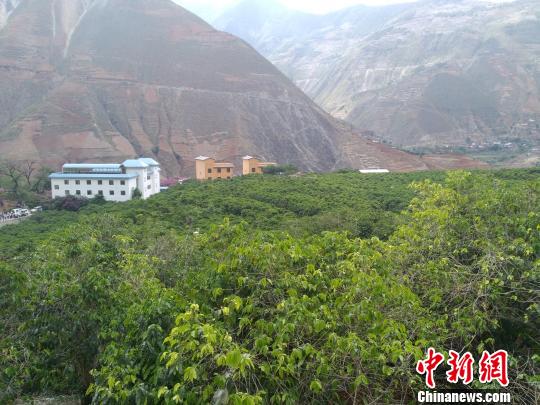
Experts and scholars from five countries in Yunnan Binchuan discuss the new development of century-old coffee
Professional baristas please follow the coffee workshop (Wechat official account cafe_style) on the 16th, coffee experts and scholars from China, the United States, Ethiopia, India and France gathered in Zhukula Village, Binchuan, Yunnan Province to open the Zhu Kula Coffee Forum to discuss the future of the century-old coffee-Zhukula Coffee, in order to help ethnic minorities shake off poverty and become rich and Yunnan Coffee goes out. Chinanews.com, Binchuan, Yunnan

Coffee Chronicle the Historical Development of Fine Coffee
In the 6th century, on the plateau of Abyssinia, a shepherd named Caldai drove goats to the new prairie for grazing, and accidentally found coffee fruit due to the accidental feeding of goats. In the early 10th century, Dr. Daggers, a famous doctor in Iraq, admitted and documented the pharmacological effects of coffee. This is one of the earliest valuable medical records of coffee. In the 11th century, the Arabs invented the whole

A century-old traditional Chinese medicine shop has changed into a coffee shop to continue the old feelings from the Baizi cabinet.
In the downtown area, many buildings with historical and cultural characteristics are no match for the great wheel of the times. The Kowloon City District is full of old buildings, and in order to tie in with urban renewal, new and old buildings and culture can also co-exist. With a history of more than half a century, "Dahetang antler Medicine Company" has become a symbol of the area. Seeing the closure of the old historical shop, Shi Junkeng (Henry), a post-80s generation, decided to rent the shop and renovate it into a "Dahe Hall Coffee Shop"