
"Century"
18591 article(s) found

Kenyan coffee with a wonderful fruit flavor
It entered Kenya in the 19th century, when Ethiopian coffee drinks were imported into Kenya through southern Yemen. But it was not until the early 20 th century that the Bourbon Coffee Tree was saint. The Austin Mission (St.AustinMission) was introduced. Kenyan coffee is mostly grown at 15002100 meters above sea level and is harvested twice a year. To ensure that only ripe berries are picked, people must patrol the forest

A century-old authentic Blue Mountain NO.1Mavis Bank treatment plant in Jamaica introduces the flavor description in detail.
Professional barista exchanges please follow the coffee workshop (Wechat official account cafe_style) Jamaica Blue Mountain Mavis Bank NO.1 Jamaica Blue Mountain Mavis Bank NO.1 from the century-old manor official certification 100% Jamaica Blue Mountain Mavis Bank is located about 10 miles northeast of the capital Kingston, is a raw bean processing plant certified by the Jamaican government.

Coffee memorabilia
In the Abyssinian plateau in the 6th century, a shepherd named Carl Dai, one day driving goats to the new grassland grazing, because of goat ingestion, and inadvertently found coffee fruit. Dr. Dajes, a famous doctor in Iraq in the early 10th century, acknowledged and documented the pharmacological effects of coffee. This is a valuable medical record of coffee's earliest days. 11th century Arabs invented the whole

A 17th century Caramel Macchiato-, a caramel macchiato with history.
Professional coffee knowledge exchange more coffee bean information please follow the coffee workshop (Wechat official account cafe_style) for many years Starbucks drank for nothing! It turns out that caramel macchiato should be drunk like this! A glass of Iced Green Tea Latte would like Grande to go. In the streets of Hong Kong, where there is a coffee shop, there are queues. Whether you are IFC Zhang Zhilin or a non-WTO college student

Fine Coffee Training Culture Coffee and Japan
Coffee was brought to Asia by the Dutch at the end of the seventeenth century and early eighteenth century, and coffee was soon introduced to Japan. Around the Meiji Restoration, Japan advocated total Westernization, and the coffee culture with Dutch flavor had taken root in Japan. During the Taisho period (1879 - 1926), coffee houses flourished because of the liberal democratic atmosphere and the fresh and flourishing culture. But with the Japanese militarism

Coffee beans Coffee characteristics Coffee origin Coffee processing methods Processing methods
Legend has it that around the tenth century AD, on the Ethiopian plateau in Africa, there was a shepherd Carl, who one day saw goats suddenly excited and excited. He thought it was strange, and after careful observation, he found that these sheep were excited by eating some kind of red fruit. Carl tasted some curiously and realized that he too felt
Coffee Culture in Europe
Coffee formed a tradition in Europe after the development of coffee roasting technology in the Middle East at the end of the 14 th century. It was introduced through an exchange between the Ottoman Turkish Empire and the merchants of Venice, a Mediterranean trader. Coffee flourished in the 18 th century. Islamists call coffee a divine medicine given by Allah. So coffee is called coffee or cavha, which means it can bring energy to people.

Development and change of Coffee: from Medicinal use to drinking
Coffee for drinking is said to have begun at the beginning of the eleventh century, and the record can be seen in ancient Arab documents. Before that, coffee beans were dried and boiled in the Arab region and then drank as stomach medicine, but later learned that coffee also had a refreshing effect, coupled with the strict Muslim commandments that forbade believers from drinking, and believers used coffee juice from roasting as a substitute for wine.

Introduction to the making method of coffee, one of the three major drinks in the world
The cultivation and production of coffee in the 17th century has always been monopolized by Arabs. At that time, it was mainly used in medicine and religion, and doctors and monks admitted that coffee had the effects of refreshing, awakening, strengthening the stomach, strengthening the body and stopping bleeding. The use of coffee was documented at the beginning of the 15th century and was integrated into religious ceremonies during this period. At the same time, it also appeared in the folk as a daily drink. Because of Islam
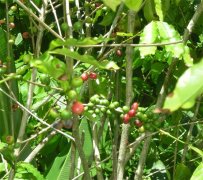
The secret to a century of organic coffee from the Caribbean
For a coffee shop, the quality of coffee beans is undoubtedly the most important, because only good coffee beans can extract a good flavor, and poor coffee beans, even if you find a world champion to do, there is no way to extract good drink. As a century-old Italian coffee brand, how does CAFFE PASCUCCI guarantee the quality of coffee beans? CAFFE PASCUCCI Brand History Source

Honduras | History of Honduran Coffee the market for Honduran coffee
Professional coffee knowledge exchange more information about coffee beans Please follow the coffee workshop (Wechat official account cafe_style) Honduran history and market Coffee is thought to have come to Honduras through merchants at the end of the 18th century. A census in the early 19th century showed that coffee was mainly grown by small farmers and had been widely grown since the mid-20th century. Since 1980, the coffee industry has experienced

Coffee Roaster Large Industrial Roaster
After the American Civil War, coffee beans first appeared packaged for sale on shelves in major cafe systems. By the end of World War II, the dominant commodity in the North American coffee market was pre-roasted coffee beans/pre-ground coffee powder made by large roasters, and this type of high-volume roasting technology with centralized and standardized requirements was called coffee.

Italian coffee has sprung up for a century. CAFFE PASCUCCI is very popular in Chinese cafes. Italian coffee.
Nowadays, the streets and alleys of China are full of cafes. For Chinese consumers, drinking coffee in a cafe represents more of a culture and a more textured way of life in terms of consumer experience. Compared with the fancy French coffee and the quick American coffee, the painstaking Italian caffeine is more similar to the Chinese spirit of drinking tea, and it is in every major city.

Coffee flavor and taste in Shaquiso, Ethiopia. Boutique coffee bean estate
Ethiopia is an ancient country with a history of 3000 years of civilization. The Hamite people who immigrated from the southern Arabian Peninsula were the earliest inhabitants. Monlinique I reigned in 975 BC. The Kingdom of Nubia was established in the 8th century BC. From the 1st century to 976 AD, the Ethiopian Empire, also known as the Kingdom of Aksum, was established in Aksum in the north. Christianity was introduced into Ethiopia in the 4th and 5th centuries.

Coffee and the basic knowledge of Japanese Coffee Culture
As early as the end of the 17th century, the Dutch brought coffee to Asia in the early 18th century, and coffee was soon introduced to Japan. Before and after the Meiji Restoration, Japan advocated total westernization, and the coffee culture with Dutch flavor took root in Japan. During the Taisho period (1879-1926), due to the pervasive atmosphere of freedom and democracy, fresh and luxuriant culture, cafes have been very prosperous. But with the Japanese army,

Century boutique coffee bean origin single origin coffee bean
Single-origin coffee beans Sulawesi Toraga creamy full-bodied and smooth, slight acidity, dignified harmony, floral and cashew oil aromas, plum fruit, round finish with spicy flavor. Blue Mountain No. 1 Blue Mountain is the best coffee bean in the best position on the mountain. The taste is balanced and the acidity is supple. With a variety of fruity aromas, it is a coffee that can bring you a fresh feeling.
Where on earth does coffee come from?
Around 900 AD, when a shepherd in the Cafa region of Ethiopia was grazing in the mountains, he found that the sheep were competing for a kind of red berry. After eating, the sheep were jubilant, and the shepherd was worried all night that his sheep had eaten some harmful food. Who knew the sheep were safe and sound the next day. This unexpected discovery prompted the shepherd to collect this wild fruit and boil juice to quench his thirst.

Where on earth does coffee come from?
Around 900 AD, when a shepherd in the Cafa region of Ethiopia was grazing in the mountains, he found that the sheep were competing for a kind of red berry. After eating, the sheep were jubilant, and the shepherd was worried all night that his sheep had eaten some harmful food. Who knew the sheep were safe and sound the next day. This unexpected discovery prompted the shepherd to collect this wild fruit and boil juice to quench his thirst.

Common sense of coffee roaster used in coffee shop
Coffee shop bean dryers, retail bean dryers, and small bean dryers are all medium to small bean dryers, which are often used in coffee shops during wartime. Before the early 20th century, most of their coffee beans were made by bean roasters in such cafes, as long as they were not baked at home, but by the early 1950s, large baking plants and pre-ground

World & A brief introduction to the spread History of Coffee in China
Origin: coffee was first discovered in the kaffa region of southern Ethiopia in the 6th century AD. So far, there is no specific historical data about the origin of coffee, what has been handed down are several different legends, but it is more recognized that Cuddy, the shepherd, discovered the coffee. Legend has it that Kadi, a shepherd in Kafa province in southern Ethiopia, drives his sheep every day.