
"Countries"
28798 article(s) found

Coffee changes the world-2
United States: giving up hundreds of millions of inheritance rights for coffee beans in the 1970s and 1980s, the rulers and generals of Guatemala and El Salvador had huge coffee fields, devouring most of their profits, while farmers had no meals. Many farmers, especially Indians, joined the Communist guerrillas and attacked government forces, and the authorities responded with the Holocaust, aggravating the deep feud between coffee farmers and the government.

How does coffee enter countries all over the world? how does it develop in all countries?
With the first coffee bean picked, the first roasting test, the first grinding, the first blending and the mellow smell of the first cup of hot coffee, the legend of coffee cultivation and coffee culture spreading on our small planet has become one of the greatest and most romantic stories in history.
Coffee beans and countries
Central American Mexican coffee is mainly concentrated in Chabas, Oaxaca, Veracruz, Puebla, Guerrero, Idarco, San Luis, Puerto Rico. The annual production is about 5 million bags, which is the main source of agricultural income. Mexican coffee beans are large in size and produce coffee that is soft, mellow and aromatic. Coffee color is light, acidity is large, most of them grow under natural conditions, do not make

Introduction of coffee countries in the world: an introduction to the development history and characteristics of coffee in different regions of different countries
Coffee production belt: the coffee belt (coffee production zone) ranges from 25 degrees north latitude to 30 degrees south latitude, including many countries in Central, West Africa, the Middle East and South Asia, the Pacific, Latin America and the Caribbean. The reason why coffee cultivation is concentrated in this area is due to the limitation of temperature. Coffee trees are very vulnerable to frost and are not suitable for north or south latitudes.

The culture is different! Do you know the coffee culture in different countries?
The exchange of professional baristas please pay attention to the coffee workshop (Wechat official account cafe_style) by Stephanie Li coffee culture is obviously different in different countries, have you noticed it when you are traveling? Most of Hong Kong people's habit of drinking coffee is to make a cup of coffee at the company, or to sigh a cup of coffee in a coffee shop in their spare time. Authentic coffee cultures are equally interesting in different countries, such as Italy

What are the coffee-producing countries in Africa? what is the grading system of Kenyan coffee beans?
Professional coffee knowledge exchange more coffee bean information please follow the coffee workshop (Wechat official account cafe_style) front street-African coffee producing area Kenya coffee grade brief introduction many coffee producing countries in Africa, more famous in the world are (Republika yu Rwanda) Ethiopia (Ethiopia) Kenya (kenya) and other countries. Front Street has always liked Kenny.

What kind of weather conditions do you need to grow coffee beans? which countries have natural bars for growing coffee trees?
At present, coffee has been grown in more than 50 countries in the world, but most of the good coffee beans are concentrated in the equatorial zone between 25 degrees north latitude and 30 degrees south latitude, high altitude, tropical climate and fertile soil. in order to grow full-grained, coffee-rich high-quality coffee beans. Coffee beans are grown all over the world, mainly in Brazil, Colombia, Indonesia and Vietnam.
International Coffee Organization-2
The 1983 International Coffee Convention has the following main economic characteristics: 1. When necessary, adopt an export quota system to ensure price stability within a certain range. This scope is reached annually through consultation between members of the organization's coffee importers and exporters at meetings of the International Coffee Council. two。 When the price of coffee rises above a certain level, the quota system will be terminated;
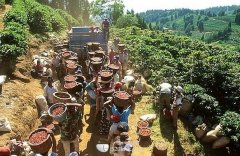
Huge Investment opportunities for Coffee in China
In China, "food comes first". Eating is not only for survival, but also the quintessence of the nation. Many foreigners are often surprised by the Chinese people's attention to diet and the time and energy they spend on buying or cooking. In fact, the consumption and pattern of meals in China also marks the current economic development, and even the investment opportunities in the future.
Basic knowledge of Coffee Coffee beans and countries
Mexican coffee from Central America and Mexico is mainly concentrated in Chabas, Oaxaca, Veracruz, Puebla, Guerrero, Hidalco, St. Lewis and Porto. The annual output is about 5 million bags, which is the main source of income for agricultural products. Mexican coffee beans have large particles, and the coffee produced is smooth, mellow and fragrant. Coffee has a light color and high acidity, and most of them grow under natural conditions.
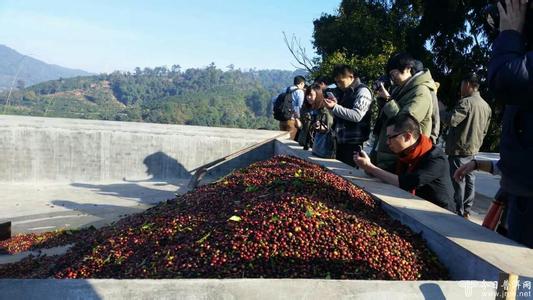
Coffee cultivation at Manor Lina, Nicaragua, one of the poorest countries in Central America
Nicaragua is an economically backward agricultural country, is one of the poorest countries in Central America, the unemployment rate is very high, people live in poverty, and coffee is Nicaragua's pillar industry, producing nearly 100,000 tons of coffee beans every year. Due to the poor economic foundation, the coffee industry is still relatively backward, and coffee farmers are also in a relatively poor state. Some of the fruits that stand out from the classifier will

The History and Culture of Coffee beans Coffee changes the World
United States: giving up hundreds of millions of inheritance rights for coffee beans in the 1970s and 1980s, the rulers and generals of Guatemala and El Salvador had huge coffee fields, devouring most of their profits, while farmers had no meals. Many farmers, especially Indians, joined the Communist guerrillas and attacked government forces, and the authorities responded with the Holocaust, aggravating the deep feud between coffee farmers and the government.

What are the similar characteristics of coffee produced in different countries?
The most sensible and practical way to understand coffee-producing countries is to classify them into the world's three major coffee growing regions: Africa, Indonesia and Central and South America. Generally speaking, coffee grown in the vicinity has similar characteristics. If a particular bean is out of stock, the manufacturer and buyer of the comprehensive product will usually look for a nearby country. People who make comprehensive products will say: I think
Factors affecting the price increase of coffee futures
Coffee futures trade coffee beans, and futures are both an investment and an increase in coffee. The increase in coffee lies not only in the origin, good or bad, but also for many piecemeal reasons. In the coffee futures market, the main factors affecting the price of coffee beans can be summarized as follows:
East African countries benefit from rising international coffee prices
Brazil, the world's largest coffee producer, has suffered a drought and reduced coffee production, leading to a rise in international coffee prices.
African producing countries
1. Ethiopian Ethiopia Ethiopian coffee is neither strong nor irritating. It is produced in Harald (Harrar), Yega Xuefei (Yirgacheffe), Sidamo (Sidamo), Limu (Limu), Djimmah (Djimmah), Lekempti (Kepa), Kapa and other places. Among them, Harald Coffee is the representative of Ethiopian Coffee.

Boutique coffee bean producing countries introduce Philippine coffee
Coffee was introduced into the Philippines (Philippines) in the early 19th century and by 1880 the country had become the fourth largest coffee exporter in the world. However, due to the spread of coffee rust, the country became a coffee importer soon after 1880. However, the coffee growing industry has gradually recovered. Coffee production in the Philippines: the Philippines is one of the few countries that can grow four varieties of coffee.

Honduras Coffee Bean Central American Rainforest countries
Honduras Honduras Central American rainforest countries, mixed with the mysterious flavor of ancient Maya and the enthusiasm and unrestrained enthusiasm of Central America, it is suitable for making single, medium or deep baking. Coffee beans with a slightly charming fragrance of flowers and fruits, very delicate and elegant, taste mild and full, slightly sour, aftertaste back sweet, belong to the gentle style of coffee. The appearance particle is small, the color is round and light.
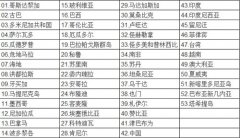
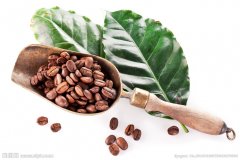
Coffee from the member countries of the International Coffee Organization Coffee geisha Coffee Panamanian Boquet boquete Rose
Angola Austria Austria Benin Benin Belgium / Luxembourg Belgium/Luxemburg Bolivia Bolivia UK Britain Brazil Brazil Cyprus Cyprus Burundi Burundi Denmark Denmark Cameroon Cameroon Finland Finland Central African Republic CentralAfricanR. French France