
"Egypt"
824 article(s) found

Ethiopian coffee is expected to increase year by year.
Although Ethiopia is the home country of Arabica, it is difficult to talk about the average yield per hectare. Central and South American countries can produce an average of one to two tons of coffee beans per hectare, but Egypt is only about 500,600 kilograms, which is really ugly. But the situation has improved year by year, especially in June of the second ○○, when Egypt forced Starbucks to give in and took control of Yegashefi, Harald and Cedar.

Coffee knowledge Ethiopian coffee is expected to increase year by year
Although Ethiopia is the home country of Arabica, it is difficult to talk about the average yield per hectare. Central and South American countries can produce an average of one to two tons of coffee beans per hectare, but Egypt is only about 500,600 kilograms, which is really ugly. But the situation has improved year by year, especially in June of the second ○○, when Egypt forced Starbucks to give in and took control of Yegashefi, Harald and Cedar.

Go into the world-famous cafes to taste the city culture
Sitting in a cafe sipping a drink is the best key to a city's culture. Coffee is a necessity in the life of Westerners. In terms of social function, the coffee shop is a bit like a Chinese teahouse: its emergence creates a public space and flattens the class distinction, and as prices fall, people from all walks of life can go for a drink and take part in gossip. After a few days

Flavor and characteristics of Ethiopian Coffee produced in Ethiopia
Professional coffee knowledge exchange more coffee bean information please follow the coffee workshop (Wechat official account cafe_style) Ethiopian coffee according to the above four different production methods, Ethiopian coffee can be divided into nine major coffee producing areas, including five boutique coffee areas: Sidamo, Yegashefi, Harald, Lim, Lekampdi, and four general commercial bean producing areas: Jemma and Iruba.

Coffee production in Ethiopia is expected to increase year by year. Coffee oven siphon
Although Ethiopia is the home country of Arabica, it is difficult to talk about the average yield per hectare. Central and South American countries can produce an average of one to two tons of coffee beans per hectare, but Egypt is only about 500,600 kilograms, which is really ugly. But the situation has improved year by year, especially in June of the second ○○, when Egypt forced Starbucks to give in and took control of Yegashefi, Harald and Cedar.

Coffee is the history of entering China.-when will coffee enter China?
Introduced into the Arab world: in 525 AD, Ethiopian troops invaded Yemen, and coffee beans were brought to Yemen by soldiers. According to records, coffee trees began to be planted in Yemen in 575 AD. Later, coffee beans were also brought to Egypt by Sudanese black slaves who were shipped to Egypt. After coffee was introduced into the Arab world, it was initially used by Arabs as a herb to treat migraine and promote elimination.

Start a fantastic journey from coffee
Seattle people are famous for drinking coffee. Egypt: there are special Arabic spices in coffee. Arabia is the first region in the world to drink and produce coffee. Caffeine culture is full of nostalgia in Egypt. Even Najib Mahafuz, a Nobel Prize winner and a famous Egyptian writer, has a specific description of Egyptian cafes in many of his novels. The most unique thing is, stir-fry

Ginger Coffee making North African Ginger Coffee
When ginger coffee from North Africa was drunk with fresh mint coffee in Egypt, it was found for the first time that in North Africa, all kinds of spices can be added to coffee, even ginger. Yemen in North Africa, the ginger coffee that nomads are best at, actually doesn't need to go to the Sahara Desert. We can also make it at home. Ginger coffee for four people only needs the following ingredients:

Carol's hundred-year-old Rish Cafe Cafe Riche
Red-brown wooden doors and windows, neat and warm red and white checked tablecloths were built at Riche Cafe in 1908 and have spent 103 years in Tahrir Square in the center of Cairo, Egypt. In the turmoil before Egypt's parliamentary elections, the formerly bustling city center was once again depressed, and most shops were closed again, except for the cafe on the street corner, whose windows emitted soft yellow lights.

Authentic life in Cairo's favorite cafe.
If Cairo is described as the capital of thousands of pagodas for its many mosques, then there is one thing in Cairo that exceeds the number of mosques: Egyptian cafes. Coffee is not a native product of Egypt, but was introduced into the daily life of Egyptians in the mid-15th century. At first, the Egyptians equated coffee beans with marijuana as narcotics, and "
Coffee dissemination chronology
Coffee spread to Arabia (eleventh century), Egypt, Syria. (13th century) Damascus (16th century) Europe (17th century) the first people to plan to grow and eat coffee were Arabs. At the beginning of the eleventh century, people in the Arab region boiled coffee into soup or dried it and then boiled it as stomach medicine. Because Muslim precepts are strict and alcohol is strictly forbidden, Muslims

Basic knowledge of fine coffee in coffee communication period chronology
Coffee spread to Arabia (eleventh century), Egypt, Syria. (13th century) Damascus (16th century) Europe (17th century) the first people to plan to grow and eat coffee were Arabs. At the beginning of the eleventh century, people in the Arab region boiled coffee into soup or dried it and then boiled it as stomach medicine. Because Muslim precepts are strict and alcohol is strictly forbidden, Muslims

The history of the spread of coffee, how is coffee popular? Why do Europeans like to drink coffee?
Coffee spread history: the earliest coffee originated in Ethiopia. In 525 AD, Ethiopian troops invaded Yemen, coffee beans carried by Ethiopian soldiers were also brought to Yemen, and coffee seeds also took root in Yemen. Later, coffee seeds were transported from Yemen to Egypt, and coffee was introduced.

Ethiopia is one of the coffee producing areas with the highest average elevation in Ethiopia.
Strictly speaking, Yega Xuefei is a by-product area of Sidamo. Located in the northwest of Sidamo, with mountains and lakes, the town is one of the highest coffee-producing areas in Egypt. However, the mode of production and flavor here are so outstanding that Egyptian coffee farmers compete to take pride in the flavor of their coffee, so they become independent from Sidamo and become the worst in Africa.
Why is Turkish coffee so bitter? introduction to the practice of authentic Turkish coffee.
Professional baristas follow the Coffee Workshop (official Wechat account cafe_style) it is said that the method of drinking sugar and milk in coffee has spread since Turkish coffee, but where did it start? It seems that the Turkish motto coffee must be sweet and deeply involved. Egyptian expedition to the Ottoman Empire and introduction of coffee to Turkey to transport coffee (Ottoman Empire)

Introduction to the quality characteristics of coffee flavor description and treatment in Ethiopia
Readers of Ethiopian Coffee who are interested in Ethiopian boutique beans can pay more attention to the producing areas of Sidamo, Yegashifi (especially rare sun-dried beans), Harald, Lim and Jinbi, whose strong orange and floral aromas are different from those of Central and South American beans. Ethiopia is a treasure trove of coffee genes. Experts estimate that there may be more than 2,000 Arabica subspecies hidden in Ethiopia.

Why do foreigners like drinking coffee? This paper briefly introduces the origin and development history of foreign coffee.
The earliest coffee beans originated in Ethiopia. In 525 AD, Ethiopian troops invaded Yemen, and coffee beans were brought to Yemen by soldiers. According to records, coffee trees began to be planted in Yemen in 575 AD. Later, coffee beans were also brought to Egypt by Sudanese black slaves who were shipped to Egypt. After coffee was introduced into the Arab world, it was first used as a herb by Arabs to treat biases.

Which coffee machine manufacturers are there in the world's largest coffee producing countries in China?
Excellent, 100% purity, small and symmetrical particles, can be boiled and soaked, mellow, deeply favored by western countries. It was rated as first class in London, England as early as the late 1950s. In recent years, with the expansion of international trade, Lujiang small grain coffee is more well-known. Merchants in Europe, the United States, Egypt, Hong Kong and Macao, especially in Britain, the United States, Egypt, Hong Kong and Macao all regard it as the best beverage.
Egyptian Cafe in History
Red-brown wooden doors and windows, neat and warm red and white checked tablecloths-the Riche Cafe, built in 1908, has spent 103 years in Tahrir Square in the center of the Egyptian capital Cairo.
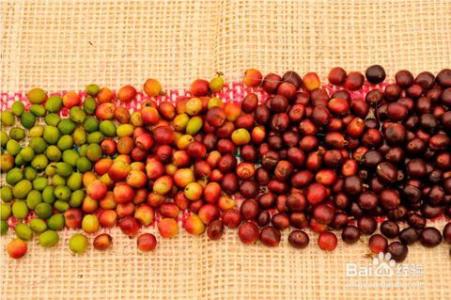
Flavor description of Ethiopian Yejia Coffee Coffee the characteristics of varieties produced by taste treatment
Ethiopia Yega Snow Coffee Flavor description the regional characteristics of the variety produced by the method of taste treatment Ethiopia is an important coffee producing country with about 12 million people engaged in coffee production and is a major exporter of Arabian coffee beans in Africa. The high-quality coffee here is of excellent quality and is worth looking for. A variety of coffee cultivation methods can be found in Ethiopia: from wild coffee forests and